



Patwari Academy videos: ECG intervals and segments
Last week, the Patwari Academy videos covered ECG basics on rate, rhythm, and axis. Here is another set of three videos discussing ECG intervals and segments — specifically the PR interval, QRS interval, and ST segments. Again, this is a nice review on ECG concepts. [+]

NPR Ted Talks: A non-medical podcast ready to inspire
Most of us have heard of TED talks and most of us have heard of NPR. But did you know that the two have paired together to give a fascinating weekly radio discussion? Since March 2013, NPR reporter and radio host Guy Raz (@NPRGuyRaz) has brought together innovators, leaders, and entrepreneurs among others to the radio format to inspire and enlighten the listener. This amazing free resource is a valuable non-medical podcast for doctors to access. [+]
Acute Coronary Syndrome (ACS) in the Elderly
Acute coronary syndrome (ACS) is the number one cause of mortality in patients older than 65 years old. 1 To complicate this fact further, they also present atypically with weakness, nausea/vomiting, fatigue, and shortness of breath. It has been shown that older adults who present to the emergency department (ED) with ACS and a chief complaint other than chest pain have worse outcomes: [+]
Quick clinical tip: Ulnar collateral ligament injury
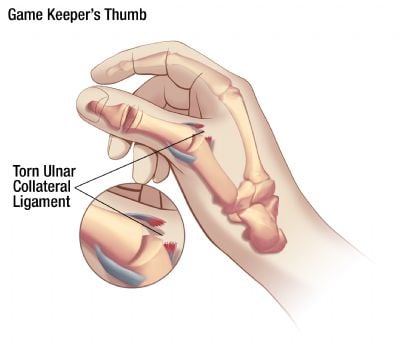
A common thumb injury is the “gamekeeper’s thumb or “skier’s thumb”, which involves an injury to the ulnar collateral ligament (UCL) of the first MCP joint. It is caused by forced abduction and hyperextension of the thumb, such as from a ski pole. But did you know that there are two branches of the ligament that you should test? [+]

Supraventricular Tachycardia (SVT) With Aberrancy Versus Ventricular Tachycardia (VT)
Differentiating between SVT with aberrancy and VT can be very difficult. It is crucial to be able to make this distinction as therapeutic decisions are anchored to this differentiation. Brugada et al prospectively analyzed 384 patients with VT and 170 patients with SVT with aberrant conduction to see if it was possible to come up with a simple criteria to help differentiate between the two with high sensitivity and specificity. [+]

ALiEM Book Club: THE CHECKLIST MANIFESTO – Join the conversation
New Horizons Do you like the ALiEM Book Club? Well we like you too!… so much so that we want YOU to join in on the next book discussion! We are taking the blog and book club to another level by pairing up with Dr. Teresa Chan (@TChanMD), an academic emergentologist from Canada. We are breaking the barriers of the internet and laying the foundation for a real-time, interactive discussion utilizing social media. [+]
Patwari Academy: ECG Rate, Rhythm, Axis
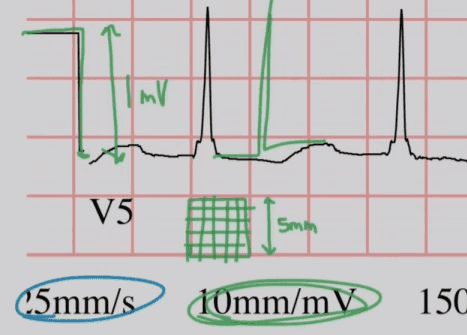
Dr. Rahul Patwari reviews the basics on how to determine an ECG’s rate, rhythm, and axis. It’s always nice to review these concepts. Do you remember how many seconds a traditional ECG typically spans on a single page? What’s the significance of the numbers: 300, 150, 100, 75, 60, 50? Spend a few minutes on these 2 refresher videos. [+]

ALiEM Book Club: Difficult Conversations
Debriefing is a difficult skill to acquire. It is a little to easy to ask accusatory questions when you witness things that went wrong, or in a direction not anticipated. It’s also hard when trying to keep your own horror and shock from what you just witnessed (how could you forget to get a fingerstick glucose??!!). But rarely these types of learning situations go well if we don’t learn how to develop high quality debriefing skills. Similarly without debriefing expertise, simulations that we conduct lose purpose and meaning. There are many ways to learn effective debriefing skills, and I want to share a [+]
EKG Subtlety: Tall T-Wave in Lead V1
EKGs are a simple, cheap modality that can give an emergency physician quite a bit of information. Sometimes, in a busy ER, this information can be very subtle and almost overlooked without a second thought. A perfect example of this is a New Tall T-wave in lead V1 (NTTV1). This finding can be a normal variant, but can also be a precursor to badness. [+]

Trick of the Trade: Less traumatic nasopharyngoscopy
A fiberoptic nasopharyngoscope is a handy tool to check patients for suspected foreign bodies (e.g. fishbone stuck in throat) or laryngeal edema. Depending on the diameter of your fiberoptic cable, it may be fairly uncomfortable for the patient despite generous viscous lidocaine instillation through the nares and nebulized lidocaine. Alternatively or additionally, you can make your own lidocaine-oxymetazoline nasal atomizer which works well. What if the patient is STILL not tolerating the procedure well? [+]