


Calling all EM residents: Submit an abstract to Annals of EM
Did you know that there is a section in the Annals of Emergency Medicine that is written by EM residents only? As Annals’ Resident Fellow, I wanted to share a great writing and publishing opportunity with my fellow residents. Many of the residents who have published in this series have gone on to do great things in EM as faculty members. [+]
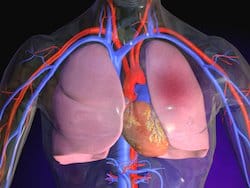
Subsegmental Pulmonary Embolisms (SSPE) are Important
Multi-detector computed tomographic pulmonary angiography (CTPA) allows for better visualization of peripheral pulmonary arteries allowing for diagnosis of small peripheral emboli limited to the subsegmental pulmonary arteries. Interestingly as these SSPE’s get diagnosed more and more, two questions come to mind: What is the prognostic utility of diagnosing SSPEs? What is the morbidity and mortality of SSPEs compared to more proximal PEs? A recent study in 2013 Blood looked at these questions. 1 [+]

The Not-So-Sick Health-Care Associated Pneumonia Patient: New Treatment Strategy
Health-care associated pneumonia (HCAP) is the term used to describe patients presenting with pneumonia who may be at higher risk of multi-drug resistant (MDR) pathogens than other patients presenting from the community due to recent contact with the health care system. What are the criteria for HCAP? [+]


Shock Index: A Predictor of Morbidity and Mortality?
Emergent airway management and severe sepsis are both high-risk situations that are commonly encountered by emergency physicians. It is well known that complications can be high in both situations, which in turn can lead to increased morbidity and mortality. For instance, about 1/4 of patients who are hemodynamically stable prior to intubation get post-intubation hypotension (PIH) after rapid sequence intubation. Also septic patients may not be reliably identified by systemic inflammatory response syndrome (SIRS) markers early in their disease course. The Shock Index (SI) may be an adjunct that is easy to calculate and could predict both PIH and severe sepsis. [+]
Social Media Index: Controversy and Evolution
The Social Media Index was moved from BoringEM to ALiEM on the morning of Thursday, November 21st. The increased exposure for my previously obscure little prototype got it a lot of attention. By that afternoon Dr. Scott Weingart (@EMCrit) had weighed in with an audio response critical of the index and requested that EMCrit be removed. This set off a lively discussion on Twitter as a good chunk of the FOAM community got in on this important discussion. [+]
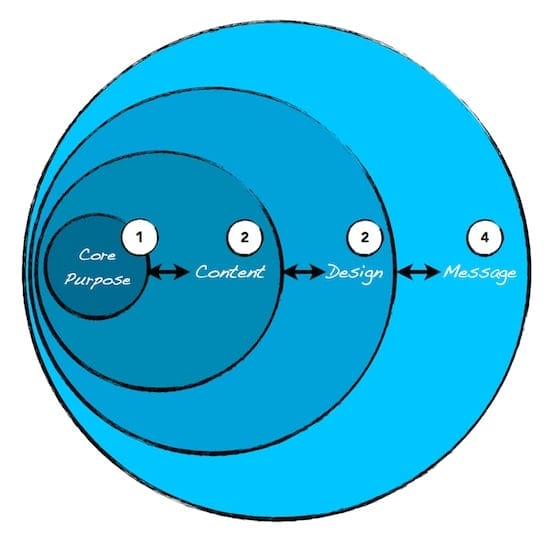
Lessons Learned from an Impromptu Twitter Consensus Conference on Blog Design
Written jointly by Teresa Chan & Tessa Davis (Guest writer from “DontForgetTheBubbles.com”) A Brief Background: It seemed like an average Thursday at first. But then, on November 21 (November 22 to some in Australia) controversy struck our little online #FOAMed world. With the launch of the Social Media Index on the ALiEM website, something had existed for almost six months at BoringEM.org suddenly became a point of contention. [+]
ALiEM Book Club Wrap Up: A Temporary Matter
The November book club selection was a short story A Temporary Matter from the collection Interpreter of Maladies by Jhumpa Lahiri. The goal in selecting the story was to gain an understanding of how doctors impact the lives of patients, even in the briefest of encounters. For this month, we do a 14-minute book club wrap up in podcast form! Dr. Teresa Chan and I discuss the story, significance to clinical practice, and announce next month's selection.

MEdIC Series: The Case of the New Job Negotiations
The final year of residency is challenging. Your responsibilities at work increase. Exams loom. And the job or fellowship hunt begins… This month in the MEdIC series we present the case of Jamal, a senior emergency medicine resident who is torn between the job he desires and the job that others are suggesting that he pursue. Join us as we ‘listen in’ on his conversation with his friend Cindy (a Pulmonology fellow) as they compare their adventures in new job negotiations. [+]
Social Media Index (SM-i) on ALiEM
The Social Media Index (SM-i) started with a pilot on BoringEM. The rationale for the experiment was that the health care professionals creating Free Open-Access Medical Education (FOAM) resources had no way to measure their impact in the way that scholars (h-index) and journals (Impact Factor) do. This made it difficult for them to quantify the impact of their work and for the consumers of FOAM to distinguish between reputable and unproven websites. While I am aware of the many imperfections of the index as it now stands, I believe the pilot demonstrated that there is enough value in the concept to justify [+]

Faculty hero: Dr. Stacey Poznanski
As part of a series on Faculty Heroes, I wanted to highlight Dr. Stacey Poznanski (Director of EM Undergraduate Education and Assistant Professor of EM at Wright State University), who has done amazing things in EM. Most recently I had the pleasure of co-presenting at the 2013 International EM Teaching Course with Stacey at our Powerpoint Resuscitation workshop. The following are some of her thoughtful words of wisdom for those interested in EM, education, and academics. [+]