



Retrieval Practice: 10 benefits of testing
Tests terrify people, especially when used for summative assessment. But in reality, tests have also helped students learn the material. Retrieval practice, also known as test enhanced learning or the testing effect, has been demonstrated to have more benefits than re-studying the material or multiple choice tests. As per Henry L. Roediger et al. If students are quizzed frequently, they tend to study more and with more regularity. Quizzes also permit students to discover gaps in their knowledge and focus study efforts on difficult material; furthermore, when students study after taking a test, they learn more from the study episode than [+]
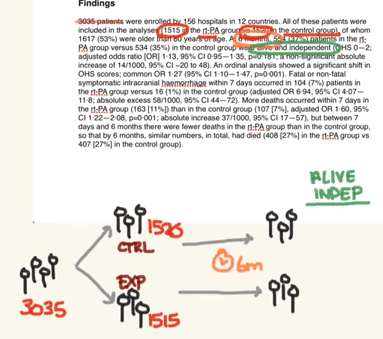
Patwari Academy videos: EBM Treatment Studies
Dr. Rahul Patwari reviews evidence-based medicine (EBM) concepts specifically regarding treatment studies, as guided by the JAMA Users Guide to the Medical Literature manual. In these first three videos, Rahul provides a brief introduction to the concept of treatment studies and then discusses (1) how to assess whether the results are valid and (2) calculating the risks/benefits of treatment based on the IST-3 trial? [+]

Public health and EM: A new series by Dr. Megan Ranney
Welcome to my inaugural post on ALiEM! My goal for this new series of missives is to inspire discussion about aspects of our life in EM, beyond the day-to-day clinical work. I chose emergency medicine not only for the clinical challenge, but also for the potential public health impact. After all, we are the only specialty to consistently care for the poor, the disempowered, the mentally ill. [+]
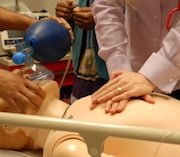
Crisis Resource Management
CRM and SBT… just another set of acronyms in the world of medical education? Don’t we already have enough?? Not quite! Rather, Crisis Resource Management (CRM) is a complementary approach to Simulation Based Training (SBT). It can enhance current ongoing medical simulations or provide foundation for a vigorous curriculum when launching new simulation programs. [+]

Hero spotlight: Dr.Todd Raine
There are incredible people doing incredibly inspiring work in Emergency Medicine. I wanted to restart the hero series, which had fallen off the radar a few years ago, featuring amazing people in our specialty. Today’s hero spotlight is on Dr. Todd Raine (@RaineDoc). He is a Staff Physician and IT Coordinator at the Providence Healthcare Department of EM and Clinical Assistant Professor at the University of British Columbia’s Department of EM. Despite these notable accomplishments, he is famous in the social media world for his innovative creation of a Google-based EM search engine GoogleFOAM.com, which many of us use to perform [+]

Supraventricular Tachycardia (SVT): Are Troponins Necessary?
More than one third of patients will have chest pain associated with SVT causing providers to order troponins and other cardiac enzymes. Elevated troponins are not pathognomonic for CAD/ACS and could represent other etiologies such as sepsis, subarachnoid hemorrhage, and pulmonary embolism. Also, subsequent coronary angiography is not necessary for risk stratification in all cases. SVT causes a rapid heart rate, which is well documented as a cause for modest troponin elevation secondary to cardiac stretch, poor diastolic perfusion, and/or coronary artery vasospasm. [+]

Introducing #EMConf Twitter Hashtag
I would like to share with the national and global community an opportunity to participate in the weekly generation of learning pearls from Emergency Medicine residency conferences. The majority of U.S. EM residencies gather faculty and residents together on a weekly basis for a half-day of education on material covering the basics of EM education. This is happening in isolated silos at the individual learning institutions. And up until now it was difficult to share the wealth of knowledge gained outside of the learning institutions in real-time. [+]

Patwari Academy videos: Spider and Hymenoptera bites
These two videos continue on the theme of envenomations. Watch these great videos on the consequences and management of bites by spiders and Hymenoptera species (bees, wasps, ants). Hymenoptera bites can cause all sorts of complications, but one of the most worrisome includes anaphylaxis, which is also reviewed in the video. [+]

ALiEM Bookclub: The Checklist Manifesto
Introduction Checklists have now almost become status quo in current medicine. My earliest encounter with the surgical checklist phenomenon was during PGY1 as an off-service intern. At this point, early adopters were running around with “Checkmark” safety-pins on their surgical caps, trying to encourage everyone to take up the cause. There were jokes and exasperated sighs each time a case started, but most complied with the task at the behest of opinion leaders (often the senior OR nurses in the room). Two years later I returned to see a culture change. OR teams seemed to communicate better, things seemed to [+]

Pediatric febrile seizure: When do I need to do a lumbar puncture?
You are in the ED when a 7 month old is brought in by EMS after a witnessed generalized seizure. The grandmother reports that the child has had URI symptoms for a couple of days and then developed a fever today. Shortly after giving ibuprofen, the child began to seize with arms and legs twitching. The episode lasted approximately 8 minutes and when EMS arrived, the child was sleepy, but arousable. The glucose was 92 mg/dL en route. On exam in the ED, child is awake and staring at you to make the next move… Vitals: Temp 39C, P 136, [+]