


CPR: Hands-on or Hands-off Defibrillation?
Pauses in chest compressions are known to be detrimental to survival in cardiac arrest, so much so that the 2010 American Heart Association (AHA) emphasize high-quality compressions while minimizing interruptions. There have been some studies that now advocate for continuous chest compressions during a defibrillation shock. There have been substantial changes to external defibrillation technology including: Biphasic shocks with real-time impedance monitoring to reduce peak voltages Paddles being replaced by adhesive pre-gelled electrodes Enhancement in ECG filtering permitting rhythm monitoring during chest compressions. So the mantra of “hard and fast” may be true when it comes to CPR, but the [+]
Patwari Academy Videos: Evidence Based Medicine (part 5)
In this fifth and final installment of the Evidence Based Medicine series, Dr. Rahul Patwari reviews the concepts of: distribution of the means (with case examples), confidence intervals, accuracy, precision, and the student t-test (with an example). [+]


Dear Program Director: Get your program on Twitter!
Dear Program Directors, I understand how tough it can be to come up with quality resident education to fulfill educational requirements on a weekly basis all year around. For most programs that is approximately 5 hours of conference material, once a week, pretty much every week of the year. That equals 260 hours of educational material that needs to be high yield, engaging, and entertaining enough to hold the attention of the millennial generation. This is an especially daunting task if tackled alone. So don’t do this alone! Start a program-wide Twitter account! [+]

Powerpoint Slide Redesign: Best Examples from IEMTC13 Workshop
At the 2013 International EM Teaching Course yesterday, Dr. Stacey Poznanski and I gave a workshop on “Powerpoint Resuscitation” to address all the widespread pitfalls which cause “death by powerpoint”. Here are the winners from the workshop competition, illustrating great examples of the coherence, redundancy, and multimedia principles that we reviewed. The slide examples are in pairs in a before-workshop and after-workshop format. Amazing what star educators can get done in a 60 minute workshop! [+]
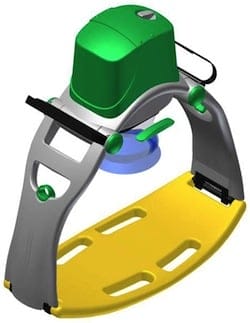
Mechanical vs Manual CPR Chest Compressions
When talking about Out of Hospital Cardiac Arrest (OHCA) there are really only three things that make a true difference on outcomes (i.e. survival and neurologic function): High quality, non-interrupted CPR Early defibrillation Therapeutic hypothermia The quality of CPR is often under appreciated and performed incorrectly (too slow and/or not hard enough). With mechanical CPR, chest compressions are delivered uninterrupted and at a predefined depth and rate. In my own practice I have seen these devices being used more and more, but my questions is do these devices impact outcomes? [+]

P-Video: Rule of 15 in anion gap metabolic acidosis
You have a patient with an anion gap of 30 and bicarbonate of 10 mEq/L. You also determine on VBG that the patient’s pCO2 is 25 mmHg. What trick of the trade can you use to quickly determine whether this low pCO2 is an appropriate compensation of the primary metabolic acidosis? Dr. Jeremy Faust and Dr. Corey Slovis explains the quick “Rule of 15”. [+]
Patwari Academy Videos: Evidence Based Medicine (part 4)
Dr. Rahul Patwari is a one-man statistics teaching machine. In part 4 of this Evidence Based Medicine series, he reviews advance concepts in statistics and calculations including: case-fatality rates, crude mortality rates, specific-mortality rates, years of potential life lost, and direct and indirect age adjustments. [+]
ALiEM Book Club: Reflecting on a Happy Coincidence
Coincidence can be very fortuitous. How exciting was it to have Shawn Achor deliver his keynote address about the Happiness Advantage at ACEP this past week? Three days after our Book Club Review was released? Best part of it all – none of it was planned. That definitely was a ‘happy coincidence’. :D Though I was not there, my Twitter feed lit up with Happiness resounding from ACEP on that first day. It seems his message resounded with many in the audience. [+]
P-Video: Sources for pediatric and adult fevers
Dr. Jeremy Faust is back with another P-video, which stands for Paucis Videos (paucis means “few” or “brief” in Latin) much like the Paucis Verbis cards. These P-videos are short video-based educational pearls for the practicing physician with a focus on Emergency Medicine and Critical Care. Here Jeremy shares two mnemonics, LUCAS and FEBRILE, to help you remember the common causes for fevers in pediatric and adult patients, respectively. [+]

Confessions of an Emergency Department Kid Helper
As I was rounding the corner from the adult area of the emergency department to the pediatric area I heard a child screaming at the top of his lungs, “I DON’T WANT A SHOT”. I knew at that moment I was being summoned. I walked into the room and I saw a mother with her 5 year old son in a full headlock, while a new intern was trying to look in his ears. I made eye contact with the intern said “maybe I can help” then turned my attention to mom and son. [+]