


Patwari Academy Videos: Evidence Based Medicine (part 3)
In part three of this Evidence Based Medicine series, Dr. Rahul Patwari does a deep dive on more advanced concepts in statistics. Specifically, he reviews: odds, incidence, prevalence, and incidence rates. What IS the difference between incidence and prevalence? Ever wonder? [+]


ALiEM Bookclub: The Happiness Advantage
Introduction Happiness at work. If you’re like so many of the seasoned physicians in my life, this might seem like an oxymoron. But that’s exactly what Shawn Achor suggests can be your status quo. The old axiom that if you are successful you will become happier is out-dated and, as it turns out, not evidence-based. It seems like many things in medicine, we may have had it backwards. Maybe, he suggests, if you find a way to make yourself happier – you’ll actually be a better doctor… [+]

Treating Ischemic Stroke with tPA in the ED: Time is Brain
Ischemic stroke is an emergent and devastating neurologic disorder, and is a leading cause of both death and disability in the United States. With each minute of brain ischemia, two million neurons are irreversibly damaged. Total ischemic time is linked to functional outcome, and therefore, the role of the Emergency Department is paramount in the management of these patients. Fibrinolytic therapy has become a mainstay of therapy for acute stroke, but guidelines for the use of tPA are dynamic, and often even controversial. When you identify someone with symptoms of stroke, what is your approach to determining if a patient [+]

Residency Interview Tips
Interview season is an exciting and stressful time for applicants and for residency programs. Both sides are invested in finding the right fit, and the interview process is integral to the process. Unfortunately, being integral doesn’t mean its easy. Here are some tips to the interview process. [+]
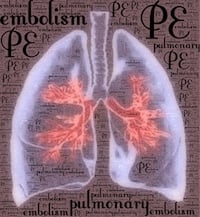
Acute Pulmonary Embolism: Size does matter and ECG can give us clues
Acute pulmonary embolism (PE) is a common condition that can be both severe and difficult to diagnose. Half of all acute PE cases are diagnosed in the emergency department, and acute PE follows acute coronary syndrome as the second most common cause of sudden unexpected death in outpatients. Also, right ventricular dysfunction is a consequence of massive/submassive acute pulmonary embolism and correlates with a poor prognosis and high mortality rate. Although an ECG lacks both sensitivity and specificity for acute PE, there are some clues that can help in determining the size of an acute PE. [+]
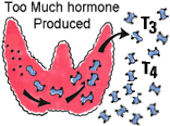
Diagnosing hyperthyroidism: Answers to 7 common questions
The prevalence of hyperthyroidism in the general population is about 1-2%, and is ten times more likely in women than men. The spectrum of hyperthyroidism ranges from asymptomatic or subclinical disease to thyroid storm. So how do we diagnose various presentations of hyperthyroidism in the Emergency Department? Below are answers to 7 common questions that commonly arise. [+]
Patwari Academy videos: Evidence Based Medicine (part 2)
In part 2 of this Evidence Based Medicine series by Dr. Rahul Patwari, more advanced statistical concepts are reviewed. These concepts include ROC curves, screening tests, probability (multiplication and addition rules) and the binomial theorem. Sounds daunting but these short videos really condenses the concepts into digestible lessons. [+]
Free Study Guide for EMS Board Exam
The faculty and fellows of the UCSF EMS/Disaster Fellowship Program met monthly over the past 2 years to to write a study guide for for the EMS Medical Board exam based on the National Association of EMS Physician’s (NAEMSP) seminal textbook Emergency Medical Services: Clinical Practice and Systems Oversight [Amazon link] (Kendall Hunt Publishers, David C Cone, Robert E O’Connor and Raymond L Fowler, Series Editors, 2009). We condensed approximately 1,800 pages into 69 pages with a simple format: summary of material and take home messages to help improve our EMS system. [+]

MEdIC: The Case of the Facebook Faceplant – Expert and Community Response
On September 27th we posted the second case of the MEdIC (Medical Education In Cases) series facilitated by Dr. Brent Thoma (@BoringEM) and me (@TChanMD). The Case of the Facebook Faceplant involved a “resident at risk” who lashed out on Facebook about an experience with a nurse. Our readers were thrust into the role of a supervising attending physician who sees the post. Once again, we were overwhelmed by the number and quality of responses in the comments and on Twitter. [+]

The Ultimate Consult Service: Emergency Pharmacists
Imagine a consult service located IN the ED. The consultants are some of the friendliest people you’ve met and are there to help you. They tirelessly go out of their way to guide you through hospital protocols, help you with treatments, keep a close eye on your work, and ensure that you and your patients stay out of trouble. Not only are these consultants helpful to you, but also your residents, mid-levels, nurses, and the admitting teams. Everything they know, they teach you – and some are very active in FOAMed and emergency medicine research. [+]