



Bundle Branch Blocks (BBBs) 101
Recently, I have been asked by several students at my home institution (UTHSC at San Antonio) to help them understand bundle branch blocks. This is different than some of my usual posts because it is meant to be more educational than evidence based. So here we go. The normal conduction system of the healthy heart is shown to the right. If there is a delay or block in the left or right bundle, depolarization will take longer to occur. Therefore we get a widened QRS (>0.12 sec or >3 small boxes). [+]

R-Wave Peak Time (RWPT) in Lead II: One Simple Step to Differentiate Wide Complex Tachycardias
There are several algorithms that are currently used to help distinguish Supraventricular Tachycardia (SVT) with aberrancy and Ventricular Tachycardia (VT). Many of these algorithms lack specificity, and let’s face it, who can remember if the absence of an RS complex in the precordial leads is VT or SVT with aberrancy. So what if there was a criterion that had a good sensitivity (SN), specificity (SP), and was one simple step? [+]
PV Card: Brugada Criteria for SVT with Aberrancy vs Ventricular Tachycardia
Due to the overwhelming popularity of Dr. Salim Rezaie's recent post discussing the Brugada criteria for SVT with aberrancy vs VT, Dr. Jason West (@JWestEM, an EM resident from Jacobi/Montefiore) kindly helped to co-author and package this information into a PV card for quick reference. To use this sequential, four-question approach, if at any time you answer YES to the question, it is ventricular tachycardia. PV Card: SVT vs VT - Brugada Criteria Adapted from [1] Go to ALiEM (PV) Cards for more resources. Reference Brugada P, Brugada J, Mont L, Smeets J, Andries E. A new approach to the differential diagnosis [+]
QI Series: Cellulitis vs Necrotizing Fasciitis
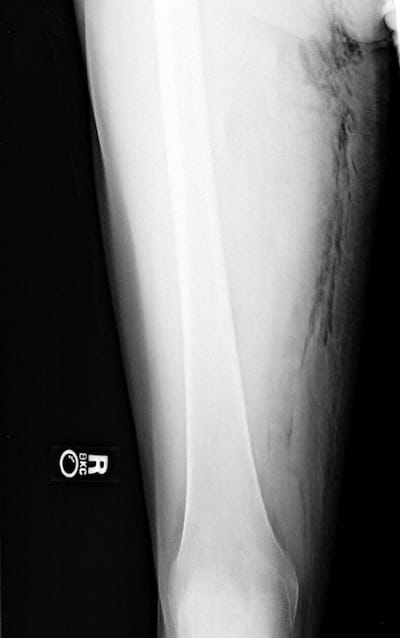
Case A 50-year-old male was referred to the ED for evaluation of cellulitis. The patient had developed pain and swelling in his right groin region 5 days earlier. He had seen his physician 3 days before the ED visit and was started on Doxycycline. On the day of evaluation, he had returned to the office with increasing redness so was referred to the ED. [+]

New Quality Improvement Series: Be a detective to avoid errors
When you attend Morbidity & Mortality or Quality Improvement (QI) Conferences, the cases presented often have teaching points, which revolve around potentially avoidable errors. Subtle and not-too-subtle clues often reveal themselves along the way, which could have been detected sooner. This ALiEM QI Series, hosted by Dr. Steven Polevoi (UCSF EM Medical and QI Director), was created to help you become a better detective in finding these clues early in the patient’s course. “Learn from the mistakes of others. You can’t live long enough to make them all yourself.” – Eleanor Roosevelt [+]
Patwari Academy videos: EBM Treatment Studies (part 2)
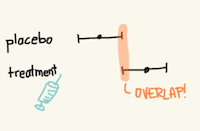
Dr. Rahul Patwari continues with the fourth and fifth videos in this series on Evidence Based Medicine (EBM) and Treatment Studies (see first three videos). These two videos are about the concept of Confidence Intervals and Patient Applicability. The second video below makes great points about whether a published study is applicable to YOUR patient. Don’t fall into common traps. [+]
The Checklist Manifesto: ALiEM Book Club Synopsis
Our dear readers have chimed in and we’ve received amazing commentary and feedback regarding this month’s book The Checklist Manifesto. Please read the summary of the discussion below. CHECKLISTS ARE EVERYWHERE IN EMERGENCY MEDICINE Our readers have spotted checklists in a number of places including PALS/ACLS algorithms, Procedural Sedation protocols, and Clinical Decision Rules. Dr. Javier Benitez (@jvrbntz) stated that he uses a checklist for resuscitations at the start of shifts. Dr. Michelle Lin (@M_Lin) stated “We already use our own mental checklists in Med[icine]. It’s just not explicitly shared. Should have more overt shared checklists.” [+]

Ultrasound-Guided Pericardiocentesis
All the years of ultrasound training in residency has paid off. You found the large pericardial effusion in the hypotensive patient who is still alive, but looks sick. You are a star! The only problem was that you never performed a pericardiocentesis in an awake patient. The cardiology fellow is at home sleeping and/or the closest receiving hospital is about 1 hour away. Now what? Dr. Arun Nagdev reviews how to do an ultrasound guided pericardiocentesis as part of this new, ongoing series of advanced ultrasound tips for emergency physicians. [+]

Heuristics and Cognitive Errors in Diagnostic Reasoning
Medical error is among the top ten causes of death in the United States, and while there are different forms and sources, diagnostic error is one of the most significant and consequential. Graber et al, 2002 classifies diagnostic error as one of 3 types: No-fault error System error Cognitive error [+]


Choosing the right vasopressor agent in hypotension
The incidence of critical illness in the ED is rising, with greater than 1 million ED patients requiring emergent resuscitation each year. In addition to definitive airway management, hemodynamic support is among the most important life-saving interventions implemented by emergency physicians. When a patient develops persistent hypotension, what is your approach to choosing the right vasopressor medication for hemodynamic support? Persistent hypotension results in impaired tissue perfusion and is often a late and ominous indication of decompensated shock. Correction of persistent hypotension is imperative, often requiring vasopressors and inotropes. When considering an agent for hemodynamic support, the following checklist can [+]