



How I Educate Series: Sara Dimeo, MD
This week’s How I Educate post features Dr. Sara Dimeo, the Program Director at East Valley Emergency Medicine. Dr. Dimeo spends approximately 70% of her shifts with learners which include emergency medicine residents, off-service residents, and medical students. She describes her practice environment as a busy, level 1 trauma center in the East Valley of Phoenix, Arizona with an annual patient volume of ~70K. Our sister hospital Mercy Gilbert has a new Women's and Children's pavilion where a pediatric ED will be opening in conjunction with Phoenix Children's hospital. The program is a community-based EM program with all of [+]

SAEM Clinical Images Series: My Shoulder Hurts
An 18-year-old male presents to the Emergency Department (ED) with right shoulder pain after wrestling with his brother. He heard a “pop," and has been having pain along his right clavicle and shoulder since. He is unable to move his right shoulder. No numbness, tingling, or weakness in his arm or hand. No dysphagia, stridor, or shortness of breath. No medical or surgical history. He has no history of shoulder dislocation or fractures. Vitals: HR 71; BP 139/77; RR 18; O2 sat 98% on RA General: Uncomfortable appearing young man with [+]

How I Educate Series: Whitney Johnson, MD
This week’s How I Educate post features Dr. Whitney Johnson, the Director of Education at UHS SoCal Medical Education Consortium. Dr. Johnson spends approximately 50-60% of her shifts with learners which include emergency medicine residents, off-service residents, and medical students. She describes her practice environment as two high-volume community hospitals. Below she shares with us her approach to teaching learners on shift. Name 3 words that describe a teaching shift with you. Cerebral, practical, inquisitive. What delivery methods do use when teaching on shift? Open discussion. What learning theory best describes your approach to teaching? Deliberate practice primarily, but [+]

SAEM Clinical Images Series: Incidental Finding on Bedside Echo
A 48-year-old female with a past medical history of opioid use disorder on suboxone presents with abdominal pain for one day. The patient developed sharp diffuse upper abdominal pain the evening prior to arrival that resolved. The pain recurred again today and was associated with bilious emesis. The patient notes persistent upper abdominal pain with paroxysmal exacerbation. She has a history of a hysterectomy, but no other abdominal surgeries. No history of gallstone pathology. Vitals: HR 38; BP 120/63; RR 14; SpO2 100% HEENT: No jugular venous distention, no scleral icterus. CV: [+]

11 Tips to Improve Epistaxis Management in the Emergency Department
Managing epistaxis is often challenging, time-consuming, and takes practice. Even under the best circumstances, epistaxis often results in return visits for rebleeding and poor outcomes. Rarely should you do “nothing” for adults who present to the ED with or following epistaxis. If it produced enough blood to seek care (even without hemodynamic compromise), epistaxis frequently recurs even if currently resolved. This is a less true in pediatric patients. A careful and comprehensive evaluation is essential in both populations, whether epistaxis is ongoing. The following 11 pearls with a bonus tip should help you avoid common pitfalls, improve outcomes, and [+]

ALiEM AIR Series | Orthopedics Lower Extremity Module
Welcome to the AIR Orthopedics Lower Extremity Module! After carefully reviewing all relevant posts in the past 12 months from the top 50 sites of the Social Media Index, the ALiEM AIR Team is proud to present the highest quality online content related to related to neurologic emergencies in the Emergency Department. 4 blog posts met our standard of online excellence and were approved for residency training by the AIR Series Board. More specifically, we identified 1 AIR and 3 Honorable Mentions. We recommend programs give 2 hours of III credit for this module. AIR Stamp of Approval [+]

SAEM Clinical Images Series: A Rare Cause of Post-traumatic Neck Pain
A 15-year-old male presents to the pediatric Emergency Department (ED) for evaluation of neck pain for three weeks. The patient is vague as to the development of his symptoms, but his mother reveals patient was assaulted by peers three weeks ago and has had progressively worsening neck pain and stiffness. The patient states symptoms have gotten to the point where he is unable to turn his head but denies fevers, chills, nausea, vomiting, focal weakness, or sensory changes. Vitals: [+]
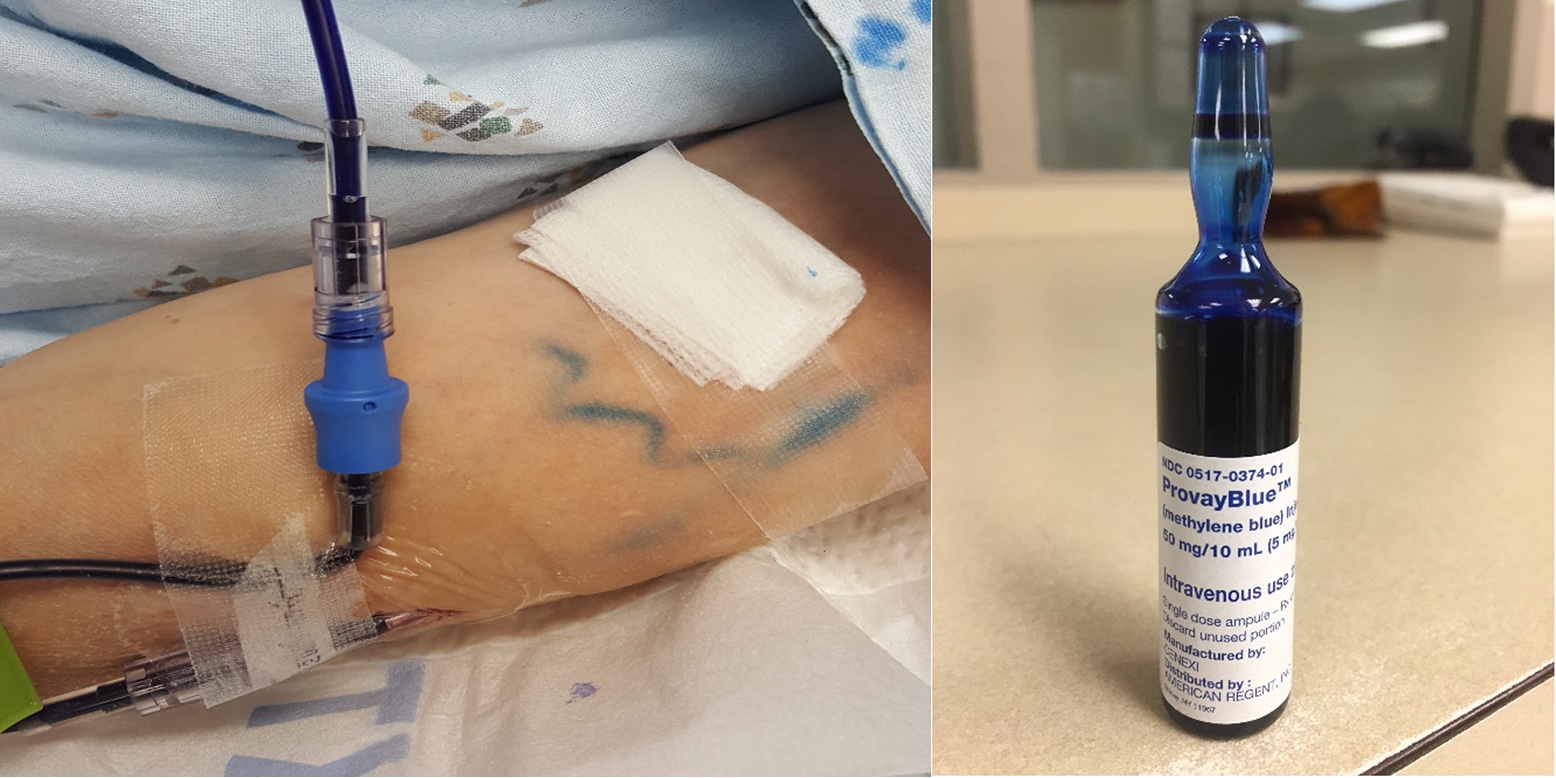
ACMT Toxicology Visual Pearl: Is the Silver Bullet for Refractory Vasoplegia Really Blue?
What is the proposed mechanism for the pictured antidote when used as a pressor for refractory vasoplegic shock? Alpha-1-adrenergic agonist Angiotensin II receptor antagonist Nitric oxide/cyclic GMP pathway inhibition Vasopressin-1 receptor agonist [+]

Parker Hambright, MD
Atrium Health Carolinas Medical Center
Charlotte, NC

ACMT Toxicology Visual Pearl: Swollen Lips
Photo used with permission The following physical finding would be most consistent with exposure to which of the following? Bee sting Household bleach Isopropyl alcohol Potassium hydroxide [+]

Maha M Farid MBBCh, MSc, PhD
Faculty of [+]

SAEM Clinical Images Series: Hey Doc, Can You Come Look at This Urine?
A 4-year-old male with no significant past medical history presents as a transfer from an outside hospital for suspected inhalation burn secondary to a house fire. The patient was home with his father and sibling when the apartment caught fire from a suspected flame in the kitchen. The patient was evacuated from the building by fire rescue after an unknown period of time. He was intubated at the outside hospital due to concern for inhalation injury. It is unknown if the patient sustained any trauma prior to extraction. Vitals: T 98.1°F; BP [+]