



How I Educate Series: Stephanie Lareau, MD
This week’s How I Educate post features Dr. Stephanie Lareau, the Wilderness Medicine Fellowship Director and Medical Director of Emergency Services at Virginia Tech Carilion Clinic. Dr. Lareau spends approximately 50% of her shifts with learners which include emergency medicine residents, off-service residents, and medical students. Her practice environment is split between an academic and community hospital. She spends 25% of her time at the academic level 1 trauma center that is home to an EM residency and medical school. The other 75% of her clinical shifts are at a 12-bed community ED which also has both resident and [+]
The Fall of FOAM
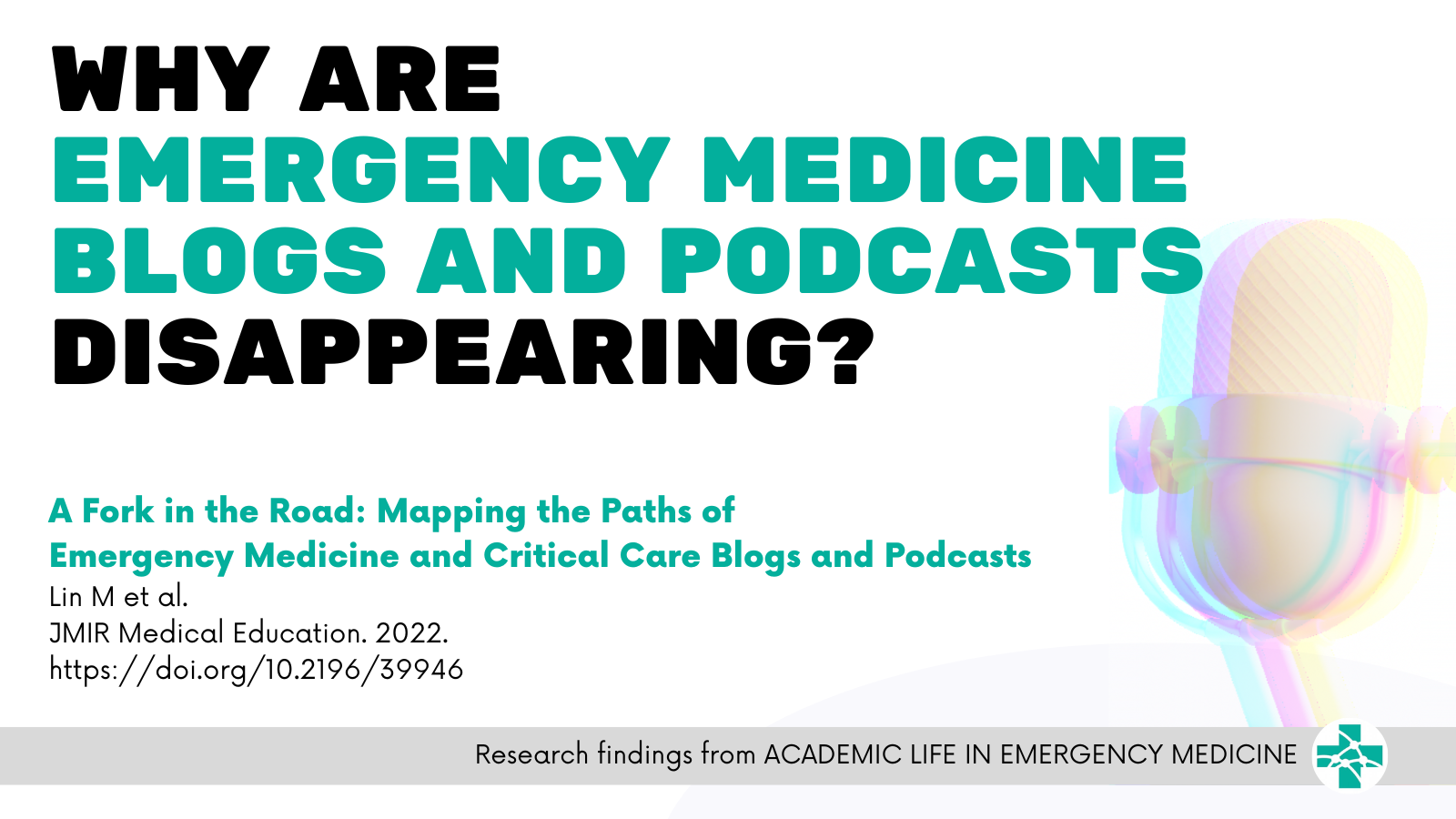
The landscape of emergency medicine and critical care (EM/CC) blogs and podcasts has changed dramatically over the past 20 years. The number of free, open-access EM/CC blogs and podcasts has plummeted. As reported by Lin and colleagues in JMIR Education (2022), these sites decreased in number from 183 in 2014 to just 109 this year– a drop of 40.1% [1]. via GIPHY This comes after a period of rapid growth of these educational resources in the late 2000's [2], with expectations that new sites would continue to come online. It is unclear when the combined number of EM/CC blogs [+]
How I Educate Series: Molly Estes, MD
This week's How I Educate post features Dr. Molly Estes, the Clerkship Director and Medical Education Fellowship Director at Loma Linda University. Dr. Estes spends approximately 80% of her shifts with learners which include emergency medicine residents, off-service residents, and medical students. She practices at a university hospital that is a level 1 trauma center, STEMI receiving center, and comprehensive stroke center. Below she shares with us her approach to teaching learners on shift. Name 3 words that describe a teaching shift with you. Humorous, practical, stretching. What delivery methods do use when teaching on shift? Mostly verbal discussion, [+]

PEM POCUS Series: Pediatric Focused Assessment with Sonography for Trauma (FAST)
Read this tutorial on the use of point of care ultrasonography (POCUS) for Pediatric Focused Assessment with Sonography for Trauma. Then test your skills on the ALiEMU course page to receive your PEM POCUS badge worth 2 hours of ALiEMU course credit. Take the ALiEMU PEM POCUS: Pediatric FAST Quiz Module Goals Summarize the indications and role of the FAST in the evaluation of injured children Describe the technique for performing the pediatric FAST Identify anatomical views and landmarks necessary for a complete pediatric FAST Accurately interpret each pediatric FAST anatomic view and corresponding landmarks [+]

IDEA Series: Ultrasound-capable, 3D-printed central line trainer
Problem: Central venous line (CVL) placement is a key skill for emergency medicine providers. Sites for central line placement include the internal jugular vein, subclavian vein, and femoral vein. Indications include, but are not limited to fluid resuscitation, medication administration, central venous pressure monitoring, pulmonary artery catheter introduction, and transvenous pacing wire placement. Procedural complications can include catheter-associated infection and arterial puncture. Success rates for CVL placement vary based on location and provider experience [1-3]. Point-of-Care Ultrasound (POCUS) increases both success rate and patient safety when used to guide CVL placement [4]. Figure 1. Setup for ultrasound-capable, 3D-printed [+]

How I Educate Series: John Casey, DO
This week’s How I Educate post features Dr. John Casey, the Program Director at OhioHealth Doctors Hospital in Columbus, OH. Dr. Casey spends 100% of his shifts with learners, including emergency medicine residents, off-service residents, medical students, nursing students, physician assistants/nurse practitioner students, and EMS students. He describes his practice environment as a busy community teaching hospital located on the city's edge, with a diverse patient population and many socioeconomic challenges. Below he shares with us his approach to teaching learners on shift. Name 3 words that describe a teaching shift with you. Use. The. Force. What learning theory [+]
PEM Pearls: An Approach to Infant Apnea
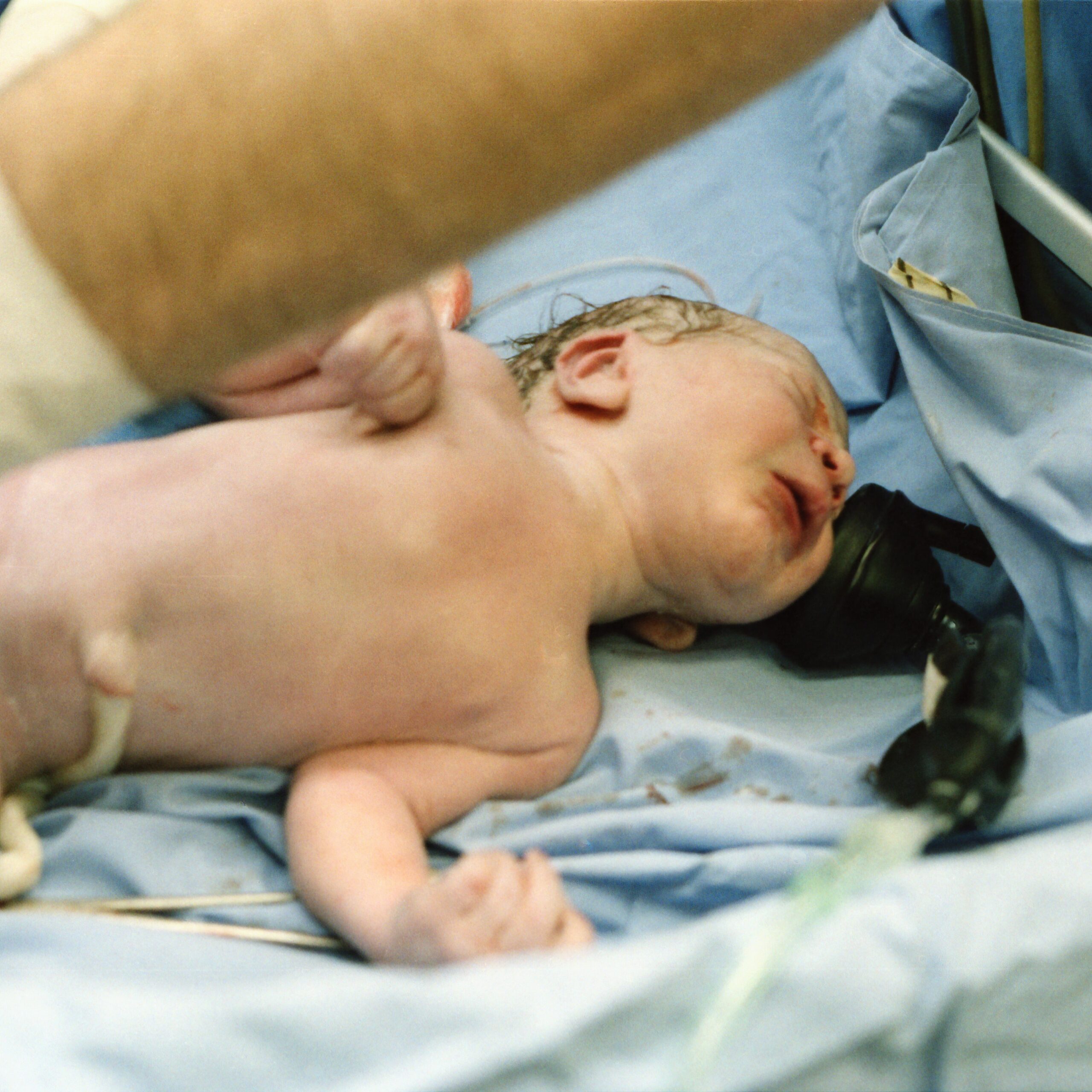
A 2-day-old female born at 41 weeks presents to the Emergency Department (ED) for an episode of apnea. Her parents noticed she stopped breathing, went limp, and turned blue. They are not sure for how long. The infant has had decreased urine output but is otherwise well without any other symptoms. Mom has an unspecified autoimmune condition and is taking hydroxychloroquine. The pregnancy and birth were largely uneventful. Mom was positive for Group B. Strep, had prolonged rupture of membranes, and was appropriately treated with antibiotics. Vitals: The infant’s vital signs in the ED are within normal limits except [+]

How I Educate Series: Alex Koyfman, MD
This week’s How I Educate post features Dr. Alex Koyfman, who serves as core faculty at UT Southwestern in Dallas, TX. Dr. Koyfman spends approximately 90% of his shifts with learners, including emergency medicine residents, off-service residents, medical students, and physician assistants. He works clinically at Parkland Memorial Hospital which is the busiest urban ED in the country. He also spends time in their independent urgent care and ED observation unit, both of which also have a mix of different learners. Below he shares with us his approach to teaching learners on shift. Name 4 words that describe a teaching [+]

SAEM Clinical Images Series: My Eye is Swollen
A 56-year-old male presented to the Emergency Department with a chief complaint of painful eyelid swelling and itching upon waking up. He reported no history of trauma or fever. He had one similar episode in the past which was self-limiting. The patient denied vision loss, diplopia, pain with extraocular movement, and ophthalmoplegia. Vitals: T 37.4°C; BP 129/73; HR 91; RR 16 General: A/O x 3; well nourished in NAD HEENT: Extraocular movements intact in both eyes. Pupils are equal, round, and reactive to light and accommodation bilaterally. Visual Acuity: OD 20/20, [+]

How I Educate Series: Andy Little, DO
This week’s How I Educate post features Dr. Andy Little, the Associate Program Director at AdventHealth Florida in Orlando. Dr. Little spends approximately 90% of his shifts with learners, including emergency medicine residents, off-service residents, and medical students. He describes his practice environment as a busy community EM residency program that sees over 100,000 patients per year. Below he shares with us his approach to teaching learners on shift. Name 3 words that describe a teaching shift with you. Malleable, understanding, fun. What delivery methods do use when teaching on shift? Post its and fill in the blanks. [+]