



How I Educate Series: Moises Gallegos, MD
This week's How I Educate post features Dr. Moises Gallegos, the Clerkship Director at Stanford University. Dr. Gallegos spends approximately 75% of his shifts with learners which include emergency medicine residents, off-service residents, medical students, and physician assistant students. He describes his practice environment as an academic Emergency Department at a medical research institution that serves as a Level 1 Trauma facility. Below he shares with us his approach to teaching learners on shift. Name 3 words that describe a teaching shift with you. Collaborative, Safe, Growth-oriented What delivery methods do use when teaching on shift? My teaching approaches [+]
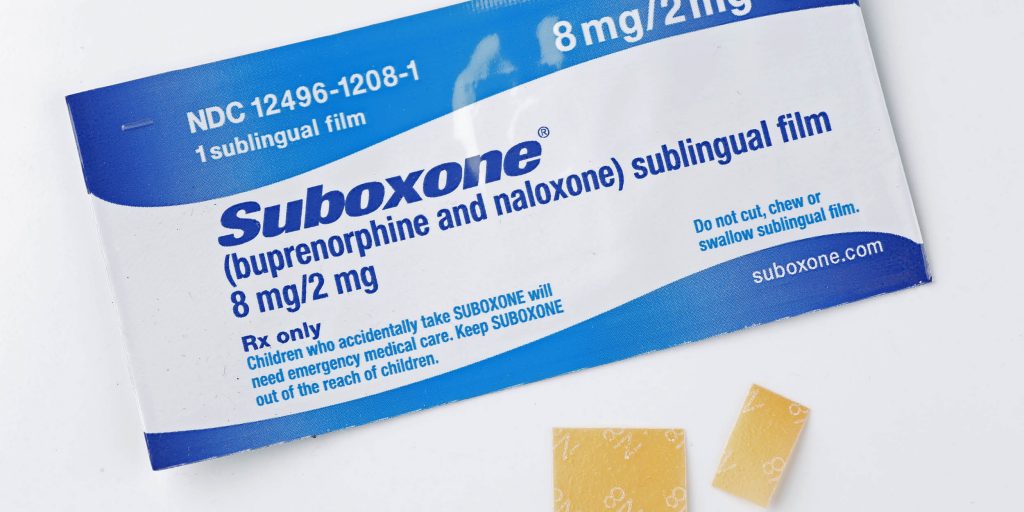
Suboxone and the Emergency Physician: Get Waivered Training
Clinical scenario: A 56-year-old male with a past medical history of opioid use disorder presents to the emergency department with acute on chronic right lower flank pain. The patient states the pain was exacerbated while shoveling snow over the weekend and worsens with movement. He feels nauseous but denies any chest pain, shortness of breath, vomiting, abdominal pain, or pain with urination. He denies any history of kidney stones, recent surgeries, and recent injuries. He does not smoke cigarettes, but does drink alcohol almost daily. His pain actually first started 2 months ago due to a work incident, for [+]

How I Educate Series: Fareen Zaver, MD
This week's How I Educate post features Dr. Fareen Zaver, the Deputy Head of Education in the Department of Emergency Medicine at the University of Calgary. Dr. Zaver spends approximately 30% of her shifts with learners at two tertiary care hospitals which include emergency medicine residents, off-service residents, and medical students. Below she shares with us her approach to teaching learners on shift. What is one thing (if nothing else) that you hope to instill in those you teach? Take the time to give proper and SIMPLE discharge instructions for every patient you see. No medical jargon, clear follow-up [+]
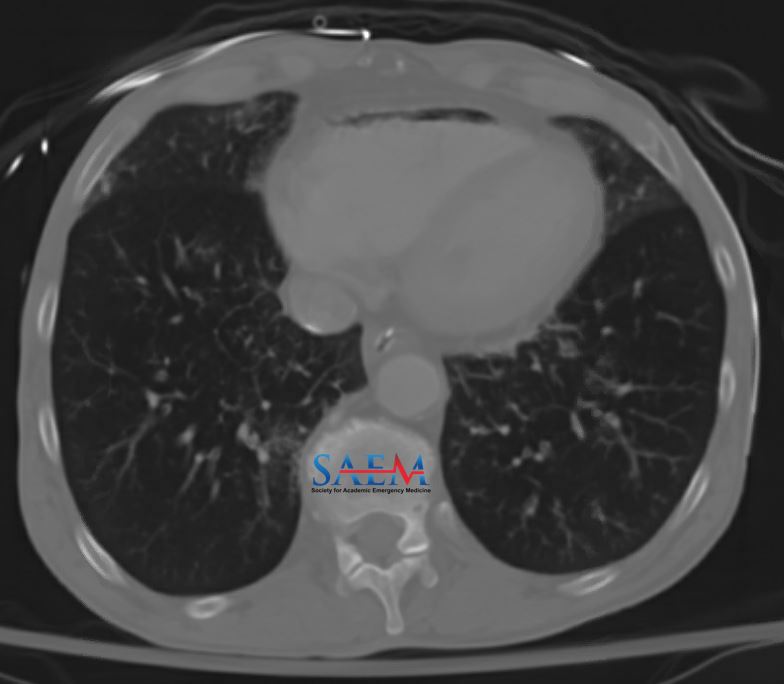
SAEM Clinical Images Series: Found Down
A 67-year-old caucasian male experiencing homelessness was “found down” in a parking lot. EMS reported that he had a GCS of 6 with a systolic blood pressure in the 80’s, finger stick glucose of 100, and no response to intranasal naloxone. He was intubated in the field and arrived to the emergency department unresponsive with a BP of 95/60, HR 125, T 38°C, and O2 Sat 100%. Hemodynamic stabilization was achieved with central venous access, and laboratory and imaging studies for the evaluation of altered mental status ensued. General: Disheveled male [+]

How I Educate Series: Michael Gisondi, MD
This week's How I Educate post features Dr. Michael Gisondi, the Vice Chair of Education at Stanford University. Dr. Gisondi spends approximately 80% of his shifts with learners which include emergency medicine residents, off-service residents, medical students, and physician assistant students. He describes his practice environment as a busy, high-acuity, university-based, suburban hospital with an annual ED census of 85,000. One-third of the patients speak a language other than English and one-third are without health insurance. Below he shares with us his approach to teaching learners on shift. Name 3 words that describe a teaching shift with you. Direct [+]

SAEM Clinical Images Series: A Backpacker’s Rash
A 33-year-old female presented with a progressively worsening rash for one week. The patient just finished hiking the John Muir Trail, a backpacking trip that encompassed three weeks and over 240 miles. On the last days of the trip, the patient started to develop a severely itchy, red rash on both feet. She tried using a topical anti-fungal, which seemed to make the rash worse. She now has swelling and difficulty walking. The rash does not involve the hands or other parts of the body. She denies fever, open wounds, nausea, vomiting, or systemic symptoms, [+]
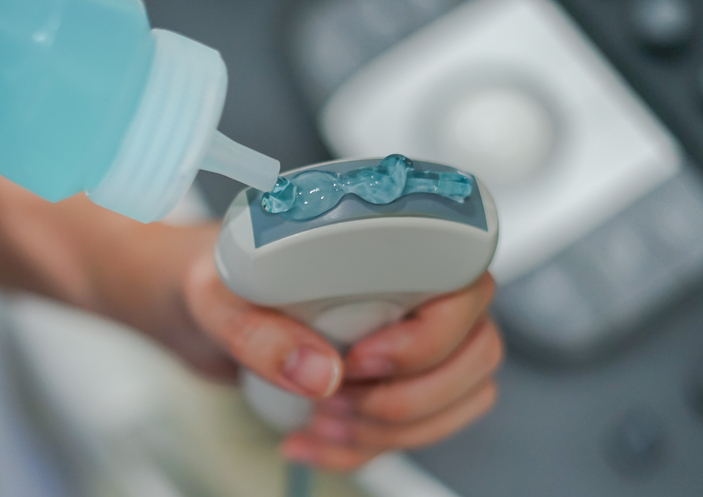
Trick of the Trade: Getting the last bit of ultrasound gel from the bottle
It’s a busy shift and you need to perform a bedside ultrasound on a patient’s belly to rule out cholecystitis, when you realize that the ultrasound gel bottle is nearly empty. No matter how many times you vigorously shake the bottle, it’s impossible to get the viscous gel out. In a pinch, you could use hand sanitizer, sterile lubricant, or even water as a substitute for gel. Or you could run to the storage room on the other side of the busy department to grab a new bottle. Or… Trick of the Trade Use centrifugal force to move the [+]

EM Match Advice 38: Our 2 Cents | The Revamped Standardized Letter of Evaluation (SLOE) is here
This is the 38th episode of EM Match Advice but the inaugural episode for new podcast series host, Dr. Sara Krzyzaniak (program director at Stanford EM residency program)! This quick podcast episode was recorded to coincide with the new, much-anticipated release of the Standardized Letter of Evaluation (SLOE 2.0). We address questions of why the changes, and what is different. In this podcast, Dr. Krzyzaniak and Dr. Michelle Lin speak with 2 key faculty who helped lead the multi-year development of this key piece of the residency application puzzle: Dr. Sharon Bord (Johns Hopkins EM Clerkship Director, 2022-23 President of [+]
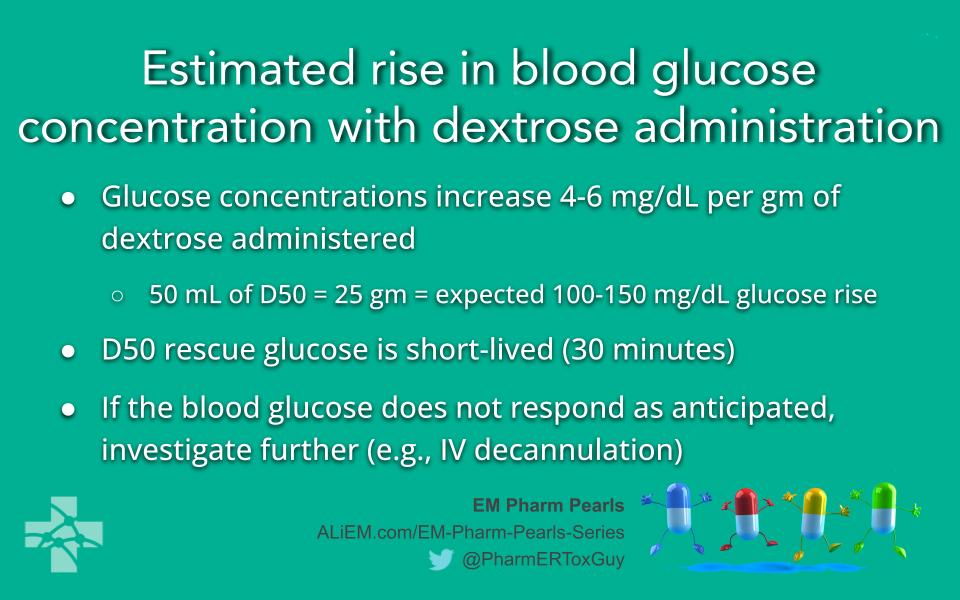
EM Pharm Pearls: Estimated rise in blood glucose concentration with dextrose administration
A common question is how much should we expect the blood glucose concentration to increase after dextrose 50% (D50) administration. Fortunately, there is an answer from 3 studies. Balentine JR, Gaeta TJ, Kessler D, Bagiella E, Lee T. Effect of 50 milliliters of 50% dextrose in water administration on the blood sugar of euglycemic volunteers. Acad Emerg Med. 1998;5(7):691-694. doi:10.1111/j.1553-2712.1998.tb02487.x PMID 9678393 Population: Healthy volunteers in the ED Intervention: 25 gm (1 ampule of D50) Result: Mean increase of 162 mg/dL at 5 min. Glucose concentrations returned to baseline by 30 minutes. Murthy MS, Duby JJ, Parker PL, Durbin-Johnson BP, [+]

Trick of the Trade: A “Fiberbougie” through a supraglottic airway device (King tube)
Resuscitation before intubation is a critical construct in modern emergency medicine. The prevention of peri-intubation arrest by correcting pre-intubation hypoxia, hypotension, and acidosis is often easier said than done. Worse yet, the intubation process itself, especially if difficult, can worsen hypoxia and hypotension which is often unrecoverable [1, 2] Supraglottic devices, such as a King Airway or laryngeal mask airway, can be placed quickly, and they effectively oxygenate and ventilate patients with a high degree of success [3]. Unfortunately, when the King (or similar device) is exchanged for an endotracheal tube, success is far from guaranteed. Ideally the King could [+]