



SAEM Clinical Images Series: Unilateral Facial Pain
A 78-year-old male with a past medical history of Lewy body dementia, hypertension on bisoprolol, hypothyroidism, COPD, chronic lower extremity edema on furosemide, and overactive bladder on oxybutynin presented to the emergency department for evaluation of three days of progressively worsening left-sided neck and facial swelling. Associated symptoms included poor oral intake, a nonproductive cough, and one week of sore throat. The black arrow represents the left parotid gland. Vitals: Afebrile; normal room air saturation HEENT: Firm, tender, warm and erythematous swelling over the left mandibular ramus that extended to the cheek, left neck, and spread [+]

Trick of the Trade: Winging It with External Jugular Cannulation
Sankoff J, et al. WJEM (2008) Imagine yourself caring for a patient that needs urgent vascular access, but several attempts at peripheral intravenous (IV) cannulation have been unsuccessful. You aren’t quite at the point where emergent intraosseous or central venous access is indicated. Maybe those options aren’t even available where you’re working. From across the room, though, you can see a very prominent external jugular (EJ) vein. Sadly, you remember the last EJ line you placed falling out almost immediately. Patients with challenging peripheral intravenous access in the extremities may require and benefit from cannulation of the [+]

How I Educate Series: Geoff Comp, DO
This week’s How I Educate post features Dr. Geoff Comp, the Associate Program Director at Creighton University School of Medicine/Valleywise Health Medical Center in Phoenix, Arizona. Dr. Comp spends all of his shifts with learners, including emergency medicine residents, off-service residents, and medical students. He describes his practice environment as a county hospital with a Level 1 Trauma designation that has both an adult and pediatric emergency room. Below he shares with us his approach to teaching learners on shift. Name 3 words that describe a teaching shift with you. Innovative, evidenced-based, fun What delivery methods do use when [+]

ALiEM AIR Series | Neurology 2022 Module
Welcome to the AIR Neurology Module! After carefully reviewing all relevant posts from the top 50 sites of the Social Media Index, the ALiEM AIR Team is proud to present the highest quality online content related to neurological emergencies in the Emergency Department. 5 blog posts met our standard of online excellence and were curated and approved for residency training by the AIR Series Board. We identified 2 AIR and 3 Honorable Mentions. We recommend programs give 3 hours (about 30 minutes per article) of III credit for this module. AIR Stamp of Approval and Honorable Mentions In an effort to truly [+]
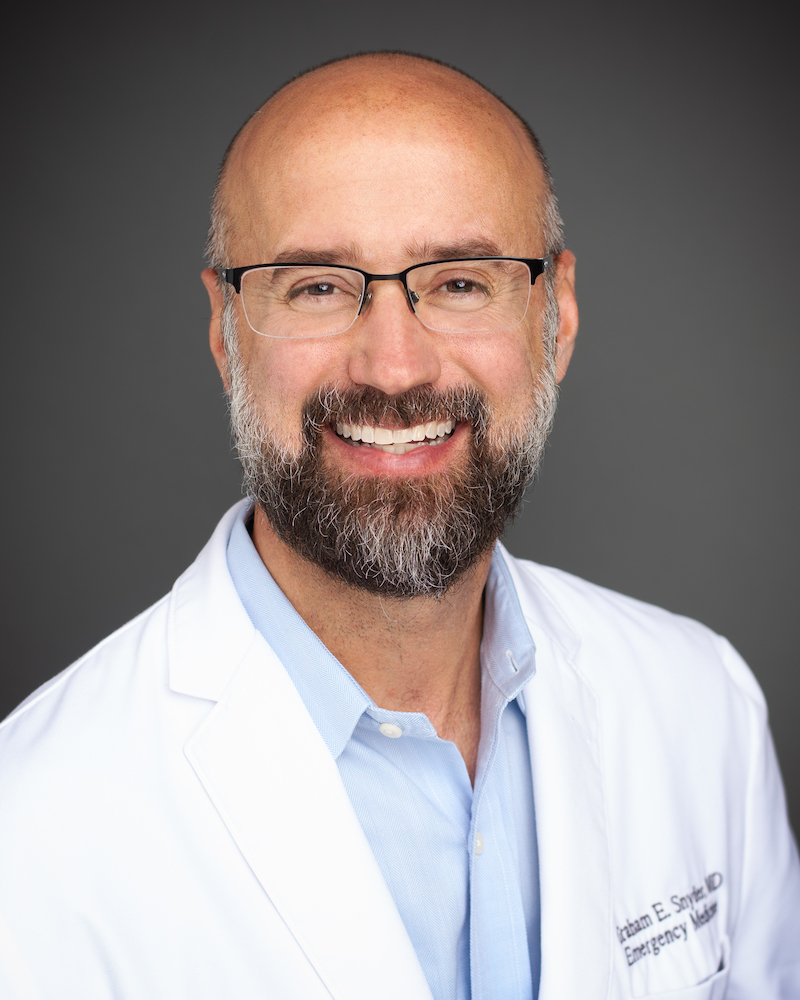
How I Educate: Graham Snyder, MD
This week’s How I Educate post features Dr. Graham Snyder, the Associate Program Director at the University of North Carolina and Director of Education for WakeMed Health and Hospitals. Dr. Snyder spends approximately 90% of his shifts with learners which include emergency medicine residents, off-service residents, and medical students. He describes his practice environment as a Level 1 trauma center that sees 125,000 patients annually. Below he shares with us his approach to teaching learners on shift. Name 3 words that describe a teaching shift with you. Practically Academic, Comradery, Rejuvenating What delivery methods do use when teaching on [+]

SAEM Clinical Images Series: Breast Swelling
A female in her 50s with a past medical history of coronary artery disease, pacemaker placement, hypertension, and ESRD presented to the emergency department with the chief complaint of missed dialysis, breast engorgement, and an increase in vascularity in her chest and abdomen. The patient reported an increase in breast swelling and increased vascularity in her belly over the past three months. Additionally, she woke up short of breath on the morning of presentation and reported dyspnea at rest. She denied chest pain, diaphoresis, breast pain, fever, rash, trauma to the breasts, or drainage. [+]

ALiEM AIR Series | CVA 2022 Module
Welcome to the AIR CVA Module! After carefully reviewing all relevant posts from the top 50 sites of the Social Media Index, the ALiEM AIR Team is proud to present the highest quality online content related to CVA emergencies in the Emergency Department. 7 blog posts met our standard of online excellence and were curated and approved for residency training by the AIR Series Board. We identified 2 AIR and 5 Honorable Mentions. We recommend programs give 4 hours (about 30 minutes per article) of III credit for this module. AIR Stamp of Approval and Honorable Mentions In an effort to [+]

How I Educate Series: Guy Carmelli, MD
This week's How I Educate post features Dr. Guy Carmelli, who is an Assistant Professor at UMass Medical School and co-leader of their EM Sub-I rotation. Dr. Carmelli spends approximately 80% of his shifts with learners which include emergency medicine residents, off-service residents, and medical students. He describes his practice environment as a tertiary care academic center with trauma, stroke, and cardiac cath capabilities. Below he shares with us his approach to teaching learners on shift. Name 3 words that describe a teaching shift with you. Enthusiasm, excitement, and engagement What delivery methods do use when teaching on shift? [+]

SAEM Clinical Images Series: Localized Weakness
A 69-year-old Caucasian female with a past medical history of seizures, cerebral vascular accident, and Parkinson’s disease presents by EMS for evaluation of a 30-minute episode of left upper and lower extremity weakness and left facial drooping. The patient complains of a right-sided “migraine-type” headache similar to that experienced with her prior stroke. Vitals: Temp 36.5°C; BP 186/74; P 74; RR 18; O2 Sat 95% General: Alert; no acute distress Skin: Warm; dry; dark red discoloration localized to the left side of face, neck, chest, and upper extremity HEENT: Normocephalic; left-sided facial [+]

How I Educate Series: Moises Gallegos, MD
This week's How I Educate post features Dr. Moises Gallegos, the Clerkship Director at Stanford University. Dr. Gallegos spends approximately 75% of his shifts with learners which include emergency medicine residents, off-service residents, medical students, and physician assistant students. He describes his practice environment as an academic Emergency Department at a medical research institution that serves as a Level 1 Trauma facility. Below he shares with us his approach to teaching learners on shift. Name 3 words that describe a teaching shift with you. Collaborative, Safe, Growth-oriented What delivery methods do use when teaching on shift? My teaching approaches [+]