


AIR Series: Immunology 2017
Welcome to the Immunology Module! After carefully reviewing all relevant posts from the top 50 sites of the Social Media Index, the ALiEM AIR Team is proud to present the highest quality online immunology content. Below we have listed our selection of the 4 highest quality blog posts within the past 12 months (as of July 2017) related to immunology emergencies. These are curated and approved for residency training by the AIR Series Board. We have identified 0 AIRs and 4 Honorable Mentions. We recommend programs give 1 hour (about 15 minutes per article) of III credit for this module. [+]
I am Dr. Wendy Lau, Meditation Teacher: How I Stay Healthy in EM
Dr. Wendy Lau is an emergency physician working in New York and Maine. When she’s not doing locums in the ED, Dr. Lau can be found teaching her other passion – meditation. Dr. Lau’s outlook on tackling new activities and challenges is inspiring. If you ever wanted to know more about meditation, keep reading! Here is how she stays healthy in EM! [+]

EM Match Advice: Northern California Residency Programs
The EM Residency Match Advice Series is back with its latest installment! For the first time, our team puts a regional flavor on an episode as we take a deep dive into the Northern California residency programs in Emergency Medicine (EM). These programs infuse multiple opportunities for regional collaboration into the residency experience. Activities include an annual incoming chief resident forum, Nor-Cal Sim Wars, wellness outings, and more! Hosted by Dr. Michael Gisondi, listen to the podcast to learn more about each of the programs and this special regional collaboration. Podcast Northern California EM Residency Director Panel Dr. David Barnes: University [+]
ALiEMU Capsules Module 9: Hospital Acquired Pneumonia
We are proud to present CAPSULES Module 9: Hospital Acquired Pneumonia (HAP), now published on ALiEMU. Here is a summary of the key points from a stellar module by Drs. Jamie Rosini and Matt Stanton. When you’re finished, head over to the Capsules page for even more practical pharmacology for the EM provider. [+]


MEdIC Series: The Case of the Discriminatory Patient
Welcome to season 5, episode 1 of the ALiEM Medical Education in Cases (MEdIC) series! Our team (Drs. Tamara McColl, Teresa Chan, John Eicken, Sarah Luckett-Gatopoulos, Eve Purdy, Alkarim Velji, and Brent Thoma) is pleased to welcome you to our online community of practice where we discuss the practice of academic medicine! This month, we present a case of a junior resident faced with discrimination while treating a patient who refuses to be seen by a “non-white” or “non-Canadian” physician. [+]

Atraumatic Low Back Pain: ACEP E-QUAL Network Podcast
Atraumatic low back pain is a common complaint in the ED. For most patients, a thorough history and physical exam is sufficient to exonerate causes that threaten life or neurological function. For a small subset, however, MRI may be required. ALiEM has partnered with the ACEP E-QUAL Network to promote clinical practice improvements through a series of podcasts. In our first installment, we focus on this common presentation. We review highlights from an interview with Dr. Jonathan Edlow, Vice Chair of Emergency Medicine at Beth Israel Deaconess, about the presentation and evaluation of low back pain. Afterward be sure to check [+]
Pronouncing ALiEM
Saying "Academic Life in Emergency Medicine" is a mouthful. Over the years there has been great controversy on our team about how to pronounce the abbreviated name "ALiEM." Is it a long A like cake? Or is it a short A like apple? People were pronouncing it all sorts of creative ways. In the hopes of making our identity clear, we had heated discussions about this on the team. After much debate (and punitive push-ups), we resolved to pronounce it with a long A - like "alien". This applies to all our ALiEM projects and initiatives such as ALiEMU.

IDEA Series: Teaching ECGs through a Written Competition
The Problem ECG interpretation is a cornerstone of Emergency Medicine (EM). It requires both rapid identification of life-threatening abnormalities and fastidious attention to detail. This pairing can intimidate some junior learners, and identifying an effective and engaging method for teaching ECGs is important to resident education. We report a teaching method that addresses this problem with an annual residency ECG competition. [+]

Sumit Patel, MD
SplintER Series: Splint Principles 101
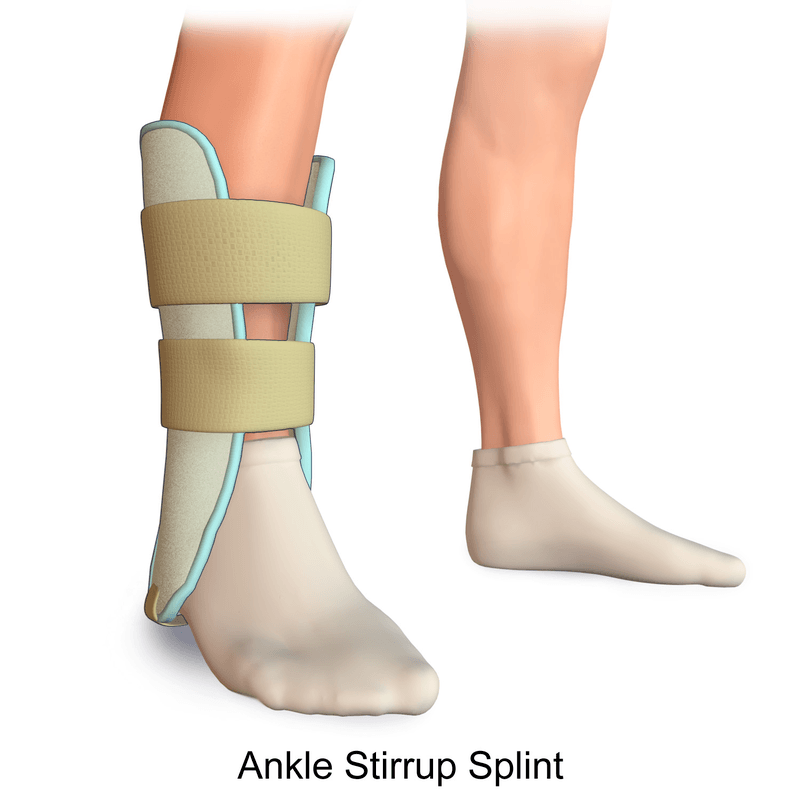
Why do we splint? Splinting is one of the fundamental procedures of the Emergency Department (ED). How well-versed are we with it? Why do we even splint? By the end of this post, you will know the reason why we splint, when to splint, and just as importantly — when NOT to splint in the ED. [+]

SplintER: A New on Orthopedic Injuries and Splinting
The purpose of the SplintER series is to teach the fundamentals and introduce advanced concepts of splinting to the Emergency Medicine (EM) professional. Humans have been splinting their injuries since 1300 B.C.1 Although the fundamentals have not changed, splint selection and application require some thoughtful consideration. A 2017 prospective, observational study in the Journal of Pediatric Orthopaedics demonstrated that more than 90% of splints applied in the Emergency Department were inappropriate (30% applied by EM attendings), as evaluated by orthopaedic surgeons.2 While that number may not be representative in your institution, it certainly highlights the inadequacies that many of us feel [+]