


I am Dr. Anne Zink, Medical Director: How I Stay Healthy in EM
Dr. Anne Zink is an emergency physician practicing up north in Alaska! When she is not on the running trail, she can be found enjoying the breath taking views with her family. Dr. Zink has truly embraced her wellness and found a way to make it part of her day. Here’s how she stays healthy in EM! [+]
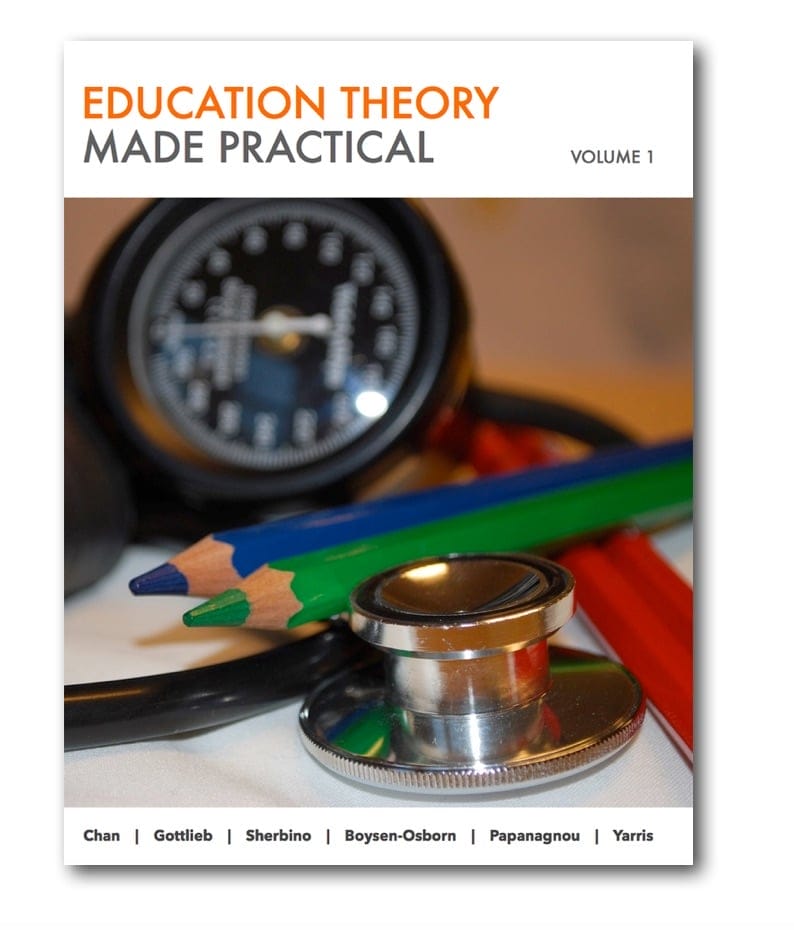
Education Theory Made Practical (Volume 1): An ALiEM Faculty Incubator eBook Project
The ALiEM Team is happy to announce yet another eBook publication: the first volume in the Education Theory Made Practical series. This book was a labor of love written by the inaugural 2016-17 Faculty Incubator class. We are so very proud of all our Faculty Incubator alumni who made this happen. Their hard work has been compiled in this FREE, peer-reviewed eBook. We sincerely feel that it will be useful for all the educators out there, wrestling with the issue of integrating theory into practice. [+]

Welcome our ALiEM Deputy Editor in Chief: Dr. Derek Monette
It is with distinct pleasure that we announce our newest ALiEM team member, Dr. Derek Monette. Derek is a senior EM resident at the Harvard Affiliated Emergency Medicine Residency program, newsletter editor for the 2017-18 ALiEM Chief Resident Incubator, and made his EM Match Advice debut talking about changing specialties in EM. Today we announce that he has accepted the newest role as the 2017-18 ALiEM Deputy Editor in Chief (EIC). [+]
Team-Focused CPR: Bringing Pre-hospital Success to the ED
High-quality chest compressions and early defibrillation are the cornerstones of effective cardiac arrest care.1 When implemented correctly these two interventions enhance patient outcomes and improve overall survival.2 However, despite simplified advanced cardiac life support (ACLS) algorithms and extensive training of providers, cardiac arrest scenarios in the emergency department (ED) are still high-stress and mortality rates remain high.3,4 [+]

Blake Johnson, MD
Department of [+]
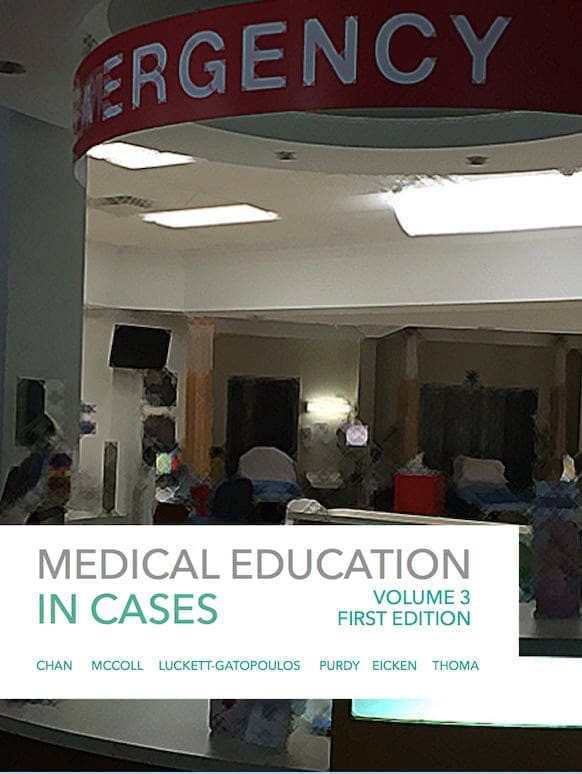
HOT OFF THE PRESS | ALiEM MEdIC Series Book, Volume 3
It has been 4 years since we launched the ALiEM Medical Education in Cases (MEdIC) Series, and we are very proud to have had 4 years of excellent engagement and participation from the FOAM audience with our interactive monthly discussions. This season has been a whirlwind. Together, we have explored challenging patient, learner, physician wellness, ethical, and assessment conundrums. We want to thank all of those who have written cases, acted as experts, and commented on the cases. We are thrilled to announce that a compilation of the third MEdIC season (last year’s cases) is available for free download. [+]

Finish Strong: Top 10 Things to Master Before Graduating EM Residency
If you are a senior resident, this post is for you! Right now you’re juggling an array of responsibilities. From adjusting to your new leadership roles in the Department to applying to jobs and fellowships, it’s easy to let that pesky procedure you have always struggled with or confusing ECG finding slip by you. To help you solidify your skills this year, we have come up with a list of things to master before the end of the academic year. Take a look, and tailor this list to your background and training. Come up with a list of your own, [+]

Building a Cohesive Residency Program: Top 10 Strategies to Engage Residents
Welcome to the beginning of the most exciting and terrifying time in your residency — the start to a new year! To help start the year off right a group of chief residents from across the country, through the ALiEM Chief Resident Incubator, have gotten together and compiled a list of ways for chief residents (and other resident leaders) to engage residents early to hopefully make this the best year yet of residency. [+]
ALiEM’s Greatest MEdIC Hits for New Academic Faculty: A Curated Collection of 8 Cases
Ok, while we congratulated the senior residents in our last piece, but let’s be honest, YOU (the junior faculty members) are the ones who TRULY should be congratulated. You’ve survived residency, and now you’re the boss! You’re probably sighing with relief at the moment. But eventually, you’ll ask yourself: “Now, what’s next?” Well, yet again, the ALiEM MEdIC team has some resources for you! [+]
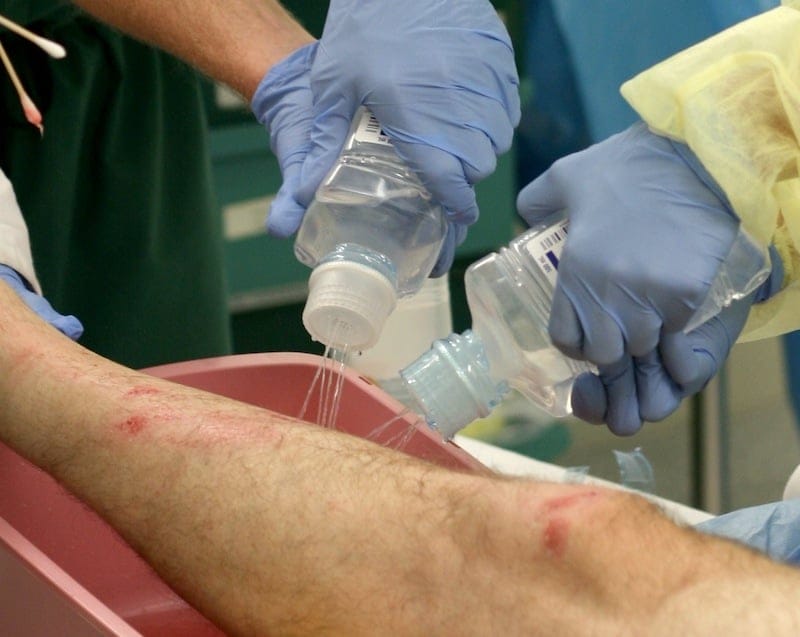
Trick of the Trade: DIY Squirt Bottle Wound Irrigation
Wound irrigation is arguably one of the most important steps in closing a laceration, because all lacerations should be considered to be contaminated. Irrigation is considered the foundation in preventing infection. A common way to cleanse a wound is to irrigate a wound using a 20 cc syringe, angiocatheter, and splash protector. To achieve 500 cc of irrigation, however, it would require 25 syringe refills! Is there a better, cost-effective alternative? [+]
ALiEM Book Club: And The Band Played On
With consistent, adequate treatment, people with HIV have a life expectancy that is nearly normal. However, because HIV often affects the most vulnerable people in our society, getting that consistent treatment remains a real and important challenge. 30 years after And the Band Played On was first published, HIV/AIDS is now often viewed as a chronic illness, rather than the terminal diagnosis it was in the 1980s. For those born after the first AIDS deaths occurred in the US, it can be hard to imagine the fear, denial, stigma, and confusion that accompanied the early AIDS epidemic. Randy Shilts’ And [+]