


I am Dr. James Adams, Chief Medical Officer: How I Stay Healthy in EM
Dr. James Adams is an emergency physician from Chicago. When he is not busy with his clinical and academic responsibilities, Dr. Adams can be found running along the Chicago lakefront. He uses a positive outlook and good vibes to keep himself and those around him well. Here’s how he stays healthy in EM! [+]

Reflections and Summaries from the 2017 Resident Wellness Consensus Summit
The first ever Resident Wellness Consensus Summit (RWCS) was held this year as a pre-day to Essentials of EM on May 15, 2017 in Las Vegas. This was an amazing opportunity for residents across North America to come together and discuss the important topic of resident wellness. We even had some participants from Fiji! Many of the attendees participated in pre-work for the RWCS through their involvement in the Wellness Think Tank, which is our virtual community of practice that involves residents from across the U.S. and Canada. In addition to pre-work for the RWCS, the members participated in online [+]
EM Fellowship Match Advice: Pediatric Emergency Medicine Fellowship
The second season of our EM Fellowship Match Advice Series launches with this insightful discussion with Pediatric Emergency Medicine (PEM) Fellowship Directors from across the United States talking about the nuances of applying into this ACGME fellowship, particularly through the lens of EM-trained residents. Hosted by Dr. Michael Gisondi, listen to the podcast version for details. Podcast PEM Fellowship Director Panelists Dr. Maybelle Kou: Altieri PEM Fellowship at Inova Fairfax Children’s Hospital Dr. Paul Ishimine: University of California, San Diego Rady Children’s Hospital Dr. Peter Auerbach: Oregon Health Sciences University Randall Children’s Hospital Read more on the PEMNetwork blog post [+]

Little Patients, Big Medicine Podcast: Lactate in Pediatric Sepsis
The first recording from Little Patients, Big Medicine: the Pediatric Emergency Medicine (PEM) Podcast. This is an exciting interview with Dr. Halden Scott, a PEM physician at Children’s Hospital Colorado, about the use of lactate measurement in pediatric sepsis. Dr. Scott is one of the premier pediatric sepsis researchers, with a specific focus on the use of lactate measurement in the ED. We talk about the Sepsis-3 definitions and whether pediatrics will eventually follow them, Dr. Scott’s previous work on lactate use in the pediatric ED, and her new article published in March of 2017 on the association between elevated [+]
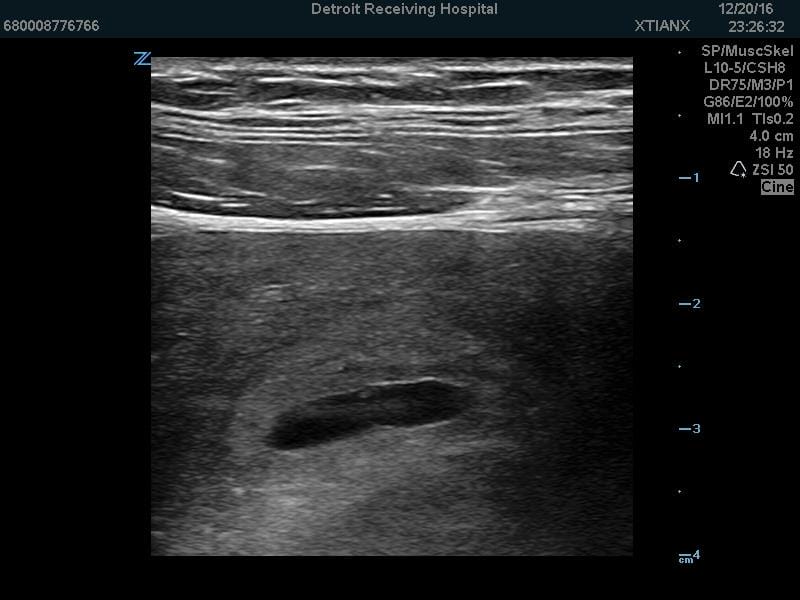
Trick: Linear Ultrasound Transducers in Intrauterine Pregnancy Evaluation
The volume of women presenting to the emergency department (ED) with newly diagnosed first-trimester pregnancies and suspected ectopic pregnancies sometimes seems like an infinitely growing number. As ED physicians, proper identification of an intrauterine pregnancy (IUP) in these patients is of paramount importance and the initial imaging test of choice for many has become bedside point-of-care ultrasound (POCUS). [+]
EM Match Advice: The Standardized Video Interview
It is not very often that the ERAS application process for residency positions changes from year to year. In 2018, there is going to be a new component added - the Standardized Video Interview (SVI) launched by the Association of American Medical Colleges (AAMC). All EM applicants in the 2018 application season are required to complete this interview during June 6 - July 31, 2017. Because it is such a new process, we invited key various stakeholders to the virtual table. The discussion was hosted by Drs. Michael Gisondi (Stanford) and Michelle Lin (UCSF/ALiEM). Podcast Panelists Mrs. Renee Overton: Senior Director, Residency & Fellowship [+]

MEdIC Series: The Case of the Failure to Fail
Welcome to season 4, episode 8 of the ALiEM Medical Education in Cases (MEdIC) series! Our team (Drs. Tamara McColl, Teresa Chan, John Eicken, Sarah Luckett-Gatopoulos, Eve Purdy, Alkarim Velji and Brent Thoma) is pleased to welcome you to our online community of practice where we discuss the practice of academic medicine! This month, we present a case of an attending emergency physician who struggles with the ingrained “failure to fail” culture amongst his colleagues when faced with a resident who has significantly underperformed throughout his emergency medicine rotation. [+]
IDEA Series: Use of Online Interactive Platform to Incorporate Board Review into Conference
The Problem Every year, emergency medicine (EM) residents take the In-Training Exam (ITE) to test their medical knowledge and predict the likelihood of passing their official written board examination upon completion of residency training. The Accreditation Council for Graduate Medical Education (ACGME) requires all EM residencies to include weekly didactics in order to build the knowledge base of residents and facilitate preparation for the written and oral American Board of Emergency Medicine (ABEM) or American Osteopathic Board of Emergency Medicine (AOBEM) examinations. These didactics, however, often consists of traditional lecture formats. In contrast, according to the testing effect, we know that taking a [+]

Beyond the Abstract | Shared Decision-Making in the ED: 3 Factors That Matter
Shared decision-making seems to be more popular than Snapchat these days. Everyone in emergency medicine is talking about it… but who is actually doing it properly? In our recent concepts piece published in Annals of Emergency Medicine, we describe 3 key factors that must be present for shared decision-making (SDM) to be appropriate in the emergency department (ED). [+]

Traumatic Bleeding in Anticoagulated Patients: 5 Other Sources Beyond the Brain
When a patient is started on anticoagulant therapy, the purpose is to prevent clot formation or propagation. Anticoagulants can improve morbidity and mortality by maintaining cardiac stent patency, reducing the propagation of pulmonary emboli, or preventing formation of intra-cardiac thrombi.1,2 Unfortunately even after minor trauma, these medications can cause major problems. When a patient on clopidogrel is in a motor vehicle collision (MVC) or an elderly patient on warfarin falls out of their bed, the once life-improving therapy becomes potentially life-threatening. It is important for emergency care providers to maintain a high index of suspicion for life-threatening bleeds in all patients on [+]