MIA 2012: Than M et al. 2-Hour accelerated diagnostic protocol to assess patients with chest pain symptoms using contemporary troponins as the only biomarker: the ADAPT trial. J Am Coll Cardiol. 2012 Jun 5;59(23):2091-8.
Bottom Line 1
For ED patients presenting with undifferentiated chest pain, a TIMI score of 0, together with a non-ischemic EKG, and a negative cTnI at 0 hours and 2 hours, can identify patients at very low-risk for having a major adverse cardiac event (MACE) in 30 days.
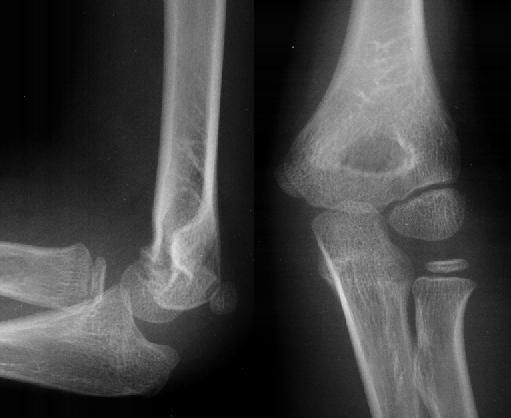
Trick of the Trade: Ossification centers of the elbow

Fracture or a normal ossification center?
This is a common question heard when viewing an xray of a pediatric elbow. How do you remember the timing of normal ossification centers? FYI, the xray images above are normal and have no fractures.
Most Interesting Articles of 2012
The following compilation of the Most Interesting Articles in 2012 is the work of the EM residents at the Jacobi/Montefiore Emergency Medicine Residency Program.
INTRODUCTION
Standing at the intersection of patient care and academics, we Emergency Medicine residents have overwhelming expectations. We’re the ones dropping NG tubes, popping abscesses, and pushing stretchers, while also expected to remain up to date with current research and trends in our field. With all these lofty expectations, not to mention the ever-present requirement of sleep and caloric intake, how does a resident pick which papers to read in this sea of literature?
Twitter is the digital watercooler in Medicine
I just don’t have time to join Twitter. Are you serious, Twitter?
Being in the minority of medical providers who use Twitter for work, these are common responses I hear. I would make the counter argument that it has given me opportunities to learn, collaborate, and share on a much more efficient level.
Patwari Academy videos: ACLS and post-resuscitation care

This is the last installment of Dr. Rahul Patwari’s digital whiteboard video talks on ACLS, specifically focusing on post-resuscitation care and therapeutic hypothermia.
- Parts 1-3 (ACLS and airway)
- Parts 4-6 (ACLS: cardiac arrest)
- Parts 7-10 (ACLS: bradycardias and tachycardias)
PV card: Metacarpal fractures
Patients with rotation deformities of the fingers from a metacarpal fracture should be reduced. All fingers should normally point towards the patient’s scaphoid bone.
Metacarpal (MC) fractures are common injuries, which often spark discussions about whether they should be reduced in the ED urgently.
- What are the criteria for acceptable degrees of angulation? Are these criteria different for the MC neck versus shaft?
- Which fractures tend to be unstable and thus require eventual operative repair?
- How should I splint the injury?
Here’s a quick-reference card to help guide your management decisions. These recommendations may vary slightly based on what references you use. You may need to tailor your decisions based on your regional practices.
PV Card: Metacarpal Fractures
Go to ALiEM (PV) Cards for more resources.
Thanks to Dr. Nicole Strauss at the UCSF-SFGH Orthopaedic Trauma Institute and my go-to hand expert for her input.