About Michelle Lin, MD

ALiEM Founder and CEO
Professor and Digital Innovation Lab Director
Department of Emergency Medicine
University of California, San Francisco

PV card: Metacarpal fractures

metacarpal fracture rotationa angulationa=Patients with rotation deformities of the fingers from a metacarpal fracture should be reduced. All fingers should normally point towards the patient’s scaphoid bone.
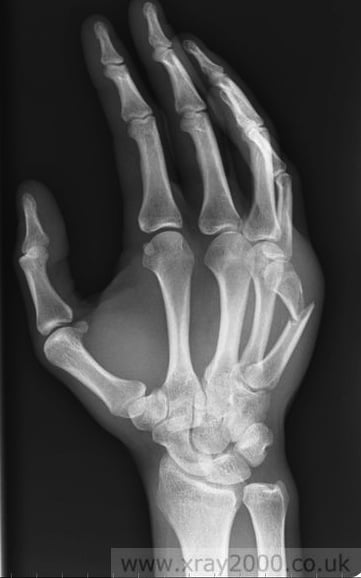
Metacarpal (MC) fractures are common injuries, which often spark discussions about whether they should be reduced in the ED urgently.

  • What are the criteria for acceptable degrees of angulation? Are these criteria different for the MC neck versus shaft?
  • Which fractures tend to be unstable and thus require eventual operative repair?
  • How should I splint the injury?

Here’s a quick-reference card to help guide your management decisions. These recommendations may vary slightly based on what references you use. You may need to tailor your decisions based on your regional practices.

PV Card: Metacarpal Fractures


Go to ALiEM (PV) Cards for more resources.


Thanks to Dr. Nicole Strauss at the UCSF-SFGH Orthopaedic Trauma Institute and my go-to hand expert for her input.

By |2021-10-08T09:33:03-07:00Dec 13, 2012|ALiEM Cards, Orthopedic|

Poll: How would manage a metacarpal fracture in the ED?

Metacarpal5fracture

I am in the process of creating a PV card on metacarpal fractures, divided into anatomical areas (base, shaft, neck, head), and am realizing that the EM and orthopedic literature don’t quite agree. Actually they are quite vague on whether reductions should occur in the ED vs orthopedics clinic in the next few days.

  • Do you need to close-reduce all angulated fractures in the ED, which are outside of “acceptable” angulations?
  • What exactly are “acceptable” angulations? Some sources say that angulations of 10, 20, 30, and 40 degrees are acceptable for MC neck fractures and only 10, 10, 20, and 20 degrees are acceptable for MC shaft fractures. These numbers, though, vary from reference to reference.

(more…)

By |2016-11-11T18:43:07-08:00Dec 5, 2012|Orthopedic|

Patwari Academy videos: ACLS (parts 4-6)

Below are the next 3 video installments of Dr. Rahul Patwari’s digital whiteboard talks on ACLS. These videos cover:

  • Cardiac arrest (Vfib and Vtach)
  • Cardiac arrest (More of Vfib and Vtach)
  • Cardiac arrest (Asystole and PEA)

I love that each video is less than 15 minutes long. Also, even if you aren’t a medical student, these are great refreshers. For instance, don’t forget that atropine is no longer on the 2010 ACLS algorithm for asystole.

(more…)

By |2019-01-28T22:10:29-08:00Dec 2, 2012|Patwari Videos|
Go to Top