Tricks of the Trade: Ultrasound workshop setup

Have you ever been to an ultrasound workshop where each small group of attendees huddles around the small ultrasound display? Personally I think the 3 people closest to the display really see the images well. This tends to exclude the other participants.
Last week, I hosted (my first!) ultrasound workshop for the UCSF Alumni CME Conference where I showed peri-retired UCSF alumni from various specialties about the future of bedside ultrasonography. I equated it to the 21st century stethoscope. Thanks to my star team of ultrasonographers: Dr. Asaravala, Flores, Miss, Lenaghan, and Wilson.


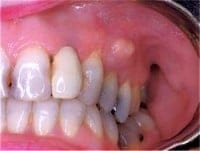 To follow up with the wildly popular Paucis Verbis card made by Dr. Hans Rosenberg (University of Ottawa), here is his card on Dental Infections. This card summarizes common dental infection complaints (like the periapical abscess seen to the right) that we see in the Emergency Department.