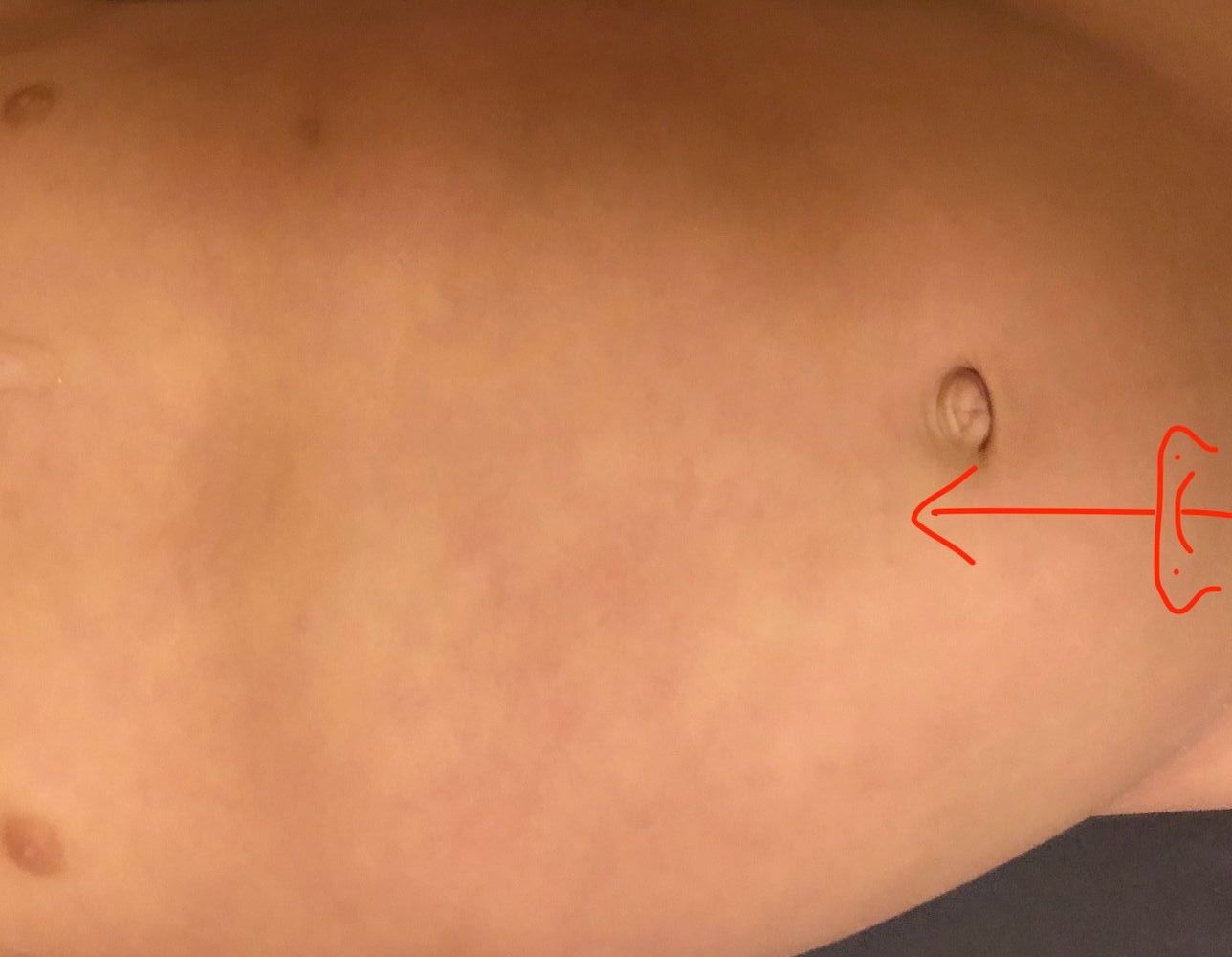
SAEM Clinical Image Series: An Uncommon Cause of Shortness of Breath

shortness of breath

A 102-year-old female presents with intermittent epigastric abdominal pain for the last two days. Episodes have no relieving or exacerbating factors. The pain originates in the epigastrium and radiates diffusely to the abdomen and back, resolving on its own within minutes of onset. She has had one episode of nonbilious, non-bloody emesis. Her last bowel movement was two days prior and she hasn’t been able to pass gas. The pain is associated with mild shortness of breath which has been progressively worsening since the onset of symptoms. Her family was concerned and called EMS because the shortness of breath has worsened and the episodes of pain have been progressively worsening in intensity. The patient denies fever, chills, hematuria, urinary frequency, chest pain, headache, dizziness, syncope, recent traumatic events, and any other associated symptoms.

General: Well-appearing; no acute distress; awake, alert, and oriented to date, place, and person

Cardiovascular: Regular rate and rhythm; S1/S2 present; 2+ systolic ejection murmur; capillary refill <2 seconds; 2+ pulses in all extremities

Respiratory: Lungs clear to auscultation bilaterally with diminished breath sounds in the left lower lobe; no signs of respiratory distress; no accessory muscle use

Abdomen: Soft; non-tender; non distended; no palpable masses; no guarding or rebound tenderness; no signs of peritonitis

Extremities: Full range of motion of all extremities; nonambulatory at baseline

Complete blood count (CBC): WBC 10.8 x 10^3/mcl; Hgb 12 g/dl; Hct 40.1%; Plt 375 x 10^3/mcl

Basic metabolic panel (BMP): Na 139 mmol/L; K 3.7 mmol/L; Cl 97 mmol/L; CO2 31 mmol/L; Glucose 170 mg/dL; BUN 10 mg/dL; Cr 0.58 mg/dL; Ca 10.2 mmol/L

Liver function test: AST 19 U/L; ALT 7 U/L; Alk Phos 144 U/L

Lipase: 11 U/L

Venous blood gas (VBG): pH 7.33; pCO2 61.1 mmHg; pO2 38 mmHg; BE -7 mmol/L

Lactic acid: 1.56 mmol/L

Small bowel obstruction (SBO) secondary to a spigellian hernia with an associated hiatal hernia. 

The CT demonstrates a spigellian hernia causing a small bowel obstruction. Spigellian hernias are hernias in the spigellian fascia which is located between the semilunar line and the lateral edge of the rectus abdominus muscle. These hernias constitute 0.12% of abdominal wall hernias, making them very rare and difficult to diagnose clinically. Spigellian hernias often go unnoticed until they are strangulated and require surgery. This patient not only had a rare spigellian hernia but also had a hiatal hernia causing the stomach to enter the pleural space. It’s possible that the bowel obstruction worsened the hiatal hernia with the backup of gastric contents and gas.

Take-Home Points

  • Spigellian hernias are rare abdominal wall hernias with a myriad of potential complications.
  • Shortness of breath is frequently considered a pathology involving the lungs or pulmonary vasculature, however abdominal complaints, especially in this case, can cause significant respiratory distress.
  • Elderly patients may have difficulty verbalizing their exact symptoms, and it is good practice to gather collateral information from families to aid in caring for these patients.

  • Spangen L. Spigelian hernia. World J Surg. 1989 Sep-Oct;13(5):573-80. doi: 10.1007/BF01658873. PMID: 2683401.


ALiEM AIR Series | ACS 2022 Module

This image has an empty alt attribute; its file name is AIR-logo-2016-transparent-SAEM-CORD-586x650.jpg

Welcome to the AIR ACS Module! After carefully reviewing all relevant posts from the top 50 sites of the Social Media Index, the ALiEM AIR Team is proud to present the highest quality online content related to ACS emergencies in the Emergency Department. 7 blog posts met our standard of online excellence and were curated and approved for residency training by the AIR Series Board. We identified 4 AIR and 3 Honorable Mentions. We recommend programs give 4 hours (about 30 minutes per article) of III credit for this module.

AIR Stamp of Approval and Honorable Mentions

In an effort to truly emphasize the highest quality posts, we have 2 subsets of recommended resources. The AIR stamp of approval is awarded only to posts scoring above a strict scoring cut-off of ≥30 points (out of 35 total), based on our scoring instrument. The other subset is for “Honorable Mention” posts. These posts have been flagged by and agreed upon by AIR Board members as worthwhile, accurate, unbiased, and appropriately referenced despite an average score.

Take the AIR ACS Quiz at ALiEMU

Interested in taking the ACS quiz for fun or asynchronous (Individualized Interactive Instruction) credit? Please go to the above link. You will need to create a free, 1-time login account.

Highlighted Quality Posts: ACS Emergencies

SiteArticleAuthor(s)DateLabel
EM CasesReciprocal Change and Occlusion MIJesse McLaren, MD10 Aug 2021AIR
EM CasesWellen’s Syndrome, Re-occlusion, and MIJesse McLaren, MD13 Jul 2021AIR
EM CasesHyperAcute T waves and Occlusion MIJesse McLaren, MD4 May 2021AIR
EM CasesST elevations mnemonic and Occlusion MIJesse McLaren, MD12 Jan 2021AIR
Rebel EMThe OMI/NOMI ParadigmSalim Rezaie, MD and Tarlan Hedayati, MD3 Oct 2021HM
Dr. Smith’s ECG blogAccuracy of OMI ECG findings versus STEMI criteria for diagnosis of acute OMISteve Smith, MD and Pendell Myers, MD12 Apr 2021HM
emDocsCocaine and ST elevationBrannon Inman, MD and Lloyd Tannenbaum, MD10 Dec 2020HM

(AIR = Approved Instructional Resource; HM = Honorable Mention)

If you have any questions or comments on the AIR series, or this AIR module, please contact us! More in-depth information regarding the Social Media Index.

Thank you to the Society of Academic Emergency Medicine (SAEM) and the Council of EM Residency Directors (CORD) for jointly sponsoring the AIR Series! We are thrilled to partner with both on shaping the future of medical education.

Extracorporeal Treatment Options in Poisoned Patients

Background

Caring for a patient that is critically-ill secondary to a toxic ingestion is complicated and, in severe cases, extracorporeal treatments (ECTRs) may be considered. The most commonly used ECTRs are intermittent hemodialysis (iHD) and continuous renal replacement therapy (CRRT), but ECTRs also include exchange transfusion, hemoperfusion, liver dialysis, and therapeutic plasma exchange. Finding and evaluating the supporting literature for these treatment modalities in a timely manner is not feasible in most situations. In order to assist in this effort, the EXtracorporeal Treatments In Poisoning (EXTRIP) workgroup has reviewed and provided free, evidence-based recommendations regarding the use of ECTRs for many common toxins and toxicants [1]. These recommendations can be found in a summarized format on the EXTRIP website and the links to their comprehensive reviews are published on PubMed with direct links on their website. This international workgroup is made up of experts in toxicology, nephrology, emergency medicine, pediatrics, pharmacology, critical care, and more. An excellent example of this resource is their review and recommendations on ECTRs for poisoning secondary to beta-adrenergic antagonists (BAAs).

Evidence

The EXTRIP workgroup included 76 publications in this comprehensive review on the use of ECTRs in BAA poisoning [2]. They evaluated pharmacokinetic/toxicokinetic data for a total of 334 patients poisoned with various BAAs, of which ~90% of the data was published prior to 1990 and does not necessarily represent the improved clearance of these medications with modern ECTR modalities. Based on this evidence, they deemed atenolol, nadolol, and sotalol as dialyzable BAAs. They also reviewed case reports/series of 37 patients with BAA toxicity and made recommendations for those agents with sufficient evidence. Based on the above data, the EXTRIP group recommends iHD over CRRT in patients severely poisoned with atenolol or sotalol and kidney impairment. They make no recommendation for or against ECTR in patients severely poisoned with atenolol or sotalol with normal kidney function and they recommend against ECTR in patients severely poisoned with propranolol.

 Bottom Line

  • Some toxic ingestions may require invasive treatment strategies (e.g., ECTRs) but a comprehensive review of the literature may not be possible
  • The EXTRIP website is an excellent resource to assess if patients should receive emergent ECTRs due to specific toxins
  • Hemodialysis is recommended in severely symptomatic patients poisoned with atenolol or sotalol and with impaired kidney function

Want to learn more about EM Pharmacology?

Read other articles in the EM Pharm Pearls Series and find previous pearls on the PharmERToxguy site.

References:

  1. Ghannoum M, Nolin TD, Lavergne V, Hoffman RS, EXTRIP workgroup. Blood purification in toxicology: nephrology’s ugly duckling. Adv Chronic Kidney Dis. 2011;18(3):160-166. doi: 10.1053/j.ackd.2011.01.008. PMID: 21531321.
  2. Bouchard J, Shepherd G, Hoffman RS, et al. Extracorporeal treatment for poisoning to beta-adrenergic antagonists: systematic review and recommendations from the EXTRIP workgroup. Crit Care. 2021;25(1):201. doi: 10.1186/s13054-021-03585-7. PMID: 34112223.

SAEM Clinical Image Series: Eye Pain

necrotizing

A 59-year-old gentleman experiencing homelessness with a history of hepatocellular carcinoma, hepatitis C, alcohol use disorder, and tobacco dependence presented to the emergency department (ED) with severe, worsening right eye pain, blurry vision, swelling, redness, and purulent discharge after scraping his upper face on concrete during a mechanical fall two weeks prior. Of note, his partner presented to the ED at the same time with a necrotic infection of the breast as well as multiple skin lesions reportedly due to insect bites.

Vitals: T 102.4°F; HR 108; BP 121/94

Head: Lice nits visible in his hair

Eye: Unable to open right eye without assistance; eyelids crusted and necrotic with underlying orbicularis oculi muscle visible; EOM full but painful in all fields of gaze; visual acuity 20/60 in each eye; pupils 2 mm, equal and minimally reactive.

White blood cell (WBC) count: 27,600/μl

Comprehensive metabolic panel (CMP): Na 121; K 2.8; Cl 83; AST 113; ALT 45

Wound culture: Positive for MRSA, Streptococcus pyogenes, Enterobacter cloacae, and Staphyloccocus epidermis

This patient’s presentation is consistent with periorbital necrotizing fasciitis complicated by severe sepsis.

This patient had type 1 necrotizing fasciitis given the polymicrobial source of infection with both aerobic and anaerobic organisms growing from his wound culture. Type 2 necrotizing fasciitis is attributable to streptococcal and/or staphylococcal infection alone. Group A strep is the most common organism responsible for necrotizing fasciitis, found in about 50% of cases.

Independent risk factors for necrotizing fasciitis include advanced age, diabetes mellitus, heart disease, liver cirrhosis, alcohol use disorder, and trauma. Furthermore, persons who experience homelessness are at risk of skin lesions due to insect bites, burns, and physical trauma which predispose them to secondary bacterial infections because of inadequate hygiene resources.

A systematic review of periorbital necrotizing fasciitis showed that 35% of cases were triggered by trauma, while 14% were caused by other infections such as acute dacryocystitis, sinus infections, and infections of the parotid glands.  Thus, it is likely that the patient’s contact with his partner who had a necrotic soft tissue infection secondary to insect bites, as well as his recent trauma to the eye, predisposed his development of this condition.

Initiation of broad-spectrum intravenous (IV) antibiotics with vancomycin, piperacillin/tazobactam, and clindamycin, as well as IV fluids.

In this case, the patient received the above antibiotics, underwent operative debridement, frequent wound care including dilute hypochlorous acid, local vancomycin administered via intra-orbital catheter, as well as lid reconstruction with glabellar flap. He was ultimately discharged on a two-week course of oral moxifloxacin and linezolid, healing well at his one-month follow-up appointment.


Take-Home Points

  • Skin problems are a common reason that persons experiencing homelessness seek medical care, given their risk factors for both primary insults and subsequent superinfection.
  • Common sources of infection for periorbital necrotizing fasciitis include trauma, surgery, and other infections of the upper face.
  • The standard of care for periorbital necrotizing fasciitis consists of IV and local antibiotics, and operative debridement.

  • Amrith S, Hosdurga Pai V, Ling WW. Periorbital necrotizing fasciitis — a review. Acta Ophthalmol. 2013 Nov;91(7):596-603. doi: 10.1111/j.1755-3768.2012.02420.x. Epub 2012 Apr 20. PMID: 22520175.


Human Trafficking in the ED – What you need to know

Human trafficking is a devastating crime, where a human being’s labor is exploited through force, fraud, or coercion, for someone else’s profit (1). For survivors, connecting to support in the community can be incredibly difficult, and may come at the expense of their personal safety (1, 2).

The emergency department (ED) is a rare exception, with some studies estimating that over 60% of trafficked persons will present at some point during their exploitation to the ED (3). Unfortunately, less than 5% of emergency physicians report feeling confident in their ability to identify a trafficked person, citing confusion around patient characteristics and their role as a provider (4).

By learning more about human trafficking, ED providers can better prepare themselves to identify and provide appropriate support to those who experience human trafficking.

What can I do to be ready in the ED?

  • Understand what human trafficking is and its consequences
  • Recognize personal bias
  • Become familiar with how to identify, assess, document, and refer cases of human trafficking
  • Know your options for survivor advocacy

Click to view full-size image.

human trafficking overview infographic

Just the Facts – Human Trafficking

What is Human Trafficking?

Human trafficking always involves 3 components –an act, a means, and a purpose.

  • The “act” refers to the role a trafficker is playing in exploiting the person
  • The “means” refers to the use of force, fraud, or coercion to exploit a person
  • The “purpose” is what type of labor they are exploited for (1)

Often human trafficking will overlap with other crimes such as assault, domestic violence, rape, and child abuse (5). Of note, anyone under the age of 18 engaged in commercial sex is considered to be sex trafficked regardless of whether a means is present, as they cannot provide consent.

How many people are affected?

Human trafficking is widespread, but is often undetected, making true estimates of size difficult.

For example, human trafficking prevalence estimates may fail to account for survivors who do not recognize they are being exploited or are afraid to disclose (6, 7).

Who is trafficked?

 While no identity is spared, there are certain populations that are at greater risk. These may include:

  • People of color
  • Children in welfare and juvenile justice systems
  • Runaway and homeless youth
  • Children working in agriculture
  • Indigenous patients
  • Migrant laborers
  • Foreign national domestic workers
  • Patients with limited English
  • Patients with disabilities
  • Members of the LGBTQ community
  • Patients with limited education
  • Patients who use substances (6,8)

Why are they targeted?

The only thing all trafficked persons have in common is their vulnerability (1). Trafficking determinants can be conceptualized as “push” and “pull” factors. Push factors lead people to away from their current situation to trafficking (e.g., abuse, poverty, family conflict). Pull factors, drive an individual to something new that increases the risk of trafficking (e.g., income, housing, access to substances) (9, 10).

Who are the traffickers?

In the same way that anyone can be trafficked, anyone can be a trafficker.

Traffickers may be well known in the community, recruiting victims from places of employment or education (1). They may be a family member. They may also lure at-risk individuals by acting as a romantic partner, or by providing emotional affirmation, financial assistance, and material goods (1).

How do traffickers coerce survivors?

A number of tactics can be employed by traffickers, each tailored to the individual survivor but can include any combination of the following (1).

  • Physical violence
  • Sexual violence
  • Emotional violence
  • Withholding basic needs (food, water, shelter)
  • Intimidation
  • Coercion and threats
  • Economic coercion
  • Social isolation 

Specific situations to be wary of:

  • Runaway or homeless youth – greater incidence of “survival sex,” where sexual acts are exchanged for basic necessities (1, 11)
  • Recent immigrantswithholding documentation/ fear of deportation are used as powerful coercion tactic (1, 5, 6)

What are some of the health consequences of Human Trafficking (6)?

  • Physical abuse (traumatic injury, chronic pain)
  • Sexual abuse (sexually transmitted infections, pregnancy)
  • Emotional abuse (post-traumatic stress disorder, suicide ideation)
  • Poor living conditions (malnutrition, dehydration, exposure injuries)
  • Substance use, overdose
  • Death

10 Common Misconceptions of Human Trafficking

    human trafficking misconceptions

Click to view full-size images

Guide for Emergency Department Providers

What are the primary goals of an ED visit with a potentially trafficked patient?

  1. Address the acute presenting illness or injury
  2. Establish the ED as a haven from trauma or exploitation
  3. Offer additional resources, if appropriate and available

The goal of the visit is NOT to elicit a disclosure.

Your role as a provider is not to investigate or confirm the presence of trafficking, but to respect the autonomy of the patient in front of you, meet their healthcare needs, and empower them to seek additional support on their terms.

What steps should I take during my encounter?

  1. Capitalize on the same “trauma-informed” principles used to care for survivors of intimate partner violence and child maltreatment.
  2. Encounter tips (1, 6, 12)
    • Separate the potential victim from accompanying persons
  3. If difficult, ask the patient to move to another room for an x-ray or routine test.
    • Use a trained interpreter when required
    • Foster trust and establish rapport
    • Use education about rights and resources as an empowerment tool (12)
  4. Providing nonjudgmental education around violence and safety can normalize the sharing of information and open discussion (12)
    • Be patient
    • Always get consent before proceeding with any next steps (physical exam, diagnostic tests, and involvement of other providers)

human trafficking providers guide part 1     

Click for full-size images

Red flags For Human Trafficking (1, 13)

Patient IndicatorsCompanion Indicators
Delayed presentationRefuses to leave
Discrepancy between history and clinical presentationInsists on translating or speaking for the patient
Scripted/memorized historyControlling, interrupting
Hypervigilance, fearfulHas patient’s documents in their possession
Cannot produce identificationEmployer demanding access to medical information
Work-related injury with unsafe conditions
Fearful attachment to a cell phone (often used for communication and tracking)

Red flags for pediatric patients (1, 14)

  • Accompanied by unrelated, non-guardian adults
  • Material possessions you reasonably doubt they would be able to afford
  • Truancy or running away
  • Multiple sexual “partners”

What are the next steps after my assessment?

Any next steps should always be determined by the patient

  • Consider offering admission if unsafe to discharge
  • Clear and accurate documentation (may be relevant to future legal proceedings)
  • Consider notifying security if appropriate (6)

Unless local criteria for mandatory reporting are met, Police should only be contacted at the explicit instruction of the patient  (6, 16).

Interested in advocacy?

Consider implementing an ED and institutional protocol for human trafficking. A complete protocol guide is available through HEAL Trafficking.

References

  1. Alpert EJ, Ahn R, Albright E  et al. Human Trafficking: Guidebook on Identification, Assessment, and Response in a Healthcare Setting. Boston, MA: MGH Human Trafficking Initiative, Division of Global Health and Human Rights, Department of Emergency Medicine.
  2. Human Trafficking. Public Safety Canada, Government of Canada. 2019.
  3. Lederer L, Wetzel C. The Health Consequences of Sex Trafficking and Their Implications for Identifying Victims in Healthcare Facilities. Ann Heal Law. 2013;23(1):61–91.
  4. Viergever RF, West H, Borland R, Zimmerman C. Health care providers and human trafficking: What do they know, what do they need to know? Findings from the Middle East, the Caribbean, and Central America. Front Public Heal. 2015;3:1–9. PMID: 25688343
  5. Canada’s Human Trafficking Laws. British Columbia Public Health Agency. 2014.
  6. Shandro J, Chisolm-Straker M, Duber HC, Findlay SL, Munoz J, Schmitz G, et al. Human Trafficking: A Guide to Identification and Approach for the Emergency Physician. Ann Emerg Med. 2016;68(4):501-508.e1. PMID: 27130802
  7. Global Report on Trafficking in Persons [Internet]. New York; 2014. Available from: https://www.unodc.org/res/cld/bibliography/global-report-on-trafficking-in-persons_html/GLOTIP_2014_full_report.pdf
  8. 2021 Trafficking in Persons Report – United States Department of State [Internet]. U.S. Department of State; 2021. Available from: https://www.state.gov/reports/2021-trafficking-in-persons-report/
  9. Macias Konstantopoulos W, Ahn R, Alpert EJ, Cafferty E, McGahan A, Williams TP, et al. An international comparative public health analysis of sex trafficking of women and girls in eight cities: Achieving a more effective health sector response. J Urban Health. 2013. PMID: 24151086
  10. Calhoun C. Push and pull factors. Oxford Dictionary. Soc Sci Oxford Univ Press. 2002;
  11. Walls NE, Bell S. Correlates of engaging in survival sex among homeless youth and young adults. J Sex Res. 2011. PMID: 20799134
  12. PEARR Tool Trauma-Informed Approach to Victim Assistance in Health Care Settings. Dignity Health, in partnership with HEAL Trafficking and Pacific Survivor Center. 2019.
  13. Identifying Victims of Human Trafficking: What to look for in a healthcare setting. National Human Trafficking Resource Center. The Polaris Project.
  14. Tracy EE, Konstantopoulos WMI. Human trafficking: A call for heightened awareness and advocacy by obstetrician-gynecologists. Obstet Gynecol. 2012. PMID: 22525917
  15. Meshkovska B, Siegel M, Stutterheim SE, Bos AER. Female sex trafficking: Conceptual issues, current debates, and future directions. J Sex Res. 2015. PMID: 25897567
  16. Zimmerman C BR. Caring for Trafficked Persons: Guidance for Health Providers. Health Providers. Geneva, Switzerland: International Organization for Migration. 2009.

Beyond the Abstract: Systematic Online Academic Resource Review #2: Endocrine, Metabolic and Nutritional Disorders

Planning to write the next great FOAM post on hyperkalemia, but not sure what’s already been done? Or maybe a less popular topic, that you hope has minimal coverage? Or are you a resident, medical student, or even a curious attending searching for the latest, best FOAM regarding a specific topic?

If so, then we have great news for these answers are here in the recently published second Systematic Online Academic Resource (SOAR) Topic Review.1 This series aims to identify and evaluate online education resources by topic. The inaugural entry has already revealed the FOAM landscape related to the renal and genitourinary organ system.2 We can now share results for endocrine, metabolic and nutritional disorders.

We developed search terms specific to endocrine, metabolic and nutritional Disorders from the American Board of Emergency Medicine’s Model of the Clinical Practice of Emergency Medicine (MPCEM). We then performed a systematic search of both FOAMSearch as well as each site within the social media index top 50.3,4 We then assessed the quality of those resources using the revised METRIQ score and designated learner levels for each resource.5

The search yielded 36,346 resources, of which 756 met the criteria for quality assessment. Table 1 displays the 121 posts identified as high quality (rMETRIQ ≥ 16). Overall, the most covered subtopic was potassium disorders, representing 15% of all posts. Subtopics that did not have a high-quality resource identified include metabolic alkalosis, respiratory alkalosis, fluid overload, phosphorus metabolism, hyperglycemia, malabsorption, malnutrition and thyroiditis. Table 2 graphically describes the number of high-quality posts by subtopic coverage and recommended target audience. Of note, resources that were better categorized under a different MCPEM category were generally not included. For example, fluid overload content specific to heart failure was not included.

We hope that educators and learners can use this information to find relevant educational resources, and that FOAM content creators can use this information to help identify topics to produce new content.

SubtopicName of First AuthorName of Blog PostLevel of Trainee  Recommendation
Metabolic AcidosisFarkas, JoshPulmCrit: pH-guided fluid resuscitation & BICAR-ICUIntern, Junior, Senior, Attending
Metabolic AcidosisFarkas, JoshIs correcting hyperchloremic acidosis beneficial?Intern, Junior, Senior, Attending
Metabolic AcidosisRusyniak, DanTox & Hound – aka AKAIntern, Junior, Senior, Attending
Metabolic AcidosisMultipleAlcoholic ketoacidosis – WikEMClerk, Intern, Junior, Senior
Metabolic AcidosisSpiegel, RoryCC Nerd-The Case of the Neutral DocumentsClerk, Intern, Junior, Senior, Attending
Respiratory AcidosisChan, WendyVBG vs ABG in HypercarbiaClerk, Intern, Junior, Senior
Acid Base (Mixed)Farkas, JoshFluid selection using pH-guided resuscitationIntern, Junior, Senior, Attending
Acid Base (Mixed)Weingart, ScottAcid Base in the Critically Ill – Part V – Enough with the Bicarb AlreadyIntern, Junior, Senior, Attending
Corticoadrenal InsufficiencyLong, BritMimics of Sepsis: What do ED Physicians Need to Know?Intern, Junior, Senior
Corticoadrenal InsufficiencyFarkas, JoshAdrenal crisis – EMCrit ProjectIntern, Junior, Senior, Attending
Corticoadrenal InsufficiencyGaillard, FrankAdrenal hemorrhage | Radiology Reference Article | Radiopaedia.orgIntern, Junior, Senior, Attending
Cushing’s SyndromeMultipleCushing syndrome | Radiology Reference Article | Radiopaedia.orgClerk, Intern, Junior, Senior, Attending
CalciumLong, BritOncologic Emergencies Part I: Pearls and PitfallsIntern, Junior, Senior, Attending
CalciumSwaminathan, AnandHypercalcemiaIntern, Junior, Senior, Attending
CalciumMultipleHypocalcemia – WikEMIntern, Junior, Senior, Attending
CalciumTaliaferro, DustinEM@3AM: Hyper- and HypoCaIntern, Junior, Senior, Attending
HypovolemiaAstin, MattThe SPLIT Trial: Saline vs Plasma-Lyte Fluid TherapyIntern, Junior, Senior, Attending
HypovolemiaRezaie, SalimSMART Trial Part 2: Secondary Analysis of Balanced Crystalloids vs Saline in SepsisClerk, Intern, Junior, Senior
HypovolemiaRezaie, SalimIs the Great Debate Between Balanced vs Unbalanced Crystalloids Finally Over?Clerk, Intern, Junior, Senior
HypovolemiaRezaie, SalimDoes Lactated Ringers (LR) Raise Serum Lactate?Clerk, Intern, Junior, Senior
HypovolemiaFarkas, JoshPulmCrit- Get SMART: Nine reasons to quit using normal saline forIntern, Junior, Senior, Attending
HypovolemiaFarkas, JoshIBCC chapter & cast – Fluid selection & pH-guided fluid resuscitationIntern, Junior, Senior, Attending
HypovolemiaFarkas, JoshThe SPLIT trial: Internal vs. external validityIntern, Junior, Senior, Attending
HypovolemiaRezaie, SalimBalanced vs Unbalanced Fluids in Pediatric Severe SepsisClerk, Intern, Junior, Senior
HypovolemiaMultipleFluid Choice in Sepsis: Does it matter?Clerk, Intern, Junior, Senior, Attending
HypovolemiaKenny, Jon-EmileAre balanced crystalloids better than saline? SMART Talk with Dr …Intern, Junior, Senior, Attending
HypovolemiaFarkas, JoshPulmCrit- Overcoming occult diuretic resistance: Achieving diuresis …Attending
HypovolemiaMultipleCT hypoperfusion complex | Radiology Reference ArticleClerk, Intern, Junior, Senior, Attending
HypovolemiaMultipleDehydration (peds) – WikEMClerk, Intern, Junior, Senior, Attending
HypovolemiaRezaie, SalimThe Great Debate Between Balanced and Unbalanced Crystalloids ContinuesJunior, Senior, Attending
HypovolemiaMorgenstern, JustinIV fluid choice part 1: The SPLIT trialClerk, Intern, Junior, Senior, Attending
HypovolemiaDrenzla, AdamSALT OF THE EARTH (PART 1)Clerk, Intern, Junior, Senior
PotassiumMeyers, PendellCritical Hyperkalemia by H. Pendell Meyers, EMCrit Intern – EMCritJunior, Senior, Attending
PotassiumFarkas, JoshHyperkalemia – EMCrit ProjectClerk, Intern, Junior, Senior
PotassiumFarkas, JoshManagement of severe hyperkalemia in the post-Kayexalate eraIntern, Junior, Senior, Attending
PotassiumSwaminathan, AnandIs Kayexalate Useful in the Treatment of Hyperkalemia in the …Clerk, Intern, Junior, Senior
PotassiumSingh, ManpreetHyperkalemia – The Great ImitatorClerk, Intern, Junior, Senior
PotassiumMultipleTumor Lysis Syndrome – Diagnosis and TreatmentClerk, Intern, Junior
PotassiumMultipleManagement of the Sick Dialysis/ESRD Patientclerk, intern, Junior, senior
PotassiumMeyers, PendellA young man with back spasmsIntern, Junior, Senior
PotassiumHelman, AntonEmergency Management of Hyperkalemia | EM Cases PodcastJunior, Senior, Attending
PotassiumLong, BritUpdates in Management of HyperkalemiaClerk, Intern, Junior, Senior
PotassiumWeingart, ScottTreatment of hyperkalemia in the EDClerk, Intern, Junior, Senior
PotassiumFarkas, JoshPulmCrit- BRASH syndrome: Bradycardia, Renal failure, Av blocker …intern, Junior, senior, attending
PotassiumFarkas, JoshMyth-busting: Lactated Ringers is safe in hyperkalemia, and is …Junior, Senior, Attending
PotassiumMultipleInsulin Dosing in HyperkalemiaIntern, Junior, Senior, Attending
PotassiumRezaie, SalimECG Changes of HyperkalemiaClerk, Intern, Junior, Senior
PotassiumSantistevan, JamieemDOCs.net – Emergency Medicine EducationSubtle ECG findings …Clerk, Intern, Junior, Senior, Attending
PotassiumMorton, A. RossManagement of Hyperkalemia with ECG Changesclerk, intern, Junior, senior
PotassiumAwad, NadiaThyroid Storm: Treatment StrategiesIntern, Junior, Senior, Attending
PotassiumGrock, AndrewBicarbonate: Completely Useless?Junior, Senior, Attending
PotassiumHayes, Bryan DHyperkalemia Management: Preventing Hypoglycemia From InsulinSenior, Attending
SodiumSmarandache, AndreiWhen and how to treat hyponatremia in the EDIntern, Junior, Senior
SodiumFarkas, JoshHypernatremia & dehydration in the ICU – EMCrit ProjectSenior, Attending
SodiumFarkas, JoshEmergent treatment of hyponatremia or elevated ICP with bicarb …intern, Junior, senior, attending
SodiumFarkas, JoshTaking control of severe hyponatremia with DDAVPAttending
SodiumHelman, AntonEmergency Management of Hyponatremia | EM Casesintern, Junior, senior, attending
SodiumFarkas, JoshUnconventional therapies for hyponatremia: Thinking outside the …intern, Junior, senior, attending
SodiumFarkas, JoshPulmCrit- Controlled aquaresis: Management of hypervolemic or euvolemic hyponatremia with oral ureaJunior, senior, attending
MagnesiumMorgenstern, JustinTorsades de Pointes: Approach to resuscitationintern, Junior, senior
MagnesiumMultipleHypermagnesemia – WikEMClerk, Intern, Junior, Senior, Attending
Diabetic KetoacidosisLodeserto, FrankPediatric DKA: Do Fluids Really Matter? – REBEL EM – Emergency …Clerk, Intern, Junior, Senior
Diabetic KetoacidosisMorgenstern, JustinIV fluids do not cause cerebral edema in pediatric DKA – First10EMClerk, Intern, Junior, Senior, Attending
Diabetic KetoacidosisFarkas, JoshBlood gas measurements in DKA: Are we searching for a unicorn?Intern, Junior, Senior, Attending
Diabetic KetoacidosisFarkas, JoshAnatomy of a DKA resuscitation – EMCrit ProjectClerk, Intern, Junior, Senior
Diabetic KetoacidosisHughes, DarrelIs There Any Benefit to an Initial Insulin Bolus in Diabetic …Clerk, Intern, Junior, Senior, Attending
Diabetic KetoacidosisAbela, NikkiFluid Type and Infusion Rate in Paediatric DKAClerk, Intern, Junior, Senior, Attending
Diabetic KetoacidosisMultipleCerebral edema in DKA – WikEMClerk, Intern, Junior, Senior, Attending
Diabetic KetoacidosisLubberdink, AshleyTREKK Series | Diabetic KetoacidosisClerk, Intern, Junior
Diabetic KetoacidosisFarkas, JoshPulmCrit- Dominating the acidosis in DKAIntern, Junior, Senior, Attending
Diabetic KetoacidosisFarkas, JoshPulmCrit – Four DKA PearlsIntern, Junior, Senior, Attending
Diabetic KetoacidosisMultipleemDOCs.net – Emergency Medicine Education DiabeticClerk, Intern, Junior, Senior, Attending
Diabetic KetoacidosisMultipleDiabetic ketoacidosis | Radiology Reference Article | Radiopaedia.orgClerk, Intern, Junior, Senior, Attending
Diabetic KetoacidosisMultiplePEM Pearls: Treatment of Pediatric Diabetic Ketoacidosis and the Two-Bag MethodJunior, Senior, Attending
Diabetic KetoacidosisMonette, DerekPEM Practice Changing Paper: Clinical Trial of Fluid Infusion Rates for Pediatric DKAJunior, Senior, Attending
Hyperosmolar Hyperglycemic StateMultipleHyperosmolar hyperglycemic state – WikEMClerk, Intern, Junior, Senior, Attending
Hyperosmolar Hyperglycemic StateMultipleHyperosmolar hyperglycemic state | Radiology Reference Article …Clerk, Intern, Junior, Senior, Attending
Hyperosmolar Hyperglycemic StateMultipleNon-ketotic hyperglycaemic seizure | Radiology Reference Article …Clerk, Intern, Junior, Senior, Attending
HypoglycemiaMultipleHypoglycemic encephalopathy | Radiology Reference Article …Clerk, Intern, Junior, Senior, Attending
Insulin PumpMultipleInsulin Pumps: Complications and Emergency Department PresentationsIntern, Junior, Senior, Attending
Insulin PumpWeingart, ScottPodcast 198 – Insulin Pumps and Such with Josh Miller, MDClerk, Intern, Junior, Senior, Attending
Insulin PumpRezaie, SalimDiabetic Gastroparesis Needs HUGSIntern, Junior, Senior, Attending
Nutritional DisordersMultipleOsteoporosis | Radiology Reference Article | Radiopaedia.orgClerk, Intern, Junior, Senior, Attending
Nutritional DisordersLong, BritProtein Shakes and Dietary Supplements: What are their ingredients and how much is too much?Senior, Attending
Vitamin DeficienciesMultipleRickets | Radiology Reference Article | Radiopaedia.orgClerk, Intern, Junior, Senior, Attending
Vitamin DeficienciesGroth, MeghanMythbusting the Banana BagIntern, Junior, Senior, Attending
Wernicke-KorsakoffMultipleThiamine DeficiencyIntern, Junior, Senior, Attending
Wernicke-KorsakoffPescatore, RickShould You Prescribe Oral Thiamine for Chronic Alcoholics …Senior, Attending
Wernicke-KorsakoffMultipleWernicke-Korsakoff syndrome – WikEMClerk, Intern, Junior, Senior, Attending
Wernicke-KorsakoffMultipleWernicke encephalopathy | Radiology Reference ArticleClerk, Intern, Junior, Senior, Attending
Wernicke-KorsakoffSwaminathan, AnandWernicke’s Encephalopathy Archives – REBEL EM – Emergency …Junior, Senior, Attending
Parathyroid DiseaseMultipleParathyroid hormone | Radiology Reference Article | Radiopaedia.orgClerk, Intern, Junior, Senior, Attending
Parathyroid DiseaseMultipleParathyroid glands | Radiology Reference Article | Radiopaedia.orgClerk, Intern, Junior, Senior, Attending
Parathyroid DiseaseNewman, SamanthaPTH versus PTHrP — Small Differences, Big Implications – Clinical …Intern, Junior, Senior
Pituitary DisordersMultipleSheehan syndrome | Radiology Reference Article | Radiopaedia.orgClerk, Intern, Junior, Senior, Attending
Pituitary DisordersMultipleemDOCs.net – Emergency Medicine EducationThunderclap …Intern, Junior, Senior
Pituitary DisordersMultiplePituitary gland | Radiology Reference Article | Radiopaedia.orgClerk, Intern, Junior, Senior, Attending
Pituitary DisordersMultipleOptic pathway glioma | Radiology Reference Article | Radiopaedia.orgClerk, Intern, Junior, Senior, Attending
Pituitary DisordersMultiplePituitary apoplexy | Radiology Reference Article | Radiopaedia.orgIntern, Junior, Senior, Attending
Pituitary DisordersMultipleEmpty sella | Radiology Reference Article | Radiopaedia.orgIntern, Junior, Senior, Attending
Pituitary DisordersMultipleElevated prolactin (differential) | Radiology Reference Article …Clerk, Intern, Junior, Senior, Attending
HyperthyroidMultipleThyroid storm – WikEMIntern, Junior, Senior, Attending
HyperthyroidLipp, ChrisCRACKCast E128 – Thyroid and Adrenal DisordersIntern, Junior, Senior, Attending
HyperthyroidMultipleHyperthyroidism – WikEMClerk, Intern, Junior, Senior
HyperthyroidMultipleThyroid Storm and Aortoiliac Occlusive DiseaseIntern, Junior, Senior, Attending
HyperthyroidMultipleBedside Rounds Series: Goiter – Clinical CorrelationsClerk, Intern, Junior, Senior
HyperthyroidLee, TerranceDiagnosing hyperthyroidism: Answers to 7 common questionsClerk, Intern, Junior, Senior
HypothyroidFox, SeanHypothyroidism and Myxedema Coma — Pediatric EM MorselsIntern, Junior, Senior, Attending
HypothyroidMultipleMyxedema coma – WikEMIntern, Junior, Senior, Attending
HypothyroidZhao, LeahSpot the Diagnosis! The case of the Pale WomanIntern, Junior, Senior
Tumors Of Endocrine GlandsMultipleParathyroid adenoma | Radiology Reference Article | Radiopaedia.orgClerk, Intern, Junior, Senior, Attending
Tumors Of Endocrine GlandsMultipleCentral nervous system germinoma | Radiology Reference Article …Intern, Junior, Senior, Attending
Tumors Of Endocrine GlandsMultipleCraniopharyngioma | Radiology Reference Article | Radiopaedia.orgJunior, Senior, Attending
Tumors Of Endocrine GlandsMultipleCarcinoid tumor | Radiology Reference Article | Radiopaedia.orgIntern, Junior, Senior, Attending
Adrenal TumorMultiplePheochromocytoma | Radiology Reference Article | Radiopaedia.orgIntern, Junior, Senior, Attending
Adrenal TumorMultipleAdrenal adenoma | Radiology Reference Article | Radiopaedia.orgIntern, Junior, Senior, Attending
Adrenal TumorMultipleAdrenal cortical carcinoma | Radiology Reference Article …Intern, Junior, Senior, Attending
Pituitary TumorMultipleAcromegaly | Radiology Reference Article | Radiopaedia.orgClerk, Intern, Junior, Senior, Attending
Pituitary TumorMultiplePituitary adenoma | Radiology Reference Article | Radiopaedia.orgClerk, Intern, Junior, Senior, Attending
Thyroid TumorMultipleMedullary thyroid carcinoma | Radiology Reference Article …Clerk, Intern, Junior, Senior
Thyroid TumorMultipleAnaplastic thyroid carcinoma | Radiology Reference Article …Intern, Junior, Senior, Attending


References: 

Special thanks to SOAR co-authors Ryan Pedigo, Lisa Zhao, JooYeon Jung, Shirley W Bae, Teresa Chan, and Andrew Grock.

  1. Hsiao, JJ, Pedigo, R, Bae, SW, et al. Systematic online academic resource (SOAR) review: Endocrine, metabolic, and nutritional disorders. AEM Educ Train. 2021; 5:e10716. doi:1002/aet2.10716
  2. Grock A, Bhalerao A, Chan T, Thoma B, Wescott A, Trueger N. Systematic Online Academic Resource (SOAR) Review: Renal and Genitourinary. AEM Educ Train. 2019;3(4):375-386. doi:10.1002/aet2.10351
  3. Raine T, Thoma B, Chan T, Lin M. FOAMSearch.net: A custom search engine for emergency medicine and critical care. Emerg Med Australas. 2015;27(4):363-365. doi:10.1111/1742-6723.12404
  4. Thoma B, Sanders J, Lin M, Paterson Q, Steeg J, Chan T. The social media index: measuring the impact of emergency medicine and critical care websites. West J Emerg Med. 2015;16(2):242-249. doi:10.5811/westjem.2015.1.24860
  5. Colmers-Gray I, Krishnan K, Chan T, et al. The Revised METRIQ Score: A Quality Evaluation Tool for Online Educational Resources. AEM Educ Train. 2019;3(4):387-392. doi:10.1002/aet2.10376


By |2022-01-29T06:11:54-08:00Jan 28, 2022|Emergency Medicine|
Go to Top