Trick of the Trade: Getting the last bit of ultrasound gel from the bottle

It’s a busy shift and you need to perform a bedside ultrasound on a patient’s belly to rule out cholecystitis, when you realize that the ultrasound gel bottle is nearly empty. No matter how many times you vigorously shake the bottle, it’s impossible to get the viscous gel out. In a pinch, you could use hand sanitizer, sterile lubricant, or even water as a substitute for gel. Or you could run to the storage room on the other side of the busy department to grab a new bottle. Or…

Trick of the Trade

Use centrifugal force to move the gel to the top of the bottle!

trick ultrasound bottle gel out


  • Turn the bottle upside down so the cap is facing the ground.
  • Place the bottle into a (fresh) patient’s sock or transducer cover. Alternatively, you can use a plastic bag or ortho tubular stockinette.
  • Firmly holding the bag, and spin the bag for a few seconds in a circular motion, almost like you were throwing a grappling hook.
  • The centrifugal motion will generate an outward force pushing all of the viscous gel to the bottle cap!
  • Once you’ve used the gel, store the bottle cap-side down so you don’t have to do this again.

This trick is useful in a pinch, because it makes use of the entire gel bottle and promotes an eco-friendly use of ED resources.

Tip: Just don’t let go while you swing, lest you turn that patient with the belly pain into a trauma activation from a bottle to the face.

Interest in other tricks?

Read more articles in the Tricks of the Trade series.

By |2022-07-25T11:26:09-07:00Jul 27, 2022|Tricks of the Trade, Ultrasound|

EM Pharm Pearls: Estimated rise in blood glucose concentration with dextrose administration

A common question is how much should we expect the blood glucose concentration to increase after dextrose 50% (D50) administration. Fortunately, there is an answer from 3 studies.

  1. Balentine JR, Gaeta TJ, Kessler D, Bagiella E, Lee T. Effect of 50 milliliters of 50% dextrose in water administration on the blood sugar of euglycemic volunteers. Acad Emerg Med. 1998;5(7):691-694. doi:10.1111/j.1553-2712.1998.tb02487.x PMID 9678393
    • Population: Healthy volunteers in the ED
    • Intervention: 25 gm (1 ampule of D50)
    • Result: Mean increase of 162 mg/dL at 5 min. Glucose concentrations returned to baseline by 30 minutes.
  1. Murthy MS, Duby JJ, Parker PL, Durbin-Johnson BP, Roach DM, Louie EL. Blood glucose response to rescue dextrose in hypoglycemic, critically ill patients receiving an insulin infusion. Ann Pharmacother. 2015;49(8):892-896. doi:10.1177/1060028015585574. PMID 25986006
    • Population: Critically ill patients experiencing hypoglycemia while on insulin infusions
    • Intervention: D50
    • Result: Median increase of 4 mg/dL per gm of D50 administered
  1. Adler PM. Serum glucose changes after administration of 50% dextrose solution: pre- and in-hospital calculationsAm J Emerg Med. 1986;4(6):504-506. doi:10.1016/S0735-6757(86)80004-3. PMID 3778594
    • Population: ED patients with altered mental status (23 with diabetes, 28 without diabetes)
    • Intervention: 25 gm (50 mL of D50)
    • Result: Mean increase of 166 mg/dL

Take Home Points

  • Glucose concentrations increase 4-6 mg/dL per gm of dextrose administered
    • 50 mL of D50 = 25 gm = expected 100-150 mg/dL glucose rise
  • D50 rescue glucose is short-lived (30 minutes)
  • If the blood glucose does not respond as anticipated, investigate further (e.g., IV decannulation)


Want to learn more about EM Pharmacology?

Read other articles in the EM Pharm Pearls Series and find previous pearls on the PharmERToxguy site.

Trick of the Trade: A “Fiberbougie” through a supraglottic airway device (King tube)

king tubeResuscitation before intubation is a critical construct in modern emergency medicine. The prevention of peri-intubation arrest by correcting pre-intubation hypoxia, hypotension, and acidosis is often easier said than done. Worse yet, the intubation process itself, especially if difficult, can worsen hypoxia and hypotension which is often unrecoverable [1, 2] Supraglottic devices, such as a King Airway or laryngeal mask airway, can be placed quickly, and they effectively oxygenate and ventilate patients with a high degree of success [3]. Unfortunately, when the King (or similar device) is exchanged for an endotracheal tube, success is far from guaranteed. Ideally the King could be blindly changed over a tube exchanger however it is quite easy to lose the airway completely during this process. We describe a potentially safer and more effective alternative.

Trick of the Trade

After a patient is stabilized after initial resuscitation, the supraglottic King airway device should be exchanged. A disposable, single-patient-use bronchoscope can serve as a bougie-like guide.

equipment fiberbougie king

Equipment Needed

  • Disposable bronchoscope
  • Endotracheal tube
  • 50 mL syringe
  • Laryngoscope (video or direct)
  • Trauma shears
  • Suction
  • Capnography
fiberbougie through supraglottic device king airway

Left: Demonstrating the technique inserting a single-use bronchoscope through a supraglottic King tube in a simulation patient. Right: Corresponding view of the vocal cords through the King side port in a real patient.

Description of the Trick

  1. Insert a disposable bronchoscope through the airway port of the King airway
  2. Guide the bronchoscope to exit through the side port of the King and into the trachea until you approach the carina
  3. Cut the disposable bronchoscope at the level of the handle, leaving a “fiberbougie” in the trachea above the carina
  4. Remove the King airway over the cut fiberscope in a modified Seldinger technique while suctioning airway
  5. Insert the endotracheal tube over the “fiberbougie”
  6. Use video or direct laryngoscopy to visualize the tube sliding over the “fiberbougie” into cords
  7. Confirm placement with capnography and/or with direct visualization and x-ray
bronch bougie equipment

Insertion of the endotracheal tube over the “fiberbougie” with video laryngoscopy confirmation with a simulation patient. The inset image was captured from a Glidescope on a real patient during the exchange.


Video Tutorial of the Fiberbougie Technique to Exchange a King Tube


References

  1. April MD, Arana A, Reynolds JC, et al. Peri-intubation cardiac arrest in the Emergency Department: A National Emergency Airway Registry (NEAR) study. Resuscitation. 2021;162:403-411. doi:10.1016/j.resuscitation.2021.02.039. PMID 33684505
  2. Russotto V, Tassistro E, Myatra SN, et al. Peri-intubation Cardiovascular Collapse in Critically Ill Patients: Insights from the INTUBE Study [published online ahead of print, 2022 May 10]. Am J Respir Crit Care Med. 2022. doi:10.1164/rccm.202111-2575OC. PMID 35536310
  3. Burns JB Jr, Branson R, Barnes SL, Tsuei BJ. Emergency airway placement by EMS providers: comparison between the King LT supralaryngeal airway and endotracheal intubation. Prehosp Disaster Med. 2010;25(1):92-95. doi:10.1017/s1049023x00007743. PMID 20405470 

SplintER Series: Stop! Hammer Time

mallet finger
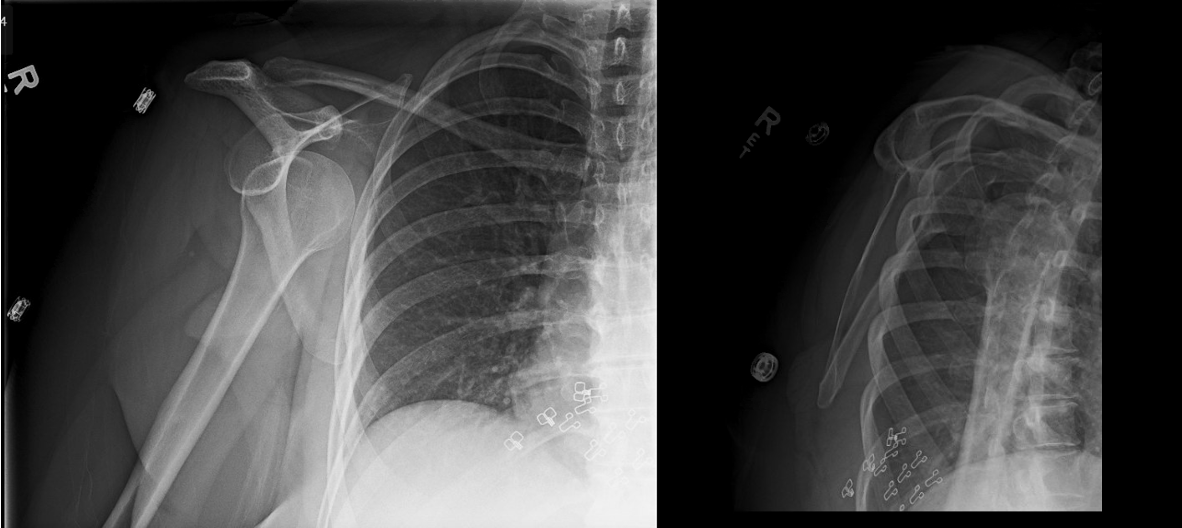
A 54-year-old female presents to the emergency department with 3rd and 4th right finger pain after “jamming” them a week ago. She was reaching to tap someone on the shoulder and they backed into her hand forcing her fingers into flexion. She has swelling and pain at the distal interphalangeal (DIP) joint of her 3rd and 4th digits on the right and cannot extend the digits at the DIP joint. An x-ray of the right hand was obtained and is shown above (Figure 1: Lateral radiographs of the right hand. Author’s own images).

(more…)

ALiEM AIR Series | Non-ACS Cardiology 2022 Module

This image has an empty alt attribute; its file name is AIR-logo-2016-transparent-SAEM-CORD-586x650.jpg

Welcome to the AIR non-ACS cardiology Module! After carefully reviewing all relevant posts from the top 50 sites of the Social Media Index, the ALiEM AIR Team is proud to present the highest quality online content related to non-ACS cardiology emergencies in the Emergency Department. 12 blog posts met our standard of online excellence and were curated and approved for residency training by the AIR Series Board. We identified 5 AIR and 7 Honorable Mentions. We recommend programs give 6 hours (about 30 minutes per article) of III credit for this module.

AIR Stamp of Approval and Honorable Mentions

In an effort to truly emphasize the highest quality posts, we have 2 subsets of recommended resources. The AIR stamp of approval is awarded only to posts scoring above a strict scoring cut-off of ≥30 points (out of 35 total), based on our scoring instrument. The other subset is for “Honorable Mention” posts. These posts have been flagged by and agreed upon by AIR Board members as worthwhile, accurate, unbiased, and appropriately referenced despite an average score.

Take the AIR non-ACS cardiology Quiz at ALiEMU

Interested in taking the AIR quiz for fun or asynchronous (Individualized Interactive Instruction) credit? Please go to the above link. You will need to create a free, 1-time login account.

Highlighted Quality Posts: non-ACS Emergencies

SiteArticleAuthorDateLabel
EMCritPericardial tamponadeJosh Farkas, MD11/10/2021AIR
EMCritMonomorphic VT stormJosh Farkas, MD11/29/2021AIR
EMCritTorsade de pointesJosh Farkas, MD11/22/2021AIR
EMCritBradycardiaJosh Farkas, MD11/20/2021AIR
EMDocsTranscatheter Aortic Valve Replacement (TAVR) Complications in the EDSam Rouleau, MD11/15/2021AIR
Peds EM morselsPediatric VADChristyn Magill, MD25 June 2021HM
EMCritCardiogenic shock & severe LV failureJosh Farkas, MD11/25/2021HM
EMCritRight Ventricular failure due to pulmonary hypertensionJosh Farkas, MD8/20/2021HM
EMCritEndocarditisJosh Farkas, MD7/4/2021HM
EMCritAtrial Fibrillation (AF) & Flutter complicating critical illnessJosh Farkas, MD2/8/2021HM
EMDocs Left atrial appendage closure: procedure basics, complications, and managementKC Collier, MD12/6/2021HM
EMDocsElectrical cardioversion in the ED: who crashes and how to improveRachel Lynn Graves, MD7/6/2021HM

(AIR = Approved Instructional Resource; HM = Honorable Mention)

If you have any questions or comments on the AIR series, or this AIR module, please contact us! More in-depth information regarding the Social Media Index.

Thank you to the Society of Academic Emergency Medicine (SAEM) and the Council of EM Residency Directors (CORD) for jointly sponsoring the AIR Series! We are thrilled to partner with both on shaping the future of medical education.

Trick of the Trade: Don’t fight the ultrasound cord for peripheral IV access

ultrasound POCUS peripheral iv trick

Ultrasound-guided IVs require hand-eye coordination and fine movements of probe in Goldilocks fashion. Apply too much pressure, and the vein in question is compressed. Slide a little to the right, and now it’s out of the window. Something that practitioners don’t think about is the tension from the cord. If left to its own devices, the cord will tug on the probe, making the probe harder to steer and handle, especially for those tiny veins.

Trick of the Trade: Reduce cord tension

Have the patient grasp the cord!

This makes them an active participant. Usually, if they are awake and good-humored, tell them “audience participation is required.” Doing so will give you enough slack to effectively visualize and troubleshoot the ultrasound-guided IV.

ultrasound cord trick POCUS


What if the patient is intubated, or altered, doesn’t quite grasp, or can’t handle the situation?

Tape the cord to the gurney side rail. Use a 2×2 gauze as a buffer between the tape and the rail so the tape doesn’t damage the cord itself.

ultrasound cord POCUS tape


Want to learn other tricks?

Read other articles in the Tricks of the Trade series.

By |2022-05-31T00:37:48-07:00Jun 3, 2022|Tricks of the Trade, Ultrasound|
Go to Top