


IDEA Series: A Low-fidelity Simulation Workshop for Teaching Cricothyroidotomy
The Problem

Cricothyroidotomy is an emergency life-saving procedure that involves surgical placement of a tube through the cricothyroid membrane in order to establish a patent airway for oxygenation and ventilation. The indications for this procedure are when traditional means, such as orotracheal or nasotracheal intubation, are contraindicated or have failed during attempts to establish an emergency airway.1,2 It is a critical skill for emergency physicians but the declining rate of this procedure has resulted in decreased exposure during training.3,4


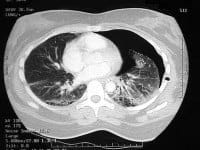 A 32 year old woman arrives in your emergency department after being in a motor vehicle collision where she was the seat-belted driver. She undergoes chest CT imaging despite a negative chest x-ray because of her ongoing anterior chest wall diffuse tenderness. You discover a small 10% pneumothorax (PTX), but no other associated thoracic injuries. Should you place a tube thoracostomy (chest tube)? Should this patient be admitted to the hospital? A 2019 Annals of Emergency Medicine paper by the NEXUS Chest research group tackles these questions.
 Welcome to Leg Day #2 of the