


PEM Practice Changing Paper: Clinical Trial of Fluid Infusion Rates for Pediatric DKA
 Most protocols for managing pediatric patients with diabetic ketoacidosis (DKA) are based on a theoretical association between fluid resuscitation and subsequent neurological decline. Although the evidence for an association between IV fluids and cerebral edema comes from retrospective reviews, for over 20 years, it is an accepted teaching principle of pediatric DKA.
Clinical Trial of Fluid Infusion Rates for Pediatric Diabetic Ketoacidosis, published just days ago in the New England Journal of Medicine, challenges this teaching with the first randomized controlled trial designed to investigate the relationship between IV fluids and cerebral edema. We review this publication and present a behind-the-scenes podcast interview with lead authors Dr. Nathan Kuppermann and Dr. Nicole Glaser from the Pediatric Emergency Care Applied Research Network (PECARN). (more…)
 Despite the widespread clinical use, and their well-documented life-saving properties, vasopressors are often maligned, accused of causing ischemia to fingers, toes, mesentery, kidneys, and so forth. Not only is the evidence that this happens poor, but, a fear of this dreaded complication can unwarrantedly lead good clinicians to limit or withhold potentially life- and organ-saving medications. This article showcases the importance of end-organ perfusion and explains how vasopressors may in fact be one of the most important therapies in an emergency physician’s armamentarium.

 Ever wonder what would happen if you were working in the emergency department (ED) when a nuclear attack happens? We’ve all had questions on boards or inservice exams about the long-term effect of radiation exposure, but would you know what to ACTUALLY DO if a nuclear attack happened? What do you do in the first few minutes? First few hours? We know that if you are in the immediate bomb vicinity, there is not much you can do. But what if you are 5 miles away? Or 10 miles?
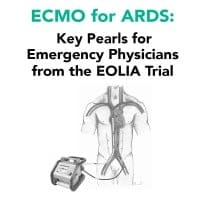 The role of extracorporeal membrane oxygenation (ECMO) in the management of acute respiratory distress syndrome (ARDS) has been a source of debate within the critical care community.
 The Emergency Department (ED) is the frontline of the opioid crisis, treating patients with opioid-related infections, opioid withdrawal, and overdose. These encounters can be difficult or even downright confrontational. But that does not have to be the case! With the use of buprenorphine, we can “flip the script” for these encounters, encouraging patient-provider collaboration in the treatment of opioid addiction as medical disease.