


SplintER Series: Tibial Plateau Fractures | Leg Day #1
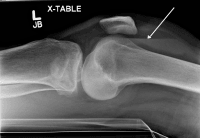 The SplintER series is back with a new sub-series – Leg Day! We will review lower extremity orthopedic injuries, introduce advanced concepts, and highlight ways to implement these into your next shift. In this post, we summarize the appropriate way to evaluate, diagnose, and manage tibial plateau fractures. This post is peer-reviewed by Dr. Kori Hudson, one of our expert sports medicine colleagues! Please read below for her commentary.
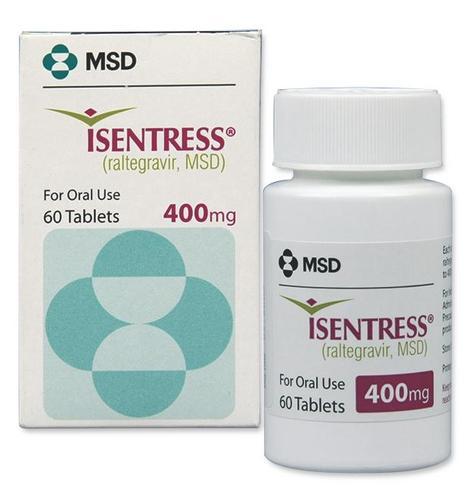 Post-exposure prophylaxis (PEP) of patients who may have been exposed to HIV includes a combination HIV nucleoside analog reverse transcriptase inhibitor emtricitabine/tenofovir (Truvada) plus an integrase inhibitor. The CDC initially recommended the integrase inhibitor dolutegravir (Tivicay). However on May 18, 2018, the CDC placed an alert about the neural tube defect risk with dolutegravir.

 Envenomation by the pictured snake would be expected to produce which clinical effects?