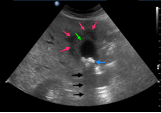
PV Card: Focused Biliary Assessment Ultrasound

focused biliary assessment ultrasound - cholecystitis

Have trouble finding the common bile duct? What’s the normal thickness of the gallbladder wall? What are common pitfalls in imaging the gallbladder? This is a great Paucis Verbis (PV)/ALiEM card on focused biliary assessment using ultrasound, courtesy of Drs. John Eicken and Mike Stone.

PV Card: Focused Biliary Assessment Ultrasound


Adapted from [1, 2]
Go to ALiEM (PV) Cards for more resources.

References

  1. Blaivas M, Harwood R, Lambert M. Decreasing length of stay with emergency ultrasound examination of the gallbladder. Acad Emerg Med. 1999;6(10):1020-1023. [PubMed
  2. Summers S, Scruggs W, Menchine M, et al. A prospective evaluation of emergency department bedside ultrasonography for the detection of acute cholecystitis. Ann Emerg Med. 2010;56(2):114-122. [PubMed]
By |2021-10-06T10:04:43-07:00Jan 1, 2015|ALiEM Cards, Gastrointestinal|

D50 vs D10 for Severe Hypoglycemia in the Emergency Department

d50

Think back to your last severely hypoglycemic and lethargic patient presenting to the ED. What was the first treatment modality that came to mind? The initial knee-jerk reaction might be to reach for that big blue box of D50 if the patient has IV access. After all, top priority is to reverse hypoglycemia as fast as possible. But in the midst of stabilizing the patient, how often do we consider the potential aftermath of concentrated glucose?

(more…)

US4TW Case: 39F with Chest Pain

Welcome to another ultrasound-based case, part of the “Ultrasound For The Win!” (#US4TW) Case Series. In this peer-reviewed case series, we focus on a real clinical case where bedside ultrasound changed the management or aided in the diagnosis. In this case, a 39-year-old female with history of lupus presents with chest pain.
(more…)

AIR Series: Psychiatry Module 2014

Welcome to the fifth ALiEM Approved Instructional Resources (AIR) Module! In an effort to reward our residents for the reading and learning they are already doing online we have created an  Individual Interactive Instruction (III) opportunity utilizing FOAM resources for U.S. Emergency Medicine residents. For each module, the AIR board curates and scores a list of blogs and podcasts. A quiz is available to complete after each module to obtain residency conference credit. Once completed, your name and institution will be logged into our private database, which participating residency program directors can access to provide proof of completion.

(more…)

US4TW Case: 74F with Right Arm Tingling | Ultrasound for the Win series

Welcome to another ultrasound-based case, part of the “Ultrasound For The Win!” (#US4TW) Case Series. In this peer-reviewed case series, we focus on real clinical cases where bedside ultrasound changed management or aided in diagnoses. In today’s case, a 74-year-old woman presents to the Emergency Department with painful right arm paresthesias.

(more…)

By |2017-07-19T00:08:52-07:00Dec 15, 2014|Cardiovascular, Ultrasound, Ultrasound for the Win|

Esmolol Use in Cardiac Arrest

ESM-lg

There is an abundance of sympathetic stimulation in patients who present in ventricular fibrillation (VF) or pulseless ventricular tachycardia (VT) whether endogenously released as a stress response or exogenously administered in a resuscitation attempt.1 The hope is that sympathetic stimulation will increase the coronary and cerebral perfusion pressure of the patient and aid in resuscitation. However, there are numerous detrimental effects associated with epinephrine such as an increase in myocardial oxygen demand leading to increased ischemia.2

Contrary to traditional teaching, interesting evidence exists in both animal models as well as in limited reports in human subjects that show a potential benefit with beta blockade in cardiac arrest.

(more…)

By |2016-12-19T10:52:53-08:00Dec 11, 2014|Cardiovascular, Critical Care/ Resus|
Go to Top