



MIA 2012: Than M et al. 2-Hour accelerated diagnostic protocol to assess patients with chest pain symptoms using contemporary troponins as the only biomarker: the ADAPT trial. J Am Coll Cardiol. 2012 Jun 5;59(23):2091-8.
 Bottom Line 1
For ED patients presenting with undifferentiated chest pain, a TIMI score of 0, together with a non-ischemic EKG, and a negative cTnI at 0 hours and 2 hours, can identify patients at very low-risk for having a major adverse cardiac event (MACE) in 30 days.
Trick of the Trade: Ossification centers of the elbow
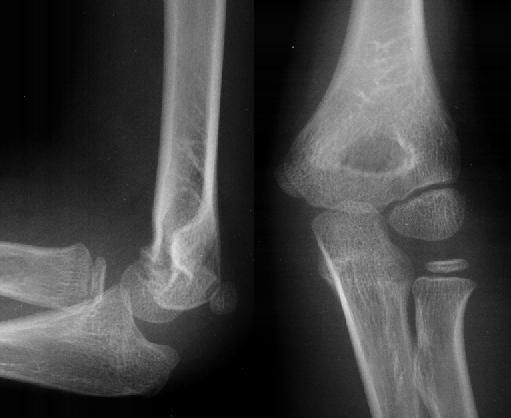
Fracture or a normal ossification center?
This is a common question heard when viewing an xray of a pediatric elbow. How do you remember the timing of normal ossification centers? FYI, the xray images above are normal and have no fractures.
PV card: Metacarpal fractures
 Patients with rotation deformities of the fingers from a metacarpal fracture should be reduced. All fingers should normally point towards the patient’s scaphoid bone.
Metacarpal (MC) fractures are common injuries, which often spark discussions about whether they should be reduced in the ED urgently.
- What are the criteria for acceptable degrees of angulation? Are these criteria different for the MC neck versus shaft?
- Which fractures tend to be unstable and thus require eventual operative repair?
- How should I splint the injury?
Here’s a quick-reference card to help guide your management decisions. These recommendations may vary slightly based on what references you use. You may need to tailor your decisions based on your regional practices.
PV Card: Metacarpal Fractures
Go to ALiEM (PV) Cards for more resources.
Thanks to Dr. Nicole Strauss at the UCSF-SFGH Orthopaedic Trauma Institute and my go-to hand expert for her input.
Trick of the Trade: Speed up ECG paper rate to differentiate tachycardias
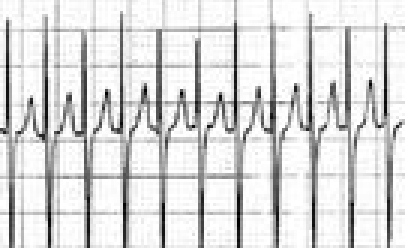
Undifferentiated tachycardias, especially when the rate is extremely fast, make it difficult to see anything other than the QRS complexes! Is there a P or flutter wave?
(more…)
Teaching internationally: More than just a language barrier
 I recently traveled to San Salvador to help teach a pediatric and adult ultrasound course. The course was well received and it was wonderful traveling around San Salvador.
I wanted to share some of our experiences, and discuss some challenges to educating internationally. More importantly, I want to engage you, the readers to share some of your experiences when educating internationally as well.
Is the 6-12-12 adenosine approach always correct?
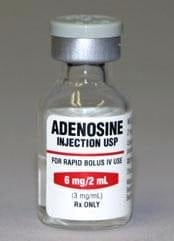 The ACLS-recommended dosing strategy of 6 mg, 12 mg, and 12 mg for adenosine may not be appropriate in every situation. There are a few instances when lower or higher dosing should be considered.
Caveat: All recommendations are data-based, but many factors affect successful conversion of paroxysmal supraventricular tachycardia (PSVT) including proper line placement and administration technique.