


Trick of the Trade: Topical Treatment of Cannabinoid Hyperemesis Syndrome

A 23-year-old female with no past medical history presents to the ED for the 4th time this month complaining of severe “10-out-of-10” abdominal pain, nausea, and intractable vomiting. She denies alcohol use, but reports she has smoked at least 1 marijuana “bud” daily for the last 3 years. In an attempt to relieve her symptoms, she has increased her marijuana use, however she has found that her pain is actually increasing, and the only thing that appears to help is taking a hot shower or bath. With this statement, the provider immediately considers cannabinoid hyperemesis syndrome (CHS).
 A 3 year-old boy presents with a deep laceration of the distal phalanx, through the nail bed, after slamming his fingers in a car door. He is crying, anxious, and uncooperative. How do you make this situation easier to evaluate and repair?
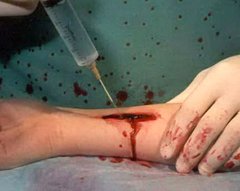 Wound irrigation is arguably one of the most important steps in closing a laceration, because all lacerations should be considered to be contaminated. Irrigation is considered the foundation in preventing infection. A common way to cleanse a wound is to irrigate a wound using a 20 cc syringe, angiocatheter, and splash protector. To achieve 500 cc of irrigation, however, it would require 25 syringe refills! Is there a better, cost-effective alternative?
 The NIH Stroke Scale is used to assess the severity of a suspected stroke. It includes 11 neurologic exam components that can be quickly performed at the bedside. The second component of the NIH Stroke Scale is testing of voluntary horizontal eye movements, a.k.a., “best gaze”.
 It is thought that the autonomic nervous system is likely involved in migraines and other primary headache disorders given commonly associated symptoms such as nausea, lacrimation, emesis, and rhinorrhea. The sphenopalatine ganglion (SPG) is an extracranial parasympathetic ganglion with both sensory and autonomic fibers. It has therefore been hypothesized that blockade of the sphenopalatine ganglion may produce relief from primary headaches by modulating the autonomic fibers involved in headache disorders.
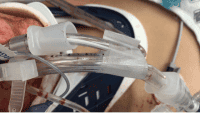 We have all been in the situation: an intubated patient needs an orogastric (OG) tube and no one has been able to place it successfully. Unfortunately, we typically find out about this situation after several failed attempts, when the patient is bleeding and/or the anatomy is distorted. It may coil in the mouth or esophagus. Here I present a novel technique to rapidly place an OG tube within seconds.