



Best mobile apps for the emergency department (2015 ACEP Live talks)
At the recent 2015 ACEP Scientific Assembly in Boston, many of emergency medicine’s (EM) finest speakers arrived to share their expertise with the EM community. Two were ACEP Live talks, hosted and recorded by the Annals of Emergency Medicine, featuring Dr. Seth Trueger (@MDAware, Assistant Social Media Editor for Annals of EM) and Dr. Iltifat Husain (@iMedicalApps, Founder and Editor-in-Chief of iMedicalApp.com). Do you agree or disagree with their lists? What are your favorite apps? [+]

Highlights from the 2015 American Heart Association CPR and ECC guidelines
The newest round of the 2015 American Heart Association (AHA) Guidelines for Cardiopulmonary Resuscitation (CPR) and Emergency Cardiac Care (ECC) contains 315 recommendations.1 It is easy to be overwhelmed by this massive (275 pages) document so this post will distill what you need to know in the emergency department. This update marks the end of a 5-year revision cycle for the AHA and the shift to a continuously updated model. Current and future guidelines can now be found at ECCGuidelines.heart.org. This round lacks any of the major foundational changes seen in 2010; however, we do say goodbye to some recommendations [+]

I am Dr. Carolyn Snider, Chief Investigator of the EDVIP Program: How I Stay Healthy in EM
Dr. Carolyn Snider (@DrCarolynSnider) is an emergency physician currently practicing in Winnipeg, MB. Her passions for traveling, expression through music, and trying new things are part of her secrets for maintaining wellness. Dr. Snider is also the principal investigator and developer of the Emergency Department Violence Intervention Program. When not at work or doing research, she is usually out with her daughter on a great adventure! Her “when in Rome…” approach to life is something we could use more of! Check out how she stays healthy in EM! [+]
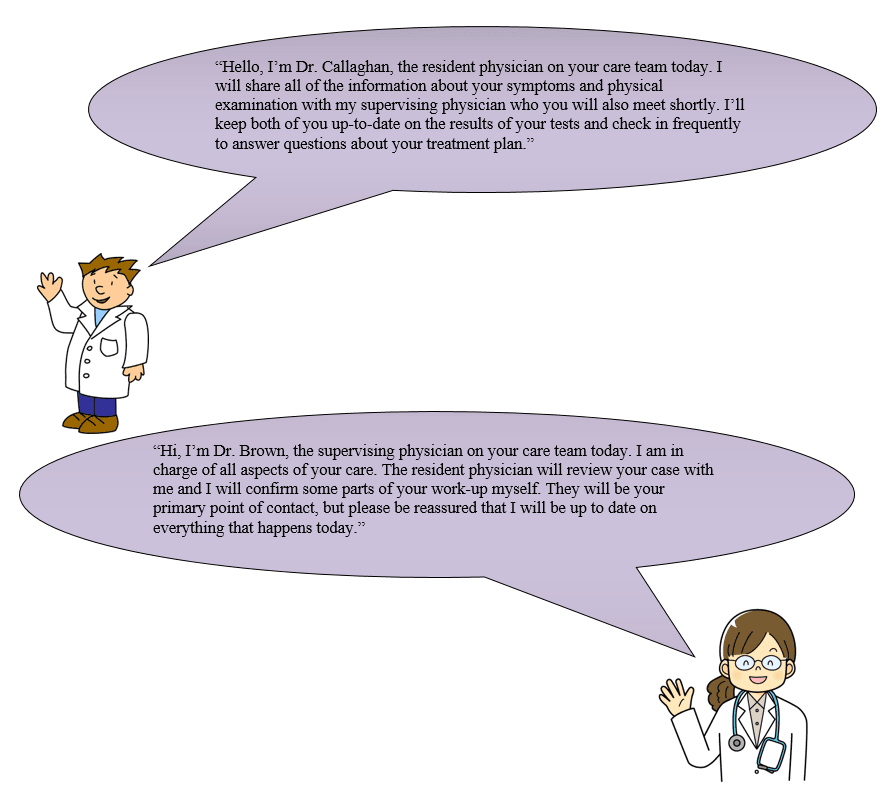
MEdIC Series | Case of the Patient with a No Learner Policy – Expert Review and Curated Commentary
Last week, we launched the second case of the ALiEM MEdIC series third season. The Case of the Patient with a No Learner Policy hit close to home for some of our regular contributors and many new ones. We are proud to present the Curated Community Commentary of the case discussion along with the opinion of our 2 experts. Thank-you again to all our experts and participants for contributing again this week to the MEdIC series. [+]

Trick of the Trade: Dermal Avulsion Injuries 2.0
This year I published a Novel, Simple Method for Achieving Hemostasis of Fingertip Dermal Avulsion Injuries in the Journal of Emergency Medicine 1 — a technique I’ve used in my local ED for several years. In brief, this involves achieving hemostasis over a fingertip skin avulsion by using a tourniquet followed by tissue adhesive glue. After bringing the technique to press and sharing this video, I’ve received great tips from peers and subsequently refined it with some additional ideas. Thus I present for the first time on ALiEM: Dermal Avulsion Injuries 2.0. [+]
ALiEMU CAPSULES Module 4: Pharmacology of Emergency Airway Management – Part 2
The next CAPSULES module is in! Part 2 of our 2-part airway series is now published on the Academic Life in EM University (ALiEMU) website. Pharmacology of Airway Management – Part 1 provided some outstanding information on topics such as preoxygenation and apneic oxygenation, awake intubation, delayed sequence intubation, and the pediatric airway. We are excited to announce the next installment of the popular CAPSULES series: Pharmacology of Emergency Airway Management – Part 2. [+]

8 Tips On How To Run An Awesome Works-in-Progress Meeting
Do you have 27 projects up in the air but none of them submitted for publication yet? (Guilty!) Have a great project in the works but can’t get past one sticky detail? (Been there!) Need help navigating a finicky IRB? (Yuck!) CV just looking a little threadbare? (Hangs head in shame.) You need a Works-in-Progress (WIP) meeting! [+]
![Benjamin Schnapp, [+]</p></body></html>](https://www.aliem.com/wp-content/uploads/Schnapp-Benjamin-MD-20150803-MPP-8538.jpg)
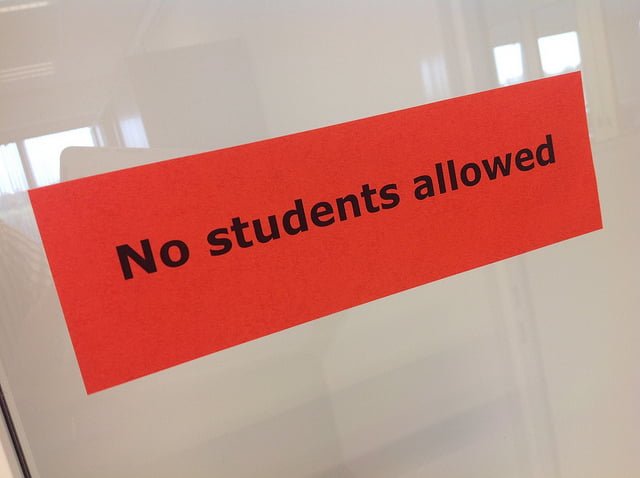
MEdIC Series | Case of the Patient with a No Learner Policy
Welcome to season 3, episode 2 of the ALiEM Medical Education in Cases (MEdIC) series! Our team (Brent Thoma, Sarah Luckett-Gatopoulos, Tamara McColl, Eve Purdy, and Teresa Chan) is pleased to welcome you to our online community of practice where we discuss difficult medical education cases each month. As usual, the community discussion will be reviewed using qualitative research methods to produce a curated summary that will be combined with two expert responses to create a functional teaching resource. This month’s case features a problem that many of us have seen in our day-to-day practice: a patient with a strict no learner policy who refuses to be [+]
AIR Series: Environmental Module
Unlike the previous cardiology modules, the environmental module was comparatively under-represented in the top 50 sites of the Social Media Index. Below we have listed our selection of the 3 highest quality blog posts within the past 12 months (as of September 2015) related to environmental emergencies, curated and approved for residency training by the AIR Series Board. More specifically in this module, we identified 0 AIRs and 3 Honorable Mentions. [+]

Evaluation and Management of Heat Stroke
Heat-related illnesses comprise a continuum of disorders ranging from the minor heat edema, heat rash, heat cramps, and heat exhaustion to the more life-threatening condition known as heat stroke. As a general rule, it is involves a process whereby heat gain overwhelms the body’s mechanisms of heat loss. Often it is caused by an impairment of the body’s cooling and adaptive mechanism to effectively transfer heat to the environment, thus leading to a rise in core temperature. 1 [+]