



Top 15 Tips for New EM Residency Graduates: The Real World
Although there is much advice on helping new interns adjust to residency life (part 1, part 2), not much is shared about helping recent residency graduates survive the real world of EM practice. Dr. Amal Mattu, Professor and Vice Chair at the University of Maryland’s Department of Emergency Medicine, solicited for advice from his department’s faculty and recent residency graduates. Below are the top 15 themes which arose from the discussion and are frankly great reminders for all practitioners in the ED. [+]

Trick of the Trade: Squeeze test for confirmation of IO placement
Venipuncture is the most common invasive procedure performed in the emergency department 1 , likely due to the fact that the vast majority of our laboratory evaluations require blood and many of our life saving interventions require access to the patient’s systemic circulation. Most of the time emergency department staff are able to perform this procedure easily, but occasionally you find that your patient is the dreaded “difficult stick”. Literature suggests that the landmark technique is successful on the initial venipuncture 74-77% of the time. 2–5 Success rates rise after multiple attempts, but what happens when you don’t have the luxury [+]
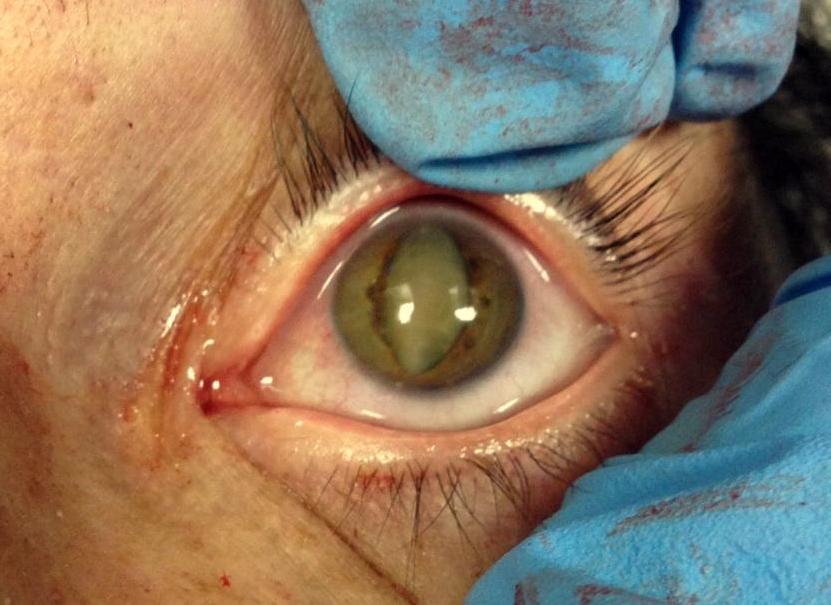
Diagnose on Sight: Traumatic Vision Loss
Case: A 60 year old male presents after being hit by an automobile while riding his bicycle. He has significant blunt head trauma. His left eye is pictured here. What is the diagnosis? [+]

Director of Growth, [+]

I am Dr. Erica Dance, Assistant Dean of Resident & Fellow Affairs at University of Alberta: How I Stay Healthy in EM
This week, we have Dr. Erica Dance (@erdance), a wellness guru from the University of Alberta. Dr. Dance is a passionate individual, who loves discussing the topic of wellness. In her role as Assistant Dean she works in the Learner Advocacy and Wellness office to support the well-being of residents and fellows across her institution. Within the post, she shares her tips for how to make wellness part of your everyday routine. Check out how Dr. Dance stays healthy in EM! [+]

Trick of the Trade: Lactated Ringers for Sepsis Complicated by Hyponatremia
An 82-year-old female is brought into the Emergency Department by family for a several day history of progressive altered mental status. You initiate a broad workup. However, soon after initial evaluation, you are called back into the room. The patient’s vitals are as follows and concerning for septic shock and an alarming serum sodium level. [+]
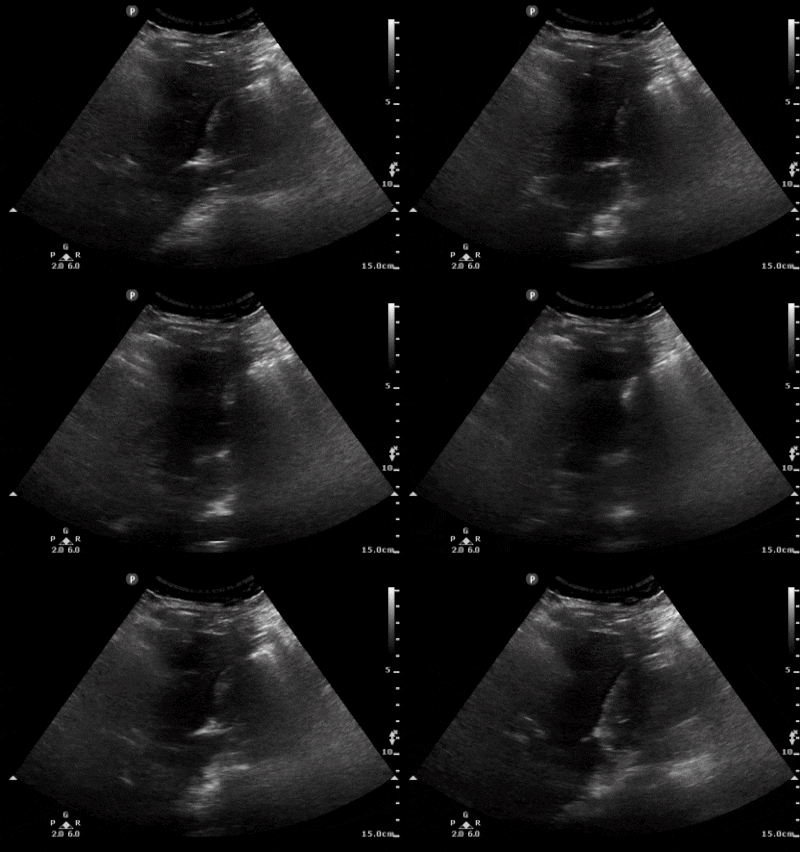
Ultrasound For the Win! Case: 38-year-old pregnant woman with acute right-sided abdominal pain #US4TW
Welcome to another ultrasound-based case, part of the “Ultrasound For The Win!” (#US4TW) Case Series. In this peer-reviewed case series, we focus on real clinical cases where bedside ultrasound changed management or aided in diagnoses. In this case, a 38-year-old pregnant woman presents with acute right-sided abdominal pain radiating to her flank. [+]
ALiEMU School Doors Open – Featuring the CAPSULES Series
Our virtual school doors are open starting today to ALiEM University (ALiEMU), which can best be thought of as our open-access, on-demand, online school of e-courses for anyone practicing Emergency Medicine worldwide. This ambitious venture was made possible by a tremendous team, but primarily led by Chris Gaafary, MD (@CGaafary), ALiEMU’s Chief of Design and Development and an EM chief resident in his free time at the University of Tennessee. Today we are incredibly excited to launch our inaugural longitudinal e-course the ALiEM Capsules Series: A Practical Pharmacology for the EM Practitioner, created and led by Bryan Hayes, PharmD, FAACT (@PharmERToxGuy). [+]
ALiEM Bookclub: The New Jim Crow – Mass Incarceration in the Age of Colorblindness
“In the era of colorblindness, it is no longer socially permissible to use race, explicitly, as a justification for discrimination, exclusion, and social contempt. So we don’t. Rather than rely on race, we use our criminal justice system to label people of color ‘criminal’ and then engage in all the practices we supposedly left behind.” (Alexander, 2) The New Jim Crow (@thenewjimcrow) by Michelle Alexander lifts the veil of “color-blindness” to expose the comprehensive, deeply routed, and tacitly disguised racialized criminal justice system that functions very similarly to Jim Crow. The authors calls upon the reader to become informed, and to take action. The foreword [+]

Trick of the Trade: DIY Circulating Water Bath for Frostbite Treatment
A 26-year-old woman presented to an urban Detroit emergency department complaining of bilateral foot pain after walking outside in the snow for 30 minutes without shoes or socks. She was unable to ambulate secondary to the pain and swelling. Physical examination revealed bilateral pallor, doughy texture, and coolness to the touch. There was generalized tenderness to palpation throughout the digits. The overlying skin was edematous, although without signs of breakdown. [+]
![Ciara Barclay-Buchanan, [+]</p></body></html>](https://www.aliem.com/wp-content/uploads/ciara.barclay-buchanan.jpg)

Announcing the 2015-2016 ALiEM-AgileMD Design Fellows!
It is with great pleasure that announce our 2015-2016 ALiEM-AgileMD Design Fellows: Drs. Catherine Patocka and Jeremy Voros. It was a fierce competition with lots of qualified applicants with great ideas and visions, but Catherine and Jeremy stood out. [+]