


Chest Pain: What is the Value of a Good History?
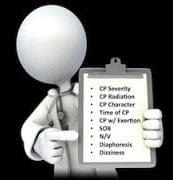
Every year there are 6 million visits to the Emergency Department (ED) for chest pain, and approximately 2 million hospital admissions each year.1 This is approximately about 10% of ED visits and 25% of hospital admissions with 85% of these admissions receiving a diagnosis of a non-ischemic etiology to their chest pain (CP).2 This over triage has enormous economic implications for the US health care system estimated at $8 billion in annual costs. [+]
Mythbuster: No Maximum Dose of Enoxaparin
Venous thromboembolism (VTE) is often treated with low molecular weight heparins (LMWH) such as enoxaparin. For patients with normal renal function, dosing is as follows: Enoxaparin: 1 mg/kg subcutaneously every 12 hours, or 1.5 mg/kg every 24 hours Dalteparin 200 IU/kg subcutaneously once daily Tinzaparin: 175 IU/kg subcutaneously once daily What about the obese patient? Is there a maximum dose for enoxaparin? [+]
Trick of the Trade: No pelvic bed? No problem
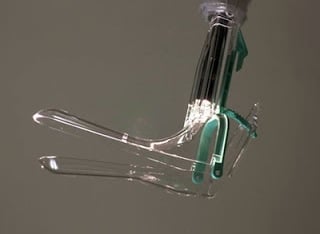
Often finding a pelvic examination bed for a female patient needing a speculum exam can be challenging. Without the elevated foot stirrups, the bed under the patient’s buttocks obstructs the pelvic speculum handle so that it can’t rotate completely into a 6 o’clock position. Some people place an upside-down bed pan to elevate the patient’s buttocks slightly in order to create more space for the speculum. Not only is the position uncomfortable for the patient, it seems a waste of a perfectly good bed pan. Fortunately there is an alternative approach. [+]

Be a great speaker: 10 practical pearls (part 2 of 5)
For the CORD Distinguished Educator’s Coaching Program, Dr. Gus Garmel has kindly offered to share his top 50 points to improve one’s speaking skills. These tips are great for anyone who plans to do public speaking. Last week, I posted his pearls #1-10. [+]
7 questions for creator of Clinical Monster: A resident-run website and blog
Residencies using websites to communicate with their residents are certainly not a new phenomenon. However, usually they are not visually appealing, rarely are controlled by the residents themselves, and are infrequently updated. Resident-run blogs are also not usually part of these websites. In this write up, I wanted to highlight a fantastic and dynamic resident-run website and blog: ClinicalMonster.com [+]

Is your mind like Sherlock Holmes’ or Dr. Watson’s?
“A fool takes in all the lumber of every sort that he comes across, so that the knowledge which might be useful to him gets crowded out, or at best is jumbled up with a lot of other things, so that he has a difficulty in laying his hands upon it. Now the skillful workman is very careful indeed as to what he takes into his brain-attic.” — Maria Konnikova 1 There is a very interesting Royal Society of the Arts (RSA) video featuring the psychologist Maria Konnikova (@mkonnikova), author of the book Mastermind: How to think like Sherlock Holmes. The video is [+]

Ketofol: Is this the “Game Changer” of Procedural Sedation and Analgesia?
When talking about procedural sedation and analgesia, our goal is to minimize pain and anxiety, with the appropriate agent that matches the needs of our patient and the clinical scenario. So what are some qualities of this “ideal agent?” In a perfect world, it would have: Minimal adverse effects Rapid onset and offset of action Pharmocokinetic predictability across a spectrum of patients [+]
First ALiEM journal article: Trial of void for acute urinary retention
A patient may present to the ED after foley catheter placement for acute urinary retention (AUR) a few days ago and now requests catheter removal. Ideally this should be performed in the urologist’s office. However, occasionally patients cannot or do not follow up with the urologist in a timely manner and return to the ED expecting urethral catheter removal. A careful history and physical should be performed along with a consulting urologist. If the eventual decision is to remove the urethral catheter in the ED, what is important to know about a Trial of Void (TOV)? [+]
Patwari Academy videos: Respiratory failure and ventilators
Dr. Rahul Patwari reviews the basics of respiratory physiology, the pathophysiology behind respiratory failure, and ventilator management. What do all the ventilator settings mean? [+]

Director of Growth, Strategic Alliance Initiative, Center for Innovation and Digital Health
[+]
Be a great speaker: 10 practical pearls (part 1 of 5)
Have you seen how some speakers can seemingly just give AMAZING talks? It actually takes a lot of hard work to make impactful talks look easy and effortless. The CORD Academy for Scholarship in Education in Emergency Medicine recently has started the “Distinguished Educator’s Coaching Program” to help established educators improve their presentation skills. The concept of coaching for mastery is a hot topic, often discussed by Dr. Atul Gawande (surgeon at Brigham and Women’s and professor at Harvard Medical School and the Harvard School of Public Health). [+]