


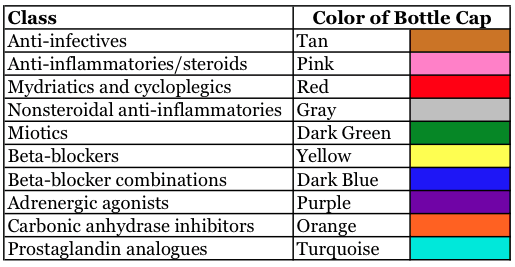
Trick of the Trade: Recognizing eyedrop bottles by color
Have you ever wondered why prescription eyedrops have different color bottle caps? Did you know that the American Academy of Ophthalmology (AAO) has a policy to color-code topical ocular medication bottles caps? Why was this needed? “The Academy’s policy on color coding of eyedrop drug caps was prompted by reports to the Academy and the National Registry of Drug-Induced Ocular Side Effects of serious adverse events resulting from patient difficulty in distinguishing between various ocular medications. With input from the pharmaceutical industry and the Food and Drug Administration (FDA), the Academy’s Committee on Drugs developed a uniform color-coding system.” — AAO policy [+]
Patwari Academy videos: Pediatric head injury – To CT or not?
When would you obtain a CT for a pediatric patient who sustained a head injury? Watch this nice 11-minute video review by Dr. Raul Patwari, discussing the 2009 Lancet PECARN study. [+]

Director of Growth, [+]
Getting serious about Serious Gaming!
Many of our childhood memories revolve around late nights playing Mario Brothers. Everybody remembers their mother yelling to stop playing so much, or else their fingers would fall off. Many of us outgrew video games, only to be sucked back in by Angry Birds and Farmville. Now there’s a new generation who experience life with an iPad glued to their hand from the womb. And then there are people like my fiance who belong to guilds in World of Warcraft. For the purposes of this write up, I want to focus on Serious Games as electronic software as opposed to table top [+]
Dexmedetomidine (Precedex) as an Adjunct to Benzodiazepines for Ethanol Withdrawal
Sometimes a question is posed on Twitter that generates a great discussion from colleagues ’round the globe. Such was the case for dexmedetomidine. Although benzodiazepines remain the standard of treatment for ethanol withdrawal, particularly seizures and delirium tremens, what’s all the hype about dexmedetomidine? [+]
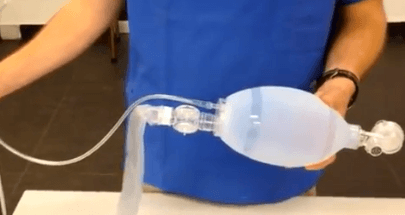
Cape Town Emergency Medicine YouTube Channel
In line with the philosophy and awesomeness of FOAM, Dr. Almero Oosthuizen and the EM Physicians at Cape Town South Africa have created the EM Cape Town YouTube Channel for the purposes of demonstrating critical EM procedures. This great series was created with zero budget, limited time, and only with the use of an iPhone for recording purposes. This group is very passionate about teaching, and it shows through the videos. [+]
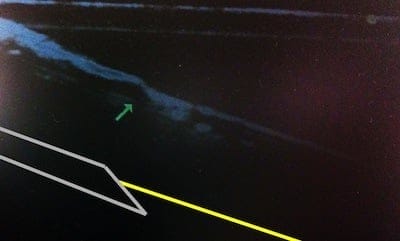
Trick of Trade: Needle foreign body removal
An IV drug user accidentally breaks off a 25-gauge needle in his/her forearm and presents to your ED for needle foreign body removal. How can you minimize the degree of trauma to the patient? How can you minimize the number of incisions made in order to find and remove this “needle in a haystack”? [+]
Patwari Academy videos: Toxicology
What is your approach to the poisoned patient? Listen to these 4 videos by Dr. Rahul Patwari to build your foundation of knowledge in toxicology. Introduction Toxidromes Testing Decontamination [+]
Director of Growth, Strategic Alliance Initiative, Center [+]
Does assessment drive learning?
“The ability to secure meaning in the course of our experience is a basic human need… But meaning is not simply found; it is constructed.” – Elliot Eisner A few days ago I participated in a Twitter chat led by a physician-educator from the United Kingdom. This Twitter chat (#ukmeded) is usually held on Thursdays at 9:00 pm UK time. This was a rich discussion on Twitter, and it also allowed me to participate in a discussion with people from other parts of the world. The most recent topic was on assessment (follow the link and learn more about the subtopics discussed). [+]
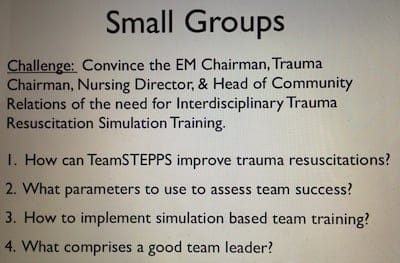
Creating a successful workshop
This past week was the 2013 International Meeting on Simulation in Healthcare Simulation Society, organized by the Society for Simulation in Healthcare (SSIH) in Orlando, FL. This was the second time that I attended this conference, and the first year that I tweeted (#IMSH2013) through it. This was also the first time that I had ever organized a workshop for a conference. Boy was I nervous! I wanted it to be a great experience for those who attended. I wanted the participants to learn.. laugh.. cry… in other words, I wanted to change their lives! [+]

PV card: VBG versus ABG
You obtain a venous blood gas (VBG) on a patient with a COPD exacerbation because you are concerned about hypercarbia. You get a value of 55 mmHg. How correlative is that compared to an arterial blood gas (ABG). There has been a lot of literature on how well the pH correlates between the ABG and VBG but what about pCO2? A small study (n=89) from 20121 found that with a cutoff of pCO2 < 45 mmHg, the venous pCO2 is 100% sensitive in ruling out arterial hypercarbia. When the pCO2 was ≥ 45 mmHg, the VBG was less correlative. Below is [+]