


Patwari Academy videos: Demystifiying how ECGs work
As a nice segue from the Low Risk Chest Pain videos, below is a 3-part series on Demystifying the Electrocardiogram by Dr. Rahul Patwari. It takes talent to make the complex simple. [+]

Director of Growth, Strategic [+]
App review: POC Ultrasound Guide
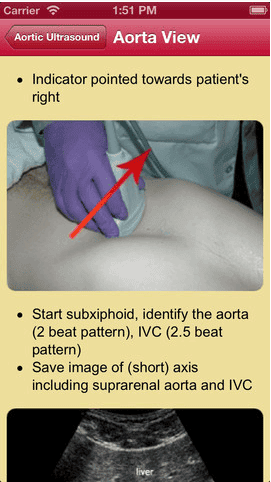
There is a new free app called POC Ultrasound Guide [iTunes link], created by Wexner Medical Center at Ohio State University. [+]
Director of Growth, Strategic Alliance Initiative, Center for Innovation and Digital Health
Massachusetts General Hospital;
Chief [+]
Website: Emergency Board Review
The emergency board in-training exam is a standardized exam that takes place every year in most if not all of the EM residency programs in the United States. It is administered on the last Wednesday in February. The exam is administered by the American Board of Emergency Medicine (ABEM). The knowledge assessed by this exam is what’s expected from residents in their third year of residency. According to ABEM there is a strong correlation between the in-training score and passing of the boards. [+]
RIME – Evaluating Learners
Lets talk about an effective evaluation process called RIME developed in 1999 by Pangaro. Not only is the name catchy, but it also makes intuitive sense. RIME stands for R – reporter I – interpreter M – manager E – educator / expert [+]
PV card: Diagnosis of DVT (ACCP guidelines)
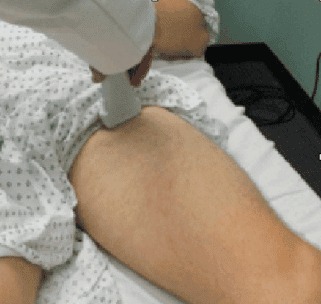
A patient presents with an asymmetric leg with trace pitting edema in the affected leg. What is your diagnostic approach to such a patient? What is the role of D-dimer and ultrasound (U/S)? Does this match the 2012 American College of Chest Physicians (ACCP) guidelines? The first step is to determine your patient's pretest probability because the recommendations vary based on risk. I can tell you that many ED patients come in with a Wells score of 1-2, which places them in the "moderate pretest probability" category. There are 2 approaches you can take based on the availability of resources at [+]
One-dose vancomycin for SSTIs: Just don’t do it
You are managing an otherwise healthy patient with cellulitis but no abscess to poke. You decide this patient needs antibiotics but is stable enough to go home.”Give em’ a dose of vanc before they go,” right? [+]
Trick of Trade: Incision and loop drainage using tourniquet
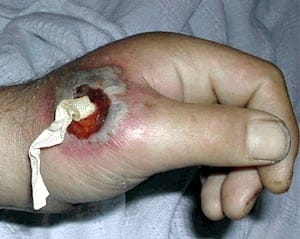
The technique for abscess drainage traditionally is incision and drainage (I&D). In August 2012, I wrote about incision and loop drainage (I&LD), which it seems has gained popularity over time with similar outcomes. This technique involves using a sterile vascular loop, which is thin and long enough to form a loose knotted loop. The video below by Dr. Rob Orman reviews the steps. But, what if you don’t have a vascular loop in the ED? [+]
Patwari Academy videos: Low risk chest pain
One of the most common complaints in the Emergency Department is chest pain. Is it something serious? How do I risk-stratify patients with potential acute coronary syndrome? What should I be thinking of and not missing? Rahul goes over the low-risk chest pain patient in 2 great, short teaching videos, based partly on the 2010 AHA/ACC Guideline for ACS risk stratification. [+]
The Socratic Method
Diagnostic reasoning is one of the most complex, analytical, and intuitive processes to develop in the medical profession. Even seasoned physicians spend a lot of time fine tuning this skill. Although charged with teaching others, some excellent diagnosticians find it difficult to explain in detail how they arrived at a diagnosis or a differential diagnosis. Some might even find themselves in a position in which they have to assess someone else’s diagnostic reasoning. This task is even more daunting since we are not all taught much about this process, even less how to teach it to others. [+]
Lost in translation: What counts as asynchronous learning?
Reiter et al 1 just published a review on Individual Interactive Instruction also known as asynchronous learning in the Annals of Emergency Medicine. They chronicled the events in 2008 that led CORD (Council of Emergency Medicine Residency Directors) to recommend integration of individual interactive instruction into the residency curriculum. The summary recommendations by Sadosty et al 2 discuss components, strengths, and weakness of both asynchronous and synchronous learning paradigms along with background about Malcolm Knowles and andragogy. [+]