


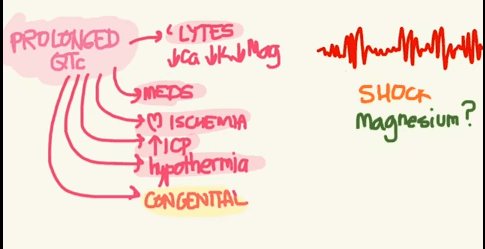
Patwari Academy video: Torsades de Pointes
Torsades de pointes is a polymorphic form of ventricular tachycardia. Why does this occur? What does it characteristically look like? Why is this an important form of ventricular tachycardia to differentiate from the more classic monomorphic ventricular tachycardia? View this short 9 minute video on QT intervals and Torsades de Pointes. [+]

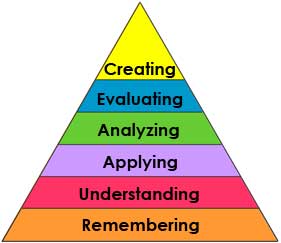
Reflections on CMS Simulation Instructor Course
I just completed the 4 day intensive Center for Medical Simulation Institute for Medical Simulation Instructor Course. The title of the course is a mouthful and just as intense and high yield as the actual course was itself. The chief purpose of the course is to develop debriefing skills as a medical instructor. The structure and nature of the course seemed so effortless and fluid, and yet at the end of the 4 days, I knew that the debriefing skills I had learned were ingrained into my brain. I highly recommend this course to any medical educator with simulation interest. [+]
Navigating the waters of medical education and social media
SUNY Downstate Department of Emergency Medicine held a lecture series May 22, 2013 as a primer for the EM residents on how to use social media to enhance medical education. This session was designed to be an introduction for the novice on how to get the most out of FOAM (Free Open Access Meducation), Twitter, and Blogging with a section on professionalism. Invited speakers included Drs. David Marcus, Jeremy Faust, Jordana Haber, and myself Nikita Joshi. The slides from the session are presented below. Enjoy! [+]

Pitfalls to avoid in collecting patient related teaching materials
Educators are eager to gather valuable learning tools such as EKGs and x-rays to be used in teaching for our learners, whether from our home institutions or internationally through the internet. However, this may not always be seen as altruistic; history and even modern day medicine is full of examples of misguided attempts to further medicine at the expense of patients such as the Tuskegee Syphilis Experiment from 1932-1972. The focus of this post is how to go about collecting patient data for teaching purposes and avoiding confidentiality and consent violations while always remaining respectful of the patient and their [+]
Lead aVR: The Forgotten 12th Lead
Augmented leads (aVR, aVF, and aVL) were developed to derive more localized information looking at the right, lower, and left part of the heart respectively. Specifically, lead aVR obtains information from the right upper side of the heart. It also gives reciprocal information on the left lateral side of the heart, which is already covered by leads aVL, I, II, V5, and V6. This is the main reason lead aVR has become forgotten. [+]
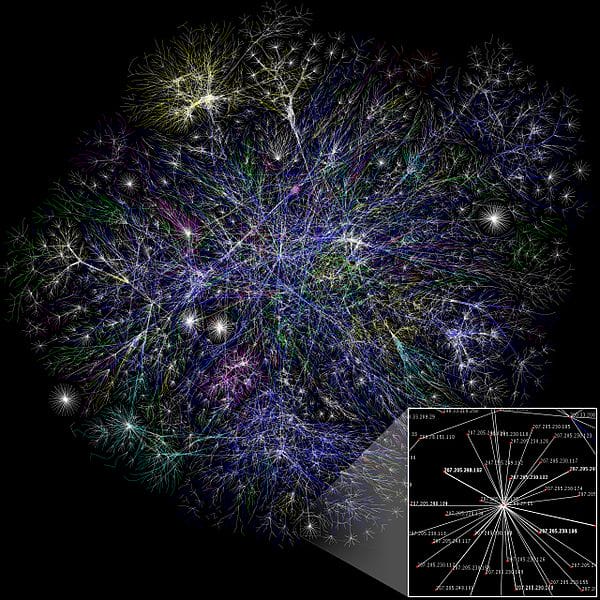
Should physicians be trained as “knowledge workers”?
According to Wikipedia a Knowledge Worker is someone whose main job is to employ creative, divergent, convergent thinking to solve problems with the help of searching new information. In the 21st century these Knowledge Workers may use Internet tools, such as social media, to form a collaborative network of expertise. These networks might be open or not. There are plenty of companies using knowledge management in order to optimize their performance. [+]
Wellens’ Syndrome: Is it on your radar?
Wellen’s Syndrome was first described in 1982 in which 75% of patients with t wave inversions in V2-V4 went on to have an acute myocardial infarction (MI). This was again repeated in 1989, and showed that all patients with this morphology had >50% LAD stenosis. The incidence in the United States is about 10-15%. [+]
Must We Avoid Nitrofurantoin with Impaired Renal Function?
Acute uncomplicated cystitis is becoming more difficult to treat in the setting of increasing antimicrobial resistance. In the 2010 IDSA Guideline, as summarized in a PV Card on Cystitis and Pyelonephritis in Women, nitrofurantoin is now listed as the first-line choice, surpassing ciprofloxacin and sulfamethoxazole/trimethoprim from the previous iteration. [+]
RUSH protocol: Rapid Ultrasound for Shock and Hypotension
Patients with hypotension or shock have high mortality rates, and traditional physical exam techniques can be misleading. Diagnosis and initial care must be accurate and prompt to optimize patient care. Ultrasound is ideal for the evaluation of critically ill patients in shock, and ACEP guidelines now delineate a new category of ultrasound (US)– “resuscitative.” Bedside US allows for direct visualization of pathology and differentiation of shock states. The RUSH Protocol was first introduced in 2006 by Weingart SD et al, and later published in 2009. It was designed to be a rapid and easy to perform US protocol (<2 minutes) [+]
PV card: Pediatric Assessment Triangle
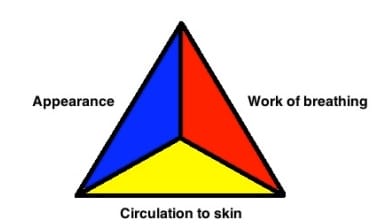
Have you heard of the Pediatric Assessment Triangle? Taught in the Pediatric Education for Prehospital Professionals (PEPP) certification course, it provides a clear and simple approach to the emergency assessment of pediatric patients. The following PV card summarizes the PAT: PV Card: Pediatric Assessment Triangle Adapted from [1] Go to ALiEM (PV) Cards for more resources. Reference Dieckmann R, Brownstein D, Gausche-Hill M. The pediatric assessment triangle: a novel approach for the rapid evaluation of children. Pediatr Emerg Care. 2010;26(4):312-315. [PubMed]