


Out-of-Hospital Cardiac Arrest and Prehospital Intubation
Worldwide, death from cardiac arrest in the out-of-hospital setting remains the leading cause of mortality. Focuses have aimed at improving bystander CPR, public access to AEDs, minimizing chest compression interruptions, and decreasing the emphasis on advanced airway management. This latter concept has become so important that the AHA/ASA have now changed their “ABC” philosophy to “CAB.” Below is the review of the literature that has changed this philosophy. [+]
Welcome new blog team member: Dr. Matt Astin
Welcome superstar Dr. Matt Astin to the ALiEM blog family. Matt is the Clinical Assistant Professor of EM and IM at Medical Center of Central Georgia, Mercer University School of Medicine. We’re incredibly happy here to add him as our new secret weapon in the social media and FOAM arena. After having met him in real-life at this past SAEM meeting, I can’t imagine a better fit for this team. Welcome! Follow him on Twitter: @mastinmd. Here is brief bio by Matt: [+]
EM-IM Residency Training: Is 5 Years Worth It?
As a new member of the ALiEM team, I am joining Dr. Salim Rezaie as the second member to be board certified in both Emergency Medicine and Internal Medicine. Since 2006, I have been asked numerous times, “Why EM/IM?” My answer is simple: I like both. But five years of residency and not be a surgeon? What can you do with this type of training? [+]
Why do we lecture?
The video lecture below is from Rhona Sharpe (@rjsharpe), the Head of the Oxford Center and Learning Development and Deputy Director of the Directorate of Human Resources at Oxford Brooks University. It is taken from First Step into Learning and Teaching in Higher Education (#fslt12) — a MOOC which took place last year. [+]
![Shuhan He, [+]</p></body></html>](https://www.aliem.com/wp-content/uploads/2020/03/Shuhan_He_MD.jpg)
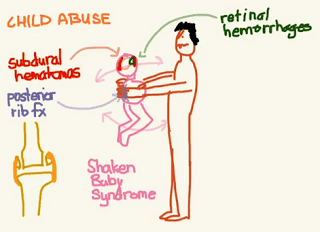
Patwari Academy video: Child abuse injury patterns
What are common injury patterns seen in children who are abused? Non-accidental trauma should always be considered in pediatric patients who present with traumatic injuries. Watch this great 8 minute video on child abuse injury patterns by Dr. Rahul Patwari. [+]

On the Horizon: Propofol for Migraines
Propofol for the treatment of migraines in the ED might be on the horizon. This will possibly be a new practice in emergency medicine, although it has been known for some time. Propofol, when given at procedural sedation doses, seems to miraculously terminate migraines refractory to usual treatment. Patients awake with minimal to no headache and may be discharged from the ED much quicker than traditional treatment with possibly less side effects. The proposed mechanism of action is described in below papers, but in short, propofol seems to “reboot” the brain and terminate the migraine. [+]
Maximizing Conferences through Twitter
Conferences are necessary. It’s how we network, exchange research ideas, and share advances in emergency medicine. The reality is that we cannot attend every conference out there because of time, money, and schedule conflicts. But thanks to Twitter, it is no longer necessary to be physically present to reap the benefits of a conference. This post lists information on how to get involved and stay involved with the Twitter conversation and learn from our great conferences without breaking your bank or schedule. [+]

PV Card: Contraindications to Thrombolytics in Stroke
This Paucis Verbis (PV) card is an updated version of the PV card on Contraindications to Thrombolytics for CVA from September 10, 2010, based on the Stroke 2013 AHA/ASA new guidelines that were just published.1 Some changes include... There is new mention of new anticoagulants in the market with additional absolute exclusion criteria. A blood glucose < 50 mg/dL has been upgraded from a relative exclusion to an absolute exclusion criteria. There is no more mention of glucose > 400 mg/dL as an exclusion criteria. Seizure at onset of presentation has moved from an absolute to a relative risk. Post-AMI pericarditis is no longer [+]
Calcium before Diltiazem may reduce hypotension in rapid atrial dysrhythmias
The Case A 56 y/o man presents to the ED via ambulance. He was sent from clinic for ‘new onset afib.’ His pulse ranges between 130 and 175 bpm, while his blood pressure is holding steady at 106/58 mm Hg. He has a past medical history significant for hypertension and hypercholesterolemia. His only medications are hydrochlorothiazide and atorvastatin. The decision is made to administer an IV medication to ‘rate control’ the patient with a goal heart rate < 100 bpm. Calcium channel blockers, such as diltiazem and verapamil, can both cause hypotension. In the case above, the patient has [+]

How Social Media is Making an Impact in Medicine
Whether you realize it or not, the use of social media (i.e. Facebook, twitter, and blogs) has found its way into the world of medical students, residents, physicians, and medical educators all around the world. The use of these resources has several advantages versus in-person/print educational tool: Overcomes physical or temporal barriers Provides searchable content Encourages interactivity [+]