


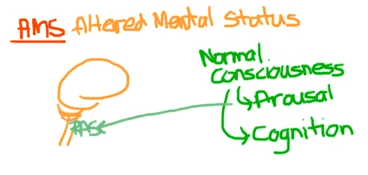
Patwari Academy video: Altered mental status
Get an organized approach on the broad chief complaint of “Altered Mental Status”. Learn about the AEIOU TIPS mnemonic om this 20 minute video by Dr. Rahul Patwari. [+]

Director of Growth, Strategic Alliance Initiative, Center for [+]
Poll: Disability Insurance – Yes or No?
I am set to graduate residency this June 2013 and among all the other things on my to-do list such as credentialing paperwork for my future employer is to explore disability insurance. Because I know very little about insurance, I decided to do some research. What is disability insurance? Why should I get it? Do I need it as a physician? Do I need it as an emergency physician? Take a poll and see the crowd-sourced results… [+]
Management of Syncope
“Done Fell Out”, or DFO, is a common saying in the South to describe syncope. Although the saying is funny the diagnosis is not. Syncope accounts for about 3–5% of ED visits and 1–6% of hospital admissions. In patients >65, syncope is the 6th most common cause of hospitalization. How do you approach the management of patients with syncope? [+]
Sim Case Series: Perimortem C-Section
Case Writer: Clare Desmond, MD Peer Reviewer and Editor: Nikita Joshi, MD Keywords: Cardiac arrest, Perimortem C-section [+]
Director of Growth, Strategic Alliance Initiative, Center for Innovation and Digital Health
Massachusetts General Hospital;
Chief Scientific Officer, Conductscience.com
Sim Case Series: Incorporating ABEM Milestones
In this week’s simulation case, you will notice the addition of a table which is a description of ABEM Milestone #9 – General approach to Procedures (PC9). I created this table after attending a workshop from Dr. Danielle Hart (Assistant Residency Director and Director of Simulation at Hennepin County Medical Center). During the 2013 CORD assembly in Denver, Dr. Hart held a session in which she described a novel method by which to incorporate the ABEM milestones into simulation cases. This would accomplish two things: Provide an evaluation tool for the learners Easily incorporate milestones to evaluate residents [+]

Trick of the Trade: Rapid Oral Phenytoin Loading in the ED
A 57-year-old male (75 kg) presents to the ED after a witnessed seizure. He describes a history of seizure disorder and is prescribed phenytoin, but recently ran out. A level is sent and, not surprisingly, results as < 3 mcg/mL (negative). After a complete workup, the decision is made to ‘load’ him with phenytoin 1 gm and discharge him with a prescription to resume phenytoin. An IV was not placed. Can you rapidly load him orally? [+]
Be a great speaker: 10 practical pearls (part 5 of 5)
For the CORD Distinguished Educator’s Coaching Program, Dr. Gus Garmel has kindly offered to share his top 50 points to improve one’s speaking skills. These tips are great for anyone who plans to do public speaking. Thus far, this “be a great speaker” series has reviewed 40 pearls. [+]
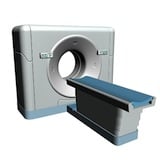
Chest Pain: Coronary CT Angiography in the ED
It is well known that taking a good history and physical, getting a non-ischemic EKG, and serial cardiac biomarkers, results in a risk of death/AMI of <5% in 30 days. Patients, in whom you still suspect have CAD, should undergo provocative testing within the next 72 hours based on the AHA/ACC guidelines. Their guidelines deem provocative testing as including: Exercise treadmill stress test, Myocardial perfusion scan, Stress echocardiography, and/or Coronary CT angiography (CCTA). [+]
Trick of the Trade: Fluorescein for lost contact lens
A patient’s contact lens broke when she was trying to take it off. She feels the pieces are still inside her eye, but she was unable to fish them out. When you look through the slit lamp, you are unable to to see whether there are contact lens pieces inside since they are clear. [+]
NG Lavage: Indicated or Outdated?
Nasogastric lavage (NGL) seems to be a logical procedure in the evaluation of patients with suspected upper GI bleeding, but does the evidence support the logic? Most studies state that endoscopy should occur within 24 hours of presentation, but the optimal timing within the first 24 hours is unclear. Rebleeding is the greatest predictor of mortality, and these patients benefit from aggressive, early endoscopic hemostatic therapy and/or surgery. So what are the arguments for and against NGL? [+]