


Article Review: Hidden cost of reducing resident duty hours
Patient care versus education This is the tug-of-war struggle that residency programs constantly grapple with. Residents work in an apprenticeship model where they are both patient providers and learners. Both are critical in residency training, but they sometimes negatively impact each other. For instance, EM residents hand-off their patients to covering residents while attending their weekly conference classes. In contrast, residents may skip that day’s board teaching rounds to manage an acutely decompensating patient. [+]
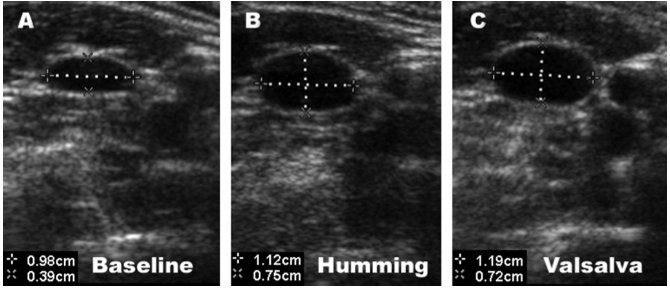
Trick of the Trade: Hum-out the jugular veins
Placing an IV in the external jugular vein requires venous distension maneuvers. This means having the patient perform a Valsalva maneuver or be placed in a Trendelenburg position. Have you ever had a patient who didn’t quite get the Valsalva maneuver concept, or couldn’t tolerate a head-down position? [+]


Article review: Commentary on graduate medical education in the U.S.
“How ready are medical students for the clinical practice of medicine?” This was the question addressed by the landmark 1910 Flexner Report from the Carnegie Foundation for the Advancement of Teaching. Back in the early 1900’s, residency training did not exist yet, and students entered clinical practice immediately after graduation from medical school. The quality of medical training varied significantly with alarming deficiencies in many medical schools. An independent, nonprofessional organization was commissioned to report about the situation in order to pressure the public to reform medical school education. [+]
Hot off the press: Review of EM Clerkship Primer book
In an upcoming issue of the Academic Emergency Medicine journal, there is a glowing review of a collaborative project that I was involved in. If you are a medical student about to do an EM rotation, or serve as a faculty advisor for an EM medical student, feel free to distribute this EM Clerkship Primer (FREE book!) for them to read. [Update 11/21/13: New link for free download PDF] This was the first official project to come out of the Clerkship Directors in Emergency Medicine (CDEM). It was written by 22 established medical educators in EM, led by our fearless [+]

Trick of the Trade: The defensive arts against pimping
Thanks to Dr. Rob Roger’s podcast on EM-RAP Educator’s Edition series, I learned of one of the funniest publications EVER in a medical journal. It was published on April 1, 2009 in JAMA. The article focuses on teaching medical students the essential skill set– how to survive “pimping”. Pimping traditionally occurs when an attending physician poses a difficult question to a learner in a public forum, such as board rounds or in the operating room. As a student or resident, you know that this will happen during your training, and you should be prepared. If you think of pimping as [+]

Article Review: Learning assessment using virtual patients
I am developing a new microsimulation module to help EM clerkship students gain a more realistic exposure to high-acuity patients. Emergent conditions, such as ectopic pregnancy, acute tricyclic overdose, and ST elevation MI, are usually cared for by senior residents and attendings. Rarely are students primarily involved in these cases. [+]
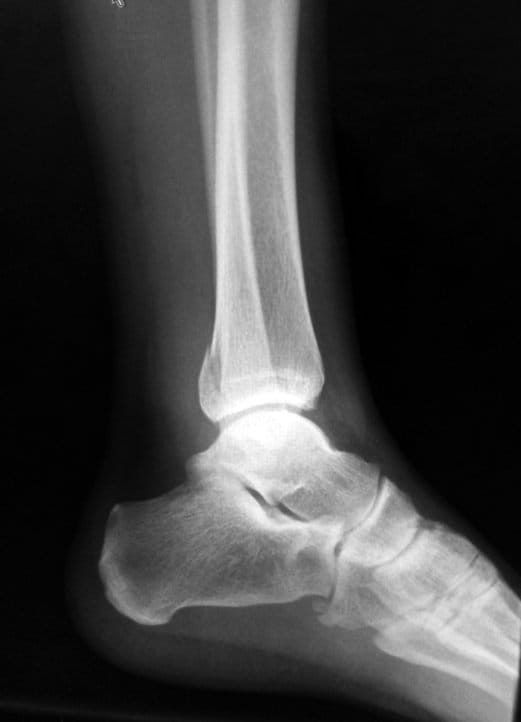
A radiology pearl: A subtle orthopedic diagnosis
A man recently presents with knee pain after pivoting and torquing his knee while falling. He complains of concurrent mild ankle pain. He presents with this tib-fib xray. Realizing that a proximal fibular fracture can present concurrently with a medial malleolus fracture or deltoid ligament rupture, we obtained xrays of the ankle. We were looking for a Maisonneuve fracture. Do you see an ankle injury in these four images? [+]
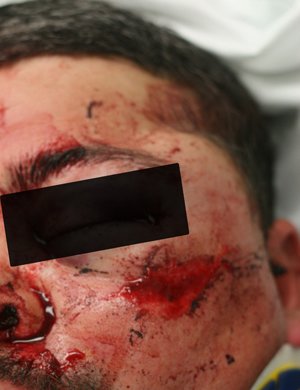
Trick of the Trade: Don’t have a mirror in the ED?
Several times in the ED, I have needed a mirror for patient care. Example 1 A moderately intoxicated patient presents with a facial or scalp laceration. S/he adamantly refuses to have it repaired in the ED, because of the disbelief of that there is indeed a laceration. You want to show the patient, using a mirror, but you don’t have one. [+]
Article review: How do you assess the quality of educational research articles?
Imagine this. You are about to conduct an innovative educational project and want to get a research publication out of it. What are considered strong methodological qualities of an educational research study? What can you do to improve your chances for publication?The authors in this study developed and use an instrument to help measure the methodological quality of quantitative studies in medical education. This instrument, the Medical Education Research Study Quality Instrument (MERSQI), was used to show that scores were predictive of manuscript acceptance into the 2008 Journal of General Internal Medicine (JGIM) special issue on medical education.What is the [+]
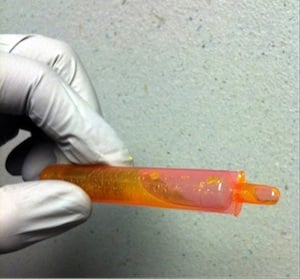
Trick of the Trade: Easy ocular application of fluoroscein
Gently instilling a fluorescein drop into a patient’s eye requires that the patient keep his/her eye still. What do you do for a patient who can’t quite stay still enough, such as an infant? This is an innovative trick of the trade, written by Dr. Sam Ko (Loma Linda EM resident) and Kimberly Chan (Loma Linda medical student). [+]