


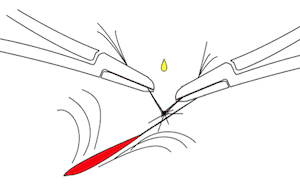
Trick of the Trade: Modified hair apposition technique
I got a nice email from Dr. John Fowler from Turkey who recently published a modified version of the Hair Apposition Technique (HAT) trick in the American Journal of Emergency Medicine in 2009. Read more about the traditional HAT trick. The HAT trick allows for scalp laceration closure by using scalp hair and tissue adhesive glue. Contraindications to this technique for wound closure include hair strands less than 3 cm, because it is difficult to manually manipulate short hair. [+]
Article review: Feedback in the Emergency Department
Feedback is important in teaching and learning. I am constantly surprised by medical student and resident comments that they rarely receive feedback. In contrast, seemingly on every shift, I hear faculty giving little nuggets of feedback - during the oral presentation, during the resuscitation, after a difficult interaction, etc. There must be some disconnect. This multi-institutional, survey-based, observational study at 17 EM residency programs asked attending physicians and residents about feedback in the ED. The primary outcome measure was overall satisfaction with feedback. Results The response rate was 71% for attendings (373/525) and 60% for residents (356/596). Side note: Survey [+]
Paucis Verbis card: Supratherapeutic INR
What do you do in these cases? A man on coumadin for atrial fibrillation arrives because he has increased bruising on his skin. He is otherwise asymptomatic. He was told to come to the ED because of a lab result showing INR = 6. A woman on coumadin for atrial fibrillation arrives because of melena and hematemesis. She looks extremely sheet-white pale. Her vital signs are surprising normal. Stat labs show a hematocrit of 15 and an INR value that the lab is “unable to calculate” because it is so high. Updated on 6/1/13: Old PV card revised to reflect [+]
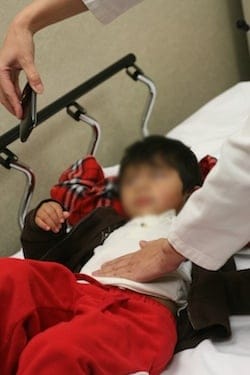
Trick of the Trade: Pediatric Distractors
Remember back in the day when we made simple toys for pediatric patients to focus on during the physical exam? Remember the inflated medical glove +/- a face drawn on it? I just encountered a FREE iPhone application (Eye Handbook), which has a lot of useful features. I currently only use the Pediatric Fixation animations. They can be found under the “Testing” section. Kids (and often adults too!) become mesmerized and distracted by the cartoon animations. [+]
Article review: Conference attendance ≠ better test scores
Not all learners should be expected to have the same learning style. This is exemplified in a recent multicenter study, which addresses whether attendance at weekly residency conferences correlates with a better in-service training examination (ITE) score. The ITE score was used as an outcome measure, because it correlates with the resident’s likelihood for passing the official ABEM Board Exams. Both tests draw from questions in the Model of the Clinical Practice of Emergency Medicine. [+]

Paucis Verbis card: TIA prognosis
Here is another installment of the Paucis Verbis (In a Few Words) e-card series on the topic of Transient Ischemic Attacks (TIA) from EM Clinics of North America. I use this card a lot specifically for the ABCD2 risk-stratification score. PV Card: Transient Ischemic Attacks Adapted from [1] Go to ALiEM (PV) Cards for more resources. Reference Ross M, Nahab F. Management of transient ischemia attacks in the twenty-first century. Emerg Med Clin North Am. 2009;27(1):51-69, viii. [PubMed]
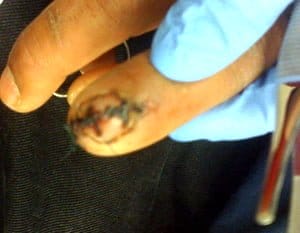
Trick of the Trade: Finger nailbed laceration repair
Over the years, I have been frustrated by how inelegant finger nailbed closure is. Nailbed lacerations are often sustained by a major crush injury, resulting in a stellate and irregular laceration pattern. This typically also requires the crushed fingernail to be removed. Cosmesis is never ideal because pieces of the nailbed are often missing, as seen in the photo above. Occasionally, nailbed lacerations are caused by a cutting rather than a crush mechanism. In these cases, I use a different technique. I leave the fingernail on. In fact, I use the fingernail to help reapproximate the nailbed edges. [+]

Top 10 tips when making your rank list
“How do I decide how to order the residency programs on my rank list?” On Feb 24, 2010, every residency applicant will have a brief moment of panic as their rank list is submitted and officially certified. Next week, I’ll be joining a group podcast with Dr. Rob Rogers (Maryland) and Dr. Dave Manthey (Wake Forest) for the next installment of EMRAcast. This new podcast series was created by Rob for EMRA for the specific purpose of providing advice to medical students. I still find it fascinating how much you can get done virtually. We’ll all be using Skype from [+]
Article review: Service versus education
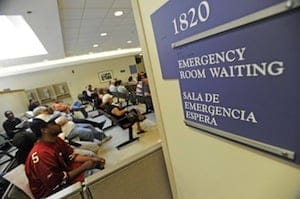
It’s a busy day in the Emergency Department and there are 5 new patients to be seen. The waiting room is overflowing. As the attending, you are getting barraged with a million questions to answer and problems to fix. There is also a case of a full-thickness burn patient going to the OR in the next few minutes. She’d be a perfect teaching case for the residents. Should I have the residents go see the new patients, or should I pull them all aside to show them the physical findings and teach about burns for 5-10 minutes? [+]
Trick of the Trade: Hip flexion strength testing
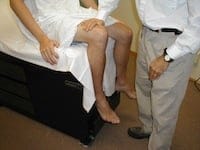
Testing lower extremity strength is a crucial part of the examination in patients with low back pain. In Emergency Departments, however, some patients provide a suboptimal effort because of general fatigue or malingering. How can you differentiate whether asymmetric hip flexion weakness is from suboptimal effort or true weakness? [+]
![Shuhan He, [+]</p></body></html>](https://www.aliem.com/wp-content/uploads/2020/03/Shuhan_He_MD.jpg)