


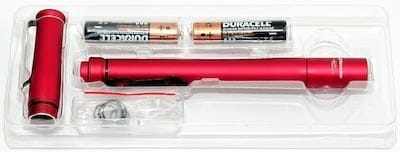
Trick of the Trade: My new penlight
On any given day in the ED, I use my super-bright penlight 2-5 times a day. It is amazing what things I’ve almost missed without a bright LED flashlight. Subtle HSV-2 labial ulcerations in a female patient with dysuria Additional scalp lacerations hidden in the hair Tonsillar exudates in a patient with strep pharyngitis Unequal pupillary responses in a brightly lit trauma room in a head-injured patient I wanted to revisit a prior post about the importance of changing your Tungsten penlight to a LED light. [+]

Paucis Verbis card: Urinary tract infection
In this installment of the Paucis Verbis (In a Few Words) e-card series, the topic is Urinary Tract Infection. UTIs are one of the most common infections that we treat in the Emergency Department. PV Card: Urinary Tract Infection Adapted from [1] Go to ALiEM (PV) Cards for more resources. Reference Norris D, Young J. Urinary tract infections: diagnosis and management in the emergency department. Emerg Med Clin North Am. 2008;26(2):413-30, ix. [PubMed]
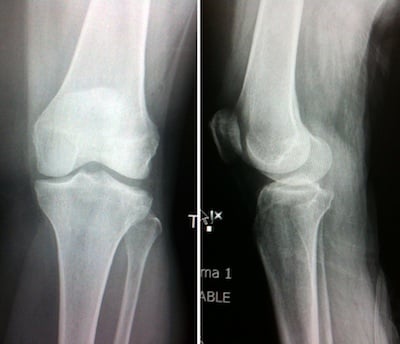
Beware the hidden tibia plateau fracture
Find the fracture in this patient with blunt knee trauma. As a general rule, plain films are insensitive in ruling out orthopedic injuries. One particularly tricky area is the knee. This 2-view knee series above is normal. Did you know that the sensitivity of picking up knee fractures is as low as 79% with a 2-view series and 85% with a 4-view series? With the advent of CT imaging, more and more subtle fractures are being found. [+]

Trick of the trade: Minimizing post-LP headache
Have you ever performed a lumbar puncture (LP) in a patient, only to have them return the next day for new debilitating headaches? It’s worse when sitting up, and much improved when laying down. You hate adding more problems for the patient, put you are certain that s/he now has a post-LP headache. [+]
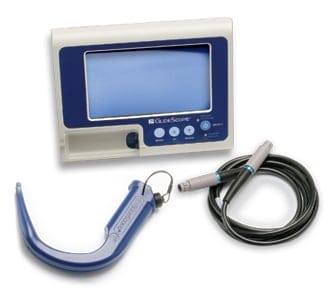
Article review: Glidescope success in difficult airway simulation
Since our department got a Glidescope, it has rapidly become a go-to difficult airway adjunct when intubating patients in the ED. Note: I have no financial ties to Glidescope. This education article Sim Healthcare is a head-to-head comparison between video laryngoscopy (VL) versus direct laryngoscopy (DL) in a difficult airway simulation model. In this prospective, convenience sample of EM attendings and residents who were all novice operators of VL, the subjects were asked intubate 3 types of mannequin scenarios using a Macintosh curve laryngoscope for DL and a Glidescope for VL. [+]
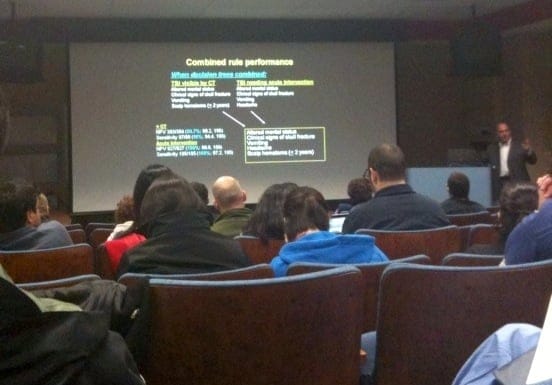
Paucis Verbis card: Pediatric blunt head injury
In this installment of the Paucis Verbis (In a Few Words) e-card series, the topic is Pediatric Blunt Head Trauma. This a particularly relevant topic given the recent press and discussions about CT irradiation and the cancer risk especially in pediatric patients. It's also relevant since Dr. Nate Kuppermann (UC Davis) just gave Grand Rounds at our UCSF-SFGH EM residency program. He first-authored a landmark 2009 Lancet article on minor head injury in kids. PV Card: Pediatric Blunt Head Trauma Adapted from [1] Go to ALiEM (PV) Cards for more resources. Update June 27, 2017 We collaborated with PECARN [+]
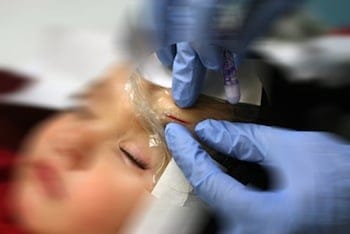
Trick of the Trade: Preventing tissue adhesive seepage
As great as tissue adhesives are in wound closure, they come with some risk. For instance, liquid adhesives, such as Dermabond, can "run" and contact undesired areas such as eyelid margins. Careful application of tissue adhesives is critical. How can you minimize the amount of seepage of tissue adhesive to undesired areas? Trick of the Trade Create an impermeable tape barrier I already mentioned this in an earlier post in July, but I now have more experience with this technique. Here are some recent photos of this trick in action. Cut out a circle from a transparent tape adhesive. In [+]
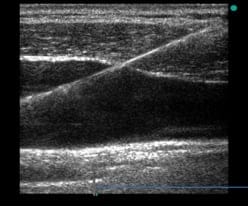
Article review: Long axis view for IJ line placement
As bedside ultrasonography is becoming a staple in central line placement (especially of internal jugular lines), emergency physicians now can minimize complications, such as carotid artery puncture and a pneumothorax. Traditionally, the US probe is positioned along the short-axis of the IJ during the procedure (see right). [+]

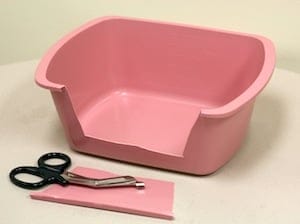
Trick of the trade: Irrigating scalp lacerations
Thanks to my new-found Emergency Medicine friend in Turkey, Dr. John Fowler has some useful tips about scalp lacerations. Often patients with scalp lacerations have clotted blood in their hair. While we can irrigate the wound itself (and unavoidably soaking the patient in cold irrigation fluid), a lot of blood remains stuck in their hair. It would be nice if we could completely wash out the blood. This would further allows us to detect occult scalp lacerations. [+]

Paucis verbis card: The Red Eye
Here is another installment of the Paucis Verbis (In a Few Words) e-card series on the topic of The Red Eye from EM Clinics of North America, Here are some sample images: Epidemic keratoconjunctivitis (note subtle white precipitates over pupil) Bacterial conjunctivitis (note injection along inferior fornix) Episcleritis Scleritis (note bluish hue of deep scleral vessels) Acute angle closure glaucoma (note corneal edema) PV Card: The Red Eye Go to ALiEM (PV) Cards for more resources.