


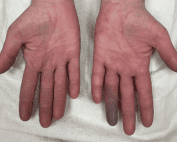
Case of a Blue, Painful Finger
A 37-year-old female presented to the emergency department for evaluation of numbness and discoloration to her left fourth finger, which had started the day before. The patient stated that she was gardening the previous day and afterward she noticed the discoloration and pain. The patient denied taking any medications. She reported recreational methamphetamine and heroin use. She denied any chest pain or difficulty breathing. She denied any history of Raynaud’s phenomenon, venous thromboembolism, or history of trauma. The patient was afebrile with normal vital signs. Physical exam revealed cyanotic discoloration to the left distal fourth finger. Sensation was intact to [+]

EM Fellowship Match Advice: Medical Education Fellowship
One of the more popular fellowships in Emergency Medicine (EM) is the Medical Education Fellowship. These fellowships come in 1- and 2-year formats and some also come with an advanced degree. What do typical medical education and medical education scholarship fellowships typically entail? What are the logistics and timing when you decide to apply? Hosted by Dr. Michael Gisondi (Stanford) and Dr. Michelle Lin (UCSF), this podcast with 3 esteemed fellowship directors help provide some much-needed guidance. Podcast Panelists Dr. Danielle E. Hart (Hennepin County Medical Center) Dr. Dmitri Papanagnou (Thomas Jefferson University) Dr. Jeffrey Riddell (LAC-USC Medical Center) Listen [+]
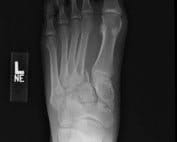
EMRad: Approach to the Traumatic Foot X-ray
Radiology teaching during medical school is variable, ranging from informal teaching to required clerkships [1]. Many of us likely received an approach to a chest x-ray, but approaches to other studies may or may not have not been taught. We can do better! Enter EM:Rad, a series aimed at providing “just in time” approaches to commonly ordered radiology studies in the emergency department. When applicable, it will provide pertinent measurements specific to management, and offer a framework for when to get an additional view, if appropriate. We recently covered the elbow, wrist, and ankle: now, the foot x-ray. [+]
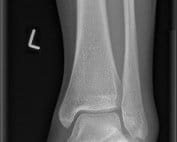
EMRad: Radiologic Approach to the Traumatic Ankle
Radiology teaching during medical school is variable, ranging from informal teaching to required clerkships [1]. Many of us likely received an approach to a chest x-ray, but approaches to other studies may or may not have not been taught. We can do better! Enter EM:Rad, a series aimed at providing “just in time” approaches to commonly ordered radiology studies in the emergency department. When applicable, it will provide pertinent measurements specific to management, and offer a framework for when to get an additional view, if appropriate. We recently covered the elbow and wrist. Now: the ankle. [+]

IDEA series: REDman simulation for teaching resuscitation skills in low-resource settings
In many parts of the world, emergency medicine is just beginning to emerge as a specialty. In Pakistan, for example, it was introduced as recently as 2012. Hands-on training in the management of critically-ill medical and trauma patients is imperative for adequate preparation of board-certified emergency physicians, but accurate simulation can be hard to come by in developing nations. There are very few training programs and dedicated centers for healthcare professionals, and even fewer that have simulation [1]. High-tech simulation equipment is often cost-prohibitive; a mobile, low-tech simulation lab could potentially address the need for advanced training in resuscitation for [+]
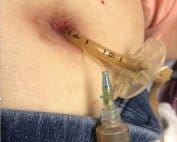
Trick of the Trade: Deflate an Undeflatable Gastrostomy Tube
A 54-year-old female with a past medical history of throat cancer presents for gastrostomy tube (G-tube) replacement. The initial G-tube was placed 3 years ago. Most recently, the patient had the G-tube changed 7 months ago. She presents to the Emergency Department because the G-tube is leaking from the tubing that is external to the skin. When you attempt to deflate the cuff, you are unsuccessful. [+]
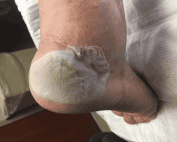
ACMT Toxicology Visual Pearls: Painful Foot
Question: A patient presents with foot pain 4 hours after contact with a chemical in the garage. What chemical exposure likely caused this injury? Ethylene Glycol Hydrofluoric Acid Petroleum Propylene Glycol Sodium Hypochlorite [+]

Ethen Ellington
Carolinas Medical Center
Charlotte, NC ,br>
Latest posts by Ethen Ellington [+]
Navigating Life After Residency: 10 Lessons I Learned in EMS Fellowship
The transition from residency to your first job or fellowship is an exciting time in any career. New opportunities for professional growth appear, but with them come a new and unique set of challenges. Transitioning from a structured clinical environment to more independent work and self-driven projects can be a difficult transition. For this reason, we wanted to share a few lessons we’ve learned. Although this advice is derived from our experience in EMS fellowship, we expect that it will apply and be helpful to other upcoming fellows and all people stepping away from residency to enter the workforce. [+]
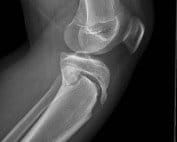
SplintER: Knee pain after the jump
A 15 year-old male presents to the emergency department with left knee pain and swelling after jumping while attempting to dunk a basketball. You obtain a knee x-ray (image 1 courtesy of Mark Hopkins, MD). What is your diagnosis? What patient population is at risk for this injury? What other injuries occur in this anatomical location? What is your emergency department management? [+]
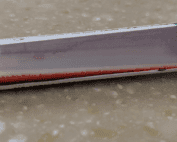
ACMT Toxicology Visual Pearls: The Blood Sample Doesn’t Look Right
Which administered antidote causes this appearance in a blood sample? a) Hydroxocobalamin b) Intravenous Lipid Emulsion (ILE) c) Methylene blue d) N-acetylcysteine [+]

Austin Costa, MD
Carolinas Medical Center
Charlotte, NC