



Teaching in the age of COVID-19: Real-time video conferencing
As programs face unprecedented pressure to protect learners via social distancing, many will turn to video as their preferred method to continue delivering educational content. The need to do this in “real-time” makes conferencing applications an obvious choice for content delivery. Programs may already be familiar with this technology for conference calls, further lowering the bar for early adoption. Studies demonstrate the educational content via live video is at least as effective as a live lecture [1]. Further, they have been used to deliver additional content, such as small groups and simulation [2]. With current technology, these tools are widely [+]

Teaching in the age of COVID-19: Teaching with tech while socially distancing
With the arrival of SARS-CoV2 (COVID-19) in North America, programs are facing the need to reconsider how they deliver didactic education to their learners. The ACGME only allows for 20% of the curriculum to be delivered in an asynchronous fashion. The remainder is delivered through traditional didactic means, including “small-group sessions, such as break-out groups, serially repeated conference sessions, practicum sessions, or large-group planned educational activities.” With mandatory social distancing likely to become standard practice, we present multiple solutions to bridge the gap between live, in-person conferences and asynchronous materials. [+]
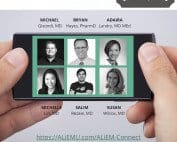
ALiEM Connect: EM residencies unite in a mega virtual conference
Weekly emergency medicine (EM) residency conferences are not exempt from the #CancelEverything movement as a result of the COVID-19 pandemic. Residency program leaders are in uncharted water, quickly pivoting to find alternative solutions to live, in-person conference sessions. We at ALiEM emphathize with these hardships and want to help. We announce ALiEM Connect, a live educational telecast with a concurrent moderated backchannel discussion on HIPAA-compliant Slack. We want to help. [+]
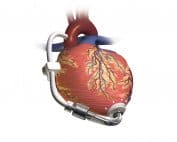
LVAD Part I: Introduction
Left ventricular assist devices (LVADs) have moved from being a bridge to a heart transplant to destination therapy for patients with severe heart failure. Although their use in the general public has increased, they still provide a challenge to the emergency medicine (EM) physician. This series aims to cover the basics of how the EM physician approaches the care of these patients. [+]

Gage Stuntz

Making Remote Work “Work” for You and Your Organization
A 32-year-old male presents for evaluation of fever and mild dry cough. His vital signs are stable and within normal limits, he is in no respiratory distress, and he looks otherwise comfortable. He is a physician at a nearby emergency department and he notifies you that he just learned that he was just exposed to a Coronavirus positive patient. He had not been wearing personal protective equipment at that time. Your diagnosis? High risk for coronavirus-19 (COVID-19) Your management? If looking well, home quarantine. If possible, he’ll be doing remote work. [+]

Announcing ALIEM Remote
We are proud to announce the ALiEM Remote series. 2020 has presented a challenging set of circumstances with an ongoing COVID pandemic, uncertainty in the workplace, and multiple educational closures at every level. With our remote series, we aim to help ameliorate these challenges by providing you with great tips and tricks for remote work, remote education, and a list of speakers ready and willing to go virtual for your next department meeting or residency conference. We want to provide everyone in emergency medicine a centralized place to find resources on how to work, learn, educate, and live remotely. [+]
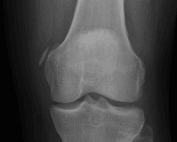
SplintER Series: Delayed pain in an injured knee
Image 1. Case courtesy of Radswiki, Radiopaedia.org A 26 year-old male presents with new medial right knee pain after twisting his knee playing soccer 3 weeks ago. His initial pain has since resolved. What is your diagnosis? What examination findings should you expect? What associated diagnoses should you assess for? What is your management in the emergency department? [+]
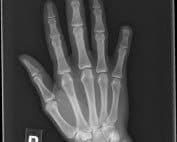
Diagnose on Sight: Post-traumatic Finger Pain
Case: A 32-year-old male with a past medical history of diabetes presents with a 1 month history of finger pain after slamming his finger in a car door. 2 weeks after the initial incident he presented to the emergency department for worsening pain and received x-rays that were negative for acute fracture. Today he presents reporting pain radiating up the hand, arm, and into the shoulder, with associated chills. His labs are significant for hyperglycemia, hyponatremia, and an elevated erythrocyte sedimentation rate and c-reactive protein. His x-ray is seen here (figure 1 image courtesy of Daniel Rogan, MD). What is [+]

Future of ALiEM: Need YOUR Input
With the arrival of a new decade, the ALiEM team has gotten quite reflective. Our last readership survey was in 2015 and it’s time for another check-in. We can track many things through Google Analytics, but there’s nothing like hearing from you directly to help us shape the upcoming year, 5 years, and 10 years. Your input is incredibly helpful to help us. We want to tailor our priorities to what YOU want. We are a volunteer organization, made up of passionate, early-adopting educators. Help us stay focused on what makes ALiEM special, helpful, and meaningful to you. [+]
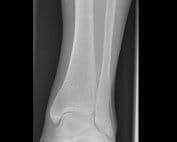
EMRad: Can’t Miss Adult Ankle and Foot Injuries
Have you ever been working at 3am and wondered, “Am I missing something? I’ll just splint and instruct the patient to follow up with their PCP in 1 week.” This is a reasonable approach, especially if you’re concerned there could be a fracture. But we can do better. Enter the “Can’t Miss” series: a series organized by body part that will help identify injuries that ideally should not be missed. This list is not meant to be a comprehensive review of each body part, but rather to highlight and improve your sensitivity for these potentially [+]