
Book Club: Forget a Mentor, Find a Sponsor
One of the most common themes in advice for career advancement is “find a mentor.” But we are rarely told HOW to find a mentor, WHY we need mentors, or WHAT ROLE mentors are supposed to play in our careers. In addition to the lack of direction regarding mentorship, when you start to research “what is mentorship,” it becomes clear that there are several limitations to the benefits of this popularized mentor-mentee relationship. To see results, the key may be more than mentorship and the answer is likely sponsorship. [+]
SplintER Series: Two cases of shoulder pain
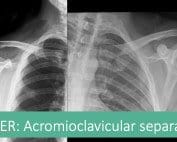
Two patients present to your emergency department: Patient 1 is a 17 year-old soccer player who fell during a game onto their right side and is now complaining of mild right shoulder pain. You obtain x-rays (Figure 1). Patient 2 is a 21 year-old motorist who lost control and went over the handlebars. They heard a pop and are complaining of left shoulder pain. You obtain shoulder x-rays (Figure 2). For these cases, what are your diagnoses, expected physical examination findings, and emergency department management? [+]
Trick of the Trade: Tracheostomy leak temporization
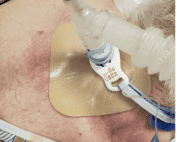
Patients who are tracheostomy and ventilator dependent are at increased risk for complications the longer they remain in this condition. One common complication is tracheomalacia. Progressive tracheomalacia can lead to air leaks around the tracheostomy cannula balloon. Initially, this can be managed by placing a longer tracheostomy cannula deeper into the trachea, however, these are often unavailable in the emergency department [1]. A second line strategy is to temporarily over-inflate the balloon, however, with chronic overinflation, eventually both the trachea and the neck stoma become too large, leading to an inability to maintain appropriate positive pressure (PEEP) and tidal volume [+]
Gaining the Diagnosis of Vitreous Hemorrhage with Ultrasound
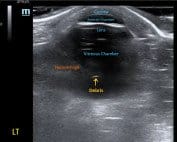
A 54 year-old male presents to the emergency department with an eye complaint. The patient works as a cook and while cleaning the grill several hours ago felt something fly into his eye. He did not immediately feel pain, but notes blurred vision and an increasing pressure-like sensation in his left eye. He describes his left-sided blurred vision as a haziness, like cobwebs over his eye. He has been able to open his eye and keep it open without difficulty. [+]

Winner of the 2020 ALiEM-EEM Fellowship Contest: Dr. Mark Ramzy
After receiving numerous high-quality submissions, we are proud to announce the winners of the 2020 Essentials of Emergency Medicine (EEM) Education Fellowship contest! Dr. Mark Ramzy from the Maimonides Medical Center Emergency Medicine Residency program has won the blog post competition. A blinded ALiEM voting panel selected his winning post after carefully examining all of the excellent entries. We are thrilled to feature it today on the blog and look forward to meeting him in San Francisco in May at the 3-day event. Thank you to everyone who submitted their work! Dr. Mark RamzyEmergency Medicine ResidentMaimonides Medical Center Emergency [+]

ALiEM AIR | Respiratory 2019 Module
Welcome to the AIR Respiratory Module! After carefully reviewing all relevant posts from the top 50 sites of the Social Media Index, the ALiEM AIR Team is proud to present the highest quality online content related to respiratory emergencies. 8 blog posts within the past 12 months (as of November 2019) met our standard of online excellence and were curated and approved for residency training by the AIR Series Board. We identified 2 AIR and 6 Honorable Mentions. We recommend programs give 4 hours (about 30 minutes per article) of III credit for this module. [+]

SAEM Clinical Image Series: Tick Bite
A 14 year old girl presenting from Mexicali with altered mental status. Her mother reports a rash about a week ago following a tick bite. She had been going to school until 4 days ago when she became very fatigued with associated vomiting, diarrhea, tactile fevers, and headache. She subsequently collapsed at home today and was difficult to arouse which prompted EMS activation. Her mother denies any prior complaint of neck stiffness, shortness of breath, cough, hematemesis, or hematochezia. [+]
Should the Trainee be Trusted? A User’s Guide to Assessment with EPAs
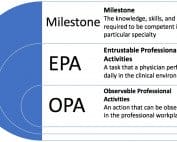
You are an attending working with a fourth-year medical student on their emergency medicine clerkship. The student sees a patient with the chief complaint of dizziness. After an initial assessment, the student says that there are no red flags in the history and the patient has a normal neurological exam. In the back of your mind you are thinking, “Does this student know the risk factors, comorbidities, and red flags? Was a thorough neurological exam performed?” How do you know the trainee should be trusted? [+]
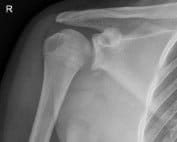
SplintER Series: The Recurrent Shoulder Dislocation
A 17 year-old football player with prior shoulder dislocation presents to the emergency department reporting shoulder pain after fall. You obtain shoulder x-rays and see the following injury (Image courtesy of Richard Hopkins, MD). What is your diagnosis? Are there any associated lesions you could expect to find? What is your emergency department management? [+]


ACMT Toxicology Visual Pearls – Look, Don’t Touch
What toxin is responsible for the most serious clinical effects experienced by patients bitten by the creature in this photo? latrotoxin Conotoxin Helothermine Tetrodotoxin Verrucotoxin [+]