Inaugural Global EM Journal Club – hosted by ALiEM and Annals of EM
 CT imaging is a powerful tool in diagnosing pathological medical conditions. Despite this, there is appropriate concern about the “magnitude of imaging-related financial costs and radiation induced malignancies.” In this month’s Annals of Emergency Medicine journal publication, Berdachl et al published about “Emergency Department Computed Tomography Utilization in the United States and Canada.” This article was selected by the journal as the featured piece for a Journal Club discussion. In this inaugural global EM journal club, ALiEM and Annals are collaborating to provide a more dynamic discussion of some of the posed questions. The focus is on teaching concepts around HOW to critically appraise a journal article rather than just receive a pre-digested summary statement from social media sites and textbooks.
 In an unprecedented collaborative effort to accelerate knowledge translation and education, ALiEM is officially partnering with Annals of Emergency Medicine. Together we will be hosting a global Journal Club discussion on ALiEM using the journal club questions posed in the journal’s journal club questions. Here’s how YOU and your colleagues can participate…
 We sometimes hear information stated as fact that may not be entirely accurate. One such example is, “I’m going to use lorazepam because it isn’t metabolized by the liver.”
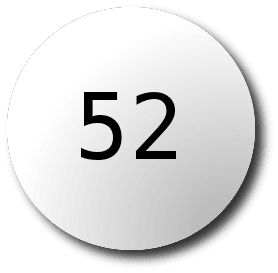 To provide a resource for evidence-based Emergency Medical education, this list of must-read landmark articles was created to supplement the Emergency Medicine (EM) internship year of training. There are 52 articles so that one article can be read at leisure each week of the year. I searched national databases and polled faculty at the University of Washington to identify articles that faculty would expect any EM resident to be familiar with or that they felt were practice-changing in EM. Articles were selected for the final list based on the quality of study design, sample size, and relevance for EM residents.