PEM POCUS Series: Soft Tissue Ultrasound

Read this tutorial on the use of point of care ultrasonography (POCUS) for pediatric soft tissue ultrasonography. Then test your skills on the ALiEMU course page to receive your PEM POCUS badge worth 2 hours of ALiEMU course credit.
Case Goals
- List the indications of performing a pediatric soft tissue point-of-care ultrasound (POCUS).
- Describe the technique for performing soft tissue POCUS.
- Interpret signs of cellulitis, abscess, and soft tissue foreign body on POCUS.
- Describe the limitations of soft tissue POCUS.
- Differentiate abscess from other soft tissue pathologies such as cysts and lymph nodes.
Case Introduction: Child with abdominal pain
Wendy is a 7-year-old girl who comes into the emergency department with redness, swelling, and pain on her left calf. Her symptoms started 1 week ago as a scratch which progressively got more red and painful. There has been no drainage from the lesion. She has had no fevers, but endorses elevated temperatures of 99 F.
On arrival, her vital signs are:
| Vital Sign | Finding |
|---|---|
| Temperature | 100.1 F |
| Heart Rate | 95 bpm |
| Blood Pressure | 105/68 |
| Respiratory Rate | 20 |
| Oxygen Saturation (room air) | 100% |
Pediatric Soft Tissue POCUS
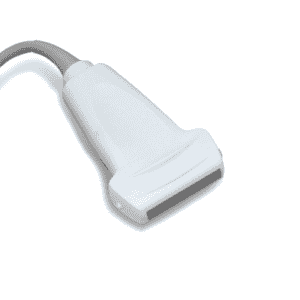
Figure 1. Linear ultrasound transducer
Probe
- Use a linear, high-frequency transducer.
Technique
- Hold the probe perpendicular to the skin.
- Scan the area of interest in 2 orthogonal (perpendicular) planes.
- If there is an abscess:
- Measure the abscess in 3 dimensions.
- Use color Doppler to ensure the structure is not vascular.
Pro Tips
- It is often helpful to ultrasound the unaffected side as a comparison.
- You cannot see what you didn’t scan. Scan the entirety of the affected area in 2 planes.
- Be aware of the patient’s comfort throughout the examination.
- A water bath may be helpful to visualize lesions in extremities such as the hands or feet.
- The probe sits just below the water’s surface and does not need to contact the skin.
- The benefits of using a water bath include better visualization of superficial structures and alleviates the need for direct skin contact.
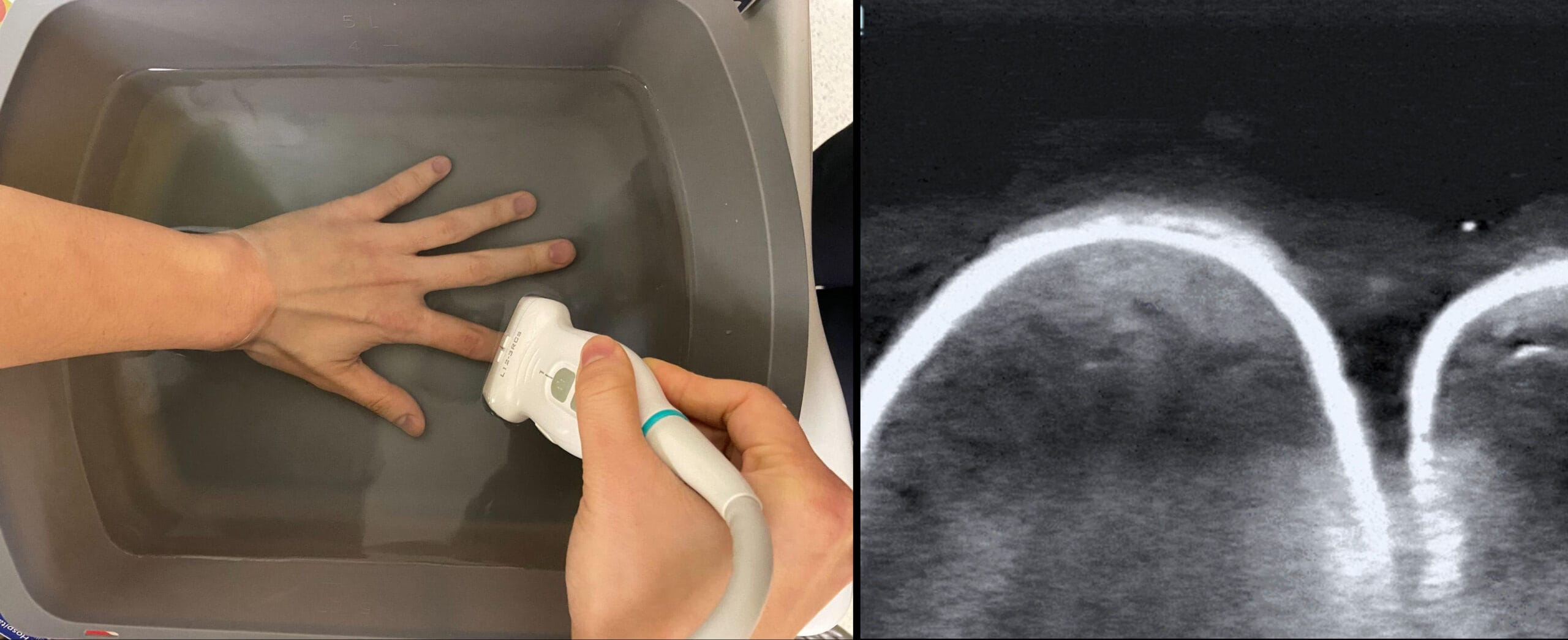
Figure 2. Left: Water bath technique; Right: Ultrasound of a toe using a water bath (image courtesy of The Pocus Atlas and Moudi Hubeishy, MD)
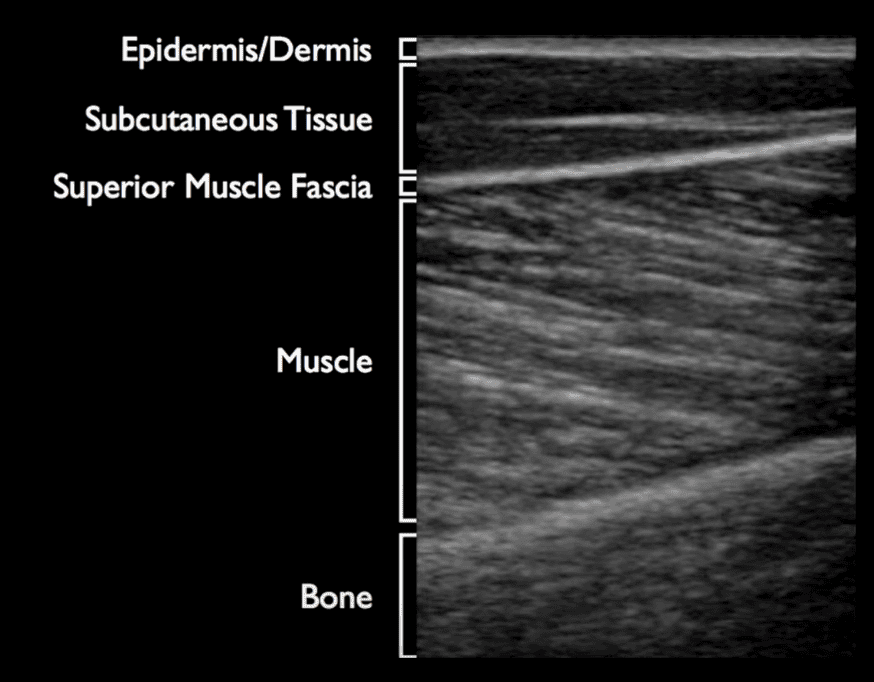
Figure 3. Normal soft tissue layers on ultrasound (image courtesy of The Pocus Atlas)
Normally on a soft tissue ultrasound, you will see layers of defined structures separated by fascial planes.
- Epidermis/dermis: This is the topmost layer and has an hyperechoic appearance on ultrasound.
- Subcutaneous tissue: This deeper layer will appear slightly more hypoechoic.
- Muscular layer: This even deeper layer classically appears striated in the long axis view, while in the short axis view, it will have a speckled appearance.
- Bone: This layer appears hyperechoic cortex with posterior shadowing.
Cellulitis has a spectrum of appearances on ultrasound. Early cellulitis may present as skin thickening (Figure 4).
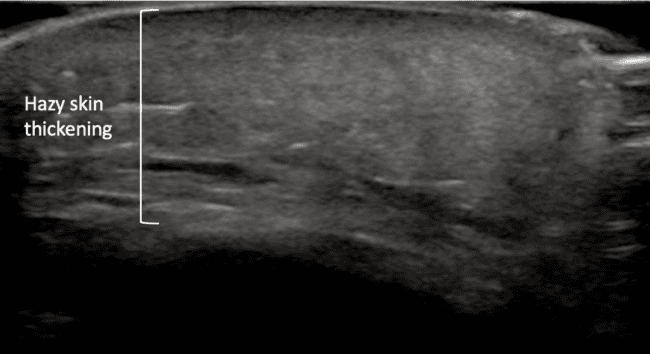
Figure 4. Cellulitis with skin thickening
As cellulitis progresses, there is effacement of the clearly differentiated structures seen above, and the tissue layers may appear hazy and hyperechoic. More advanced cellulitis may have “cobblestoning” which is the result of edematous fluid separating fat globules in the subcutaneous tissue.
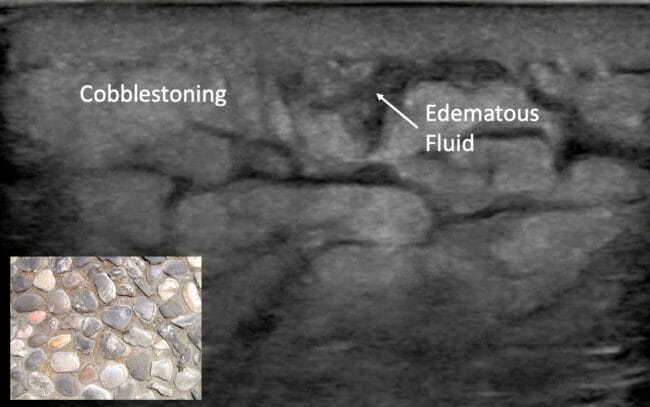
Figure 5. Cellulitis with cobblestoning
Video 1. Ultrasound showing cellulitis with cobblestoning
Abscesses can have varied appearances. They can be anechoic (black) or filled with debris leading to a heterogeneous appearance of contents. The rim may be echogenic or blend in with surrounding tissue. They may be well-circumscribed or may have irregular borders.
 A. Abscess with irregular borders and heterogeneous appearance |
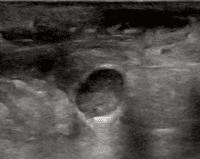 B. Well-circumscribed abscess with heterogeneous debris |
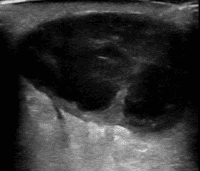 C. Larger abscess with well-circumscribed borders |
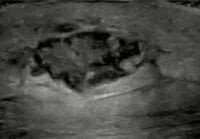 D. Abscess with irregular borders and surrounding cellulitis |
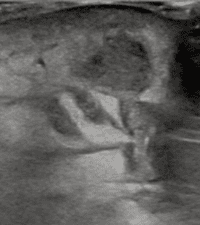 E. Abscess with irregular borders and more homogenous appearance |
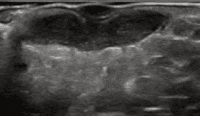 F. Superficial abscess with well-circumscribed borders |
Table 1. Examples of different appearances of abscesses on ultrasound
Video 2. Ultrasound of a cutaneous abscess
Color Doppler Flow
Placing color Doppler flow on a suspected abscess is helpful to differentiate it from a lymph node or blood vessel (see “Abscess Mimickers” section for lymph node examples). It may also aid in identifying nearby vasculature.
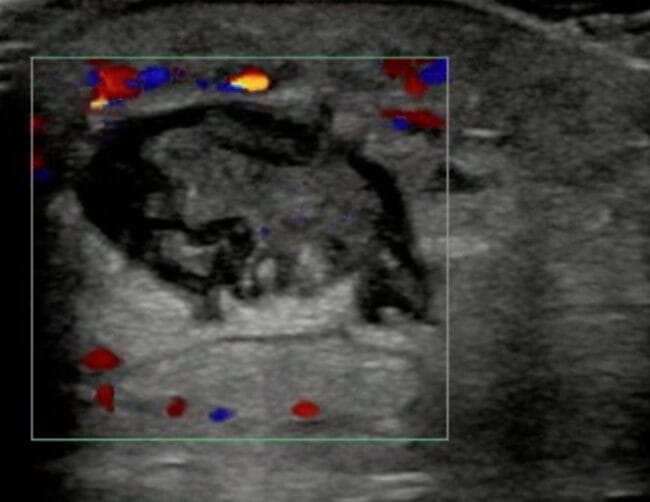
Figure 6. Abscess with color Doppler flow
Video 3. Ultrasound of cutaneous abscess with color Doppler flow
Posterior Acoustic Enhancement
Abscesses may exhibit posterior acoustic enhancement, which results in an enhanced transmission of ultrasound waves through a fluid-filled structure. Sometimes the abscess may not be as obvious and appear less anechoic due to debris. A squish (or swirl) sign may be elicited by putting pressure on the region, which will cause movement of the abscess contents. This finding has also been called “pus-talsis”.
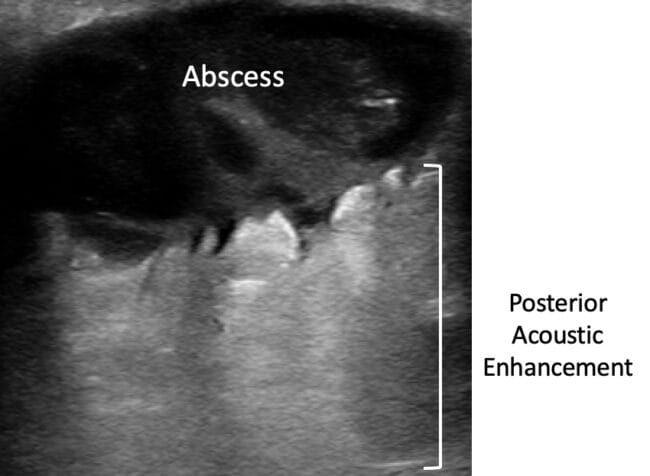
Figure 7. Abscess with posterior acoustic enhancement
Video 4. Ultrasound of cutaneous abscess with squish sign
Size Measurement
Abscesses should be measured in 2 planes. Measure depth in 1 plane and length in 2. An easy way to remember this is to measure a plus sign (+) in one view, and a minus sign (-) in the other.
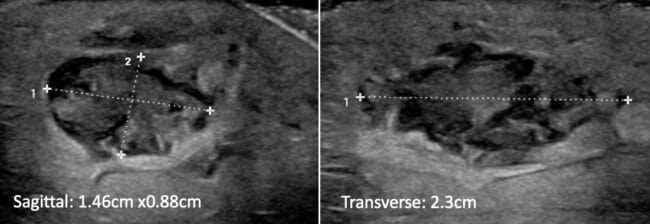
Figure 8. Measurement of abscess in two planes (images courtesy of Dr. Munaza Rizvi)
Lymph Nodes
Lymph nodes appear as ovid and well-circumscribed structures on ultrasound and may be confused for abscesses. They may be differentiated by their homogenous echotexture, central echogenic hilum. When inflamed, they may exhibit internal vascularity which should not be seen in an abscess.
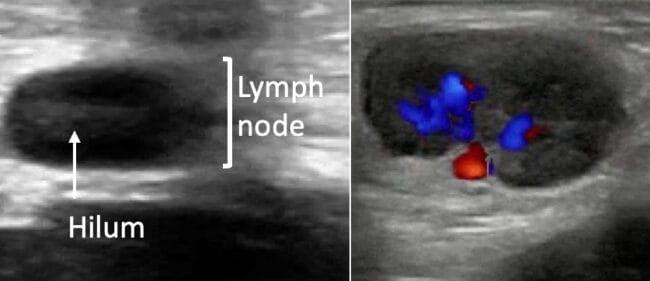
Figure 9. A lymph node with a hilum (left) and a reactive inguinal lymph node with central vascularity (right)
Cysts
Cysts are fluid-filled, well-circumscribed structures which may be similar to abscesses. A common soft tissue cyst is an epidermoid cyst, which is a subepidermoid nodule filled with keratin. In addition to physical exam clues which may help distinguish cysts from abscess, cysts are typically very well-circumscribed and more homogenous in appearance.
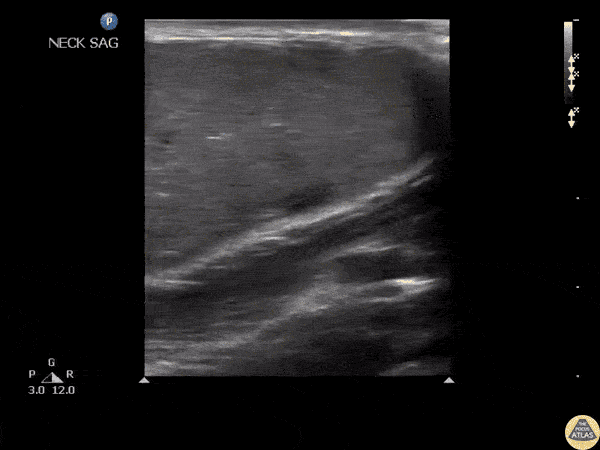
Figure 10. Epidermoid cyst (image courtesy of The Pocus Atlas and Dr. Robert Jones)
Soft tissue foreign bodies are a common pediatric presentation and can be easily identified on ultrasound. X-rays can be used to identify foreign bodies; however, their use is limited to radiopaque objects. On ultrasound, foreign bodies often appear as a hyperechoic defect.
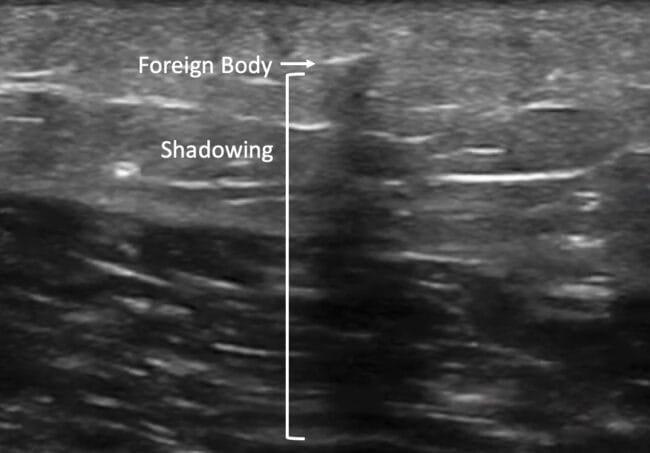
Figure 11. Hyperechoic foreign body (glass) embedded in the soft tissue of a foot with posterior shadowing
Video 5. Ultrasound of soft tissue foreign body
Foreign bodies embedded for a prolonged time may have signs of infection, such as cellulitis or abscess (Figure 12).
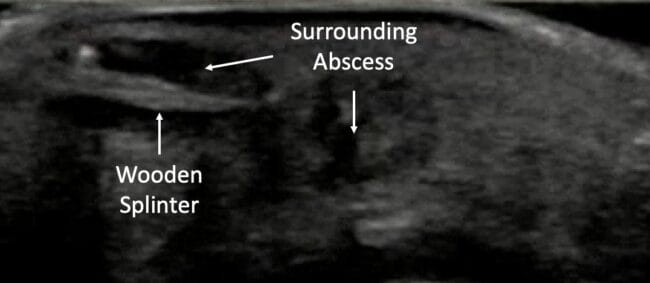
Figure 12. Wooden splinter embedded in a patient’s plantar foot with surrounding fluid collection consistent with abscess
A foreign body’s composition can affect how it appears on ultrasound. Different materials can produce characteristic ultrasound artifacts.
| Foreign Body | Ultrasound Findings | Ultrasound Image |
|---|---|---|
| Wood | Hyperechoic with posterior shadowing | 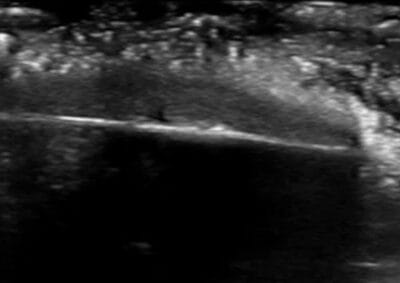 |
| Glass | Hyperechoic with posterior shadowing May have comet tail artifact |
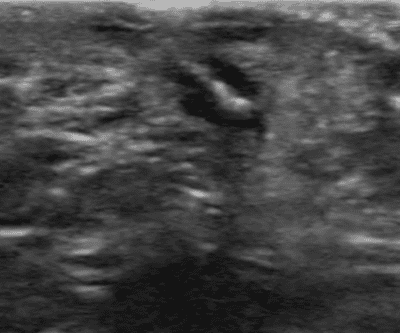
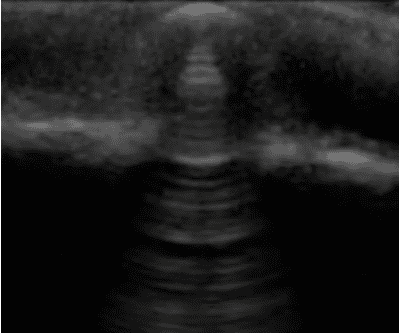 Images courtesy of Dr. Ashkon Shaahinfar |
| Metal | Very hyperechoic Often has a comet tail or reverberation artifact |
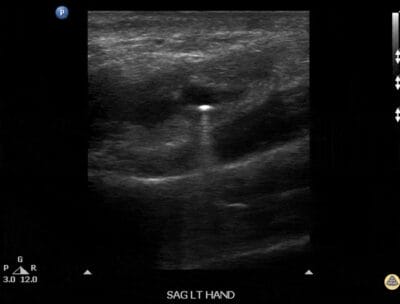 Image courtesy of The Pocus Atlas and Robert Jones DO, FACEP |
Table 2. Foreign body characteristics on ultrasound
Foreign Body Removal
Ultrasound assistance in foreign body removal may be static (used to locate the foreign body’s position) or dynamic (using ultrasound to guide foreign body removal in real-time). Measuring the foreign body and assessing the object’s depth on ultrasound may assist in determining if bedside removal versus surgical removal is indicated.
Limited evidence suggests that there may be some sonographic differences between the papular urticaria of a “skeeter syndrome” and local cellulitis. On ultrasound, both findings will have thickening of dermal and subcutaneous tissues. Angioedema characteristically includes more linear, horizontal, striated bands — in comparison to cobblestoning found in cellulitis [1]. However, additional studies are needed to confirm this.
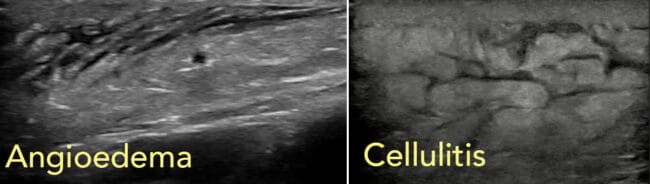
Figure 13. Ultrasound of angioedema (left) and cellulitis with cobblestoning (right). Angioedema image courtesy of Dr. Laura Malia.
Necrotizing fasciitis is a rare pediatric diagnosis but a rapidly progressive and life-threatening condition if not identified quickly. While necrotizing fasciitis is primarily a clinical diagnosis, imaging may be helpful when the diagnosis is uncertain. Computed tomography (CT) and magnetic resonance imaging (MRI) have good test characteristics; however, these tests are time-consuming and may not be available in all centers. CT also involves ionizing radiation. Point-of-care ultrasound has the benefit of rapid bedside use and lack of ionizing radiation.
On ultrasound, early necrotizing fasciitis presents with thickening of the subcutaneous tissue, similar to cellulitis. Fluid in the fascial layers may also be present, and a thick layer of pre-fascial fluid >4 mm has been associated with necrotizing fasciitis [2]. Subcutaneous air with dirty shadowing (Figure 14) is a characteristic but late finding in necrotizing fasciitis. These findings may be recalled using the “STAFF” mnemonic [3]:
- Subcutaneous Thickening
- Air
- Fascial Fluid
Note: It may be difficult to distinguish early cases of necrotizing fasciitis from cellulitis. Therefore ultrasound should not be used to exclude necrotizing fasciitis. Patients with findings concerning for necrotizing fasciitis require additional work-up and surgical consultation.
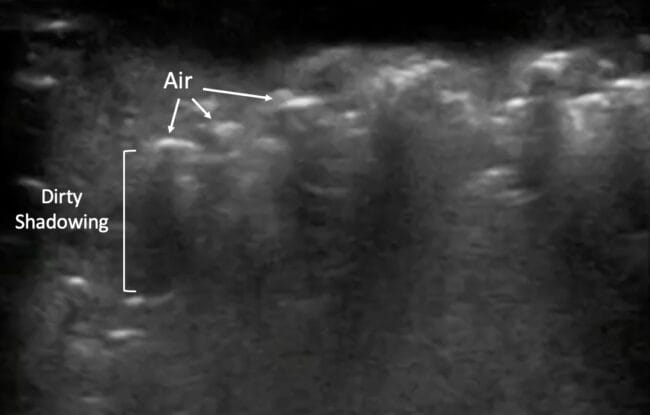
Figure 14. Necrotizing fasciitis on POCUS exam showing the presence of air with dirty shadowing within soft tissue (image courtesy of Dr. Di Coneybeare)
For additional reading on ultrasounding necrotizing fasciitis, see these ALiEM articles:
- As with all ultrasound applications, soft tissue POCUS is operator dependent.
- The ultrasound can only see what is scanned. You must make sure the lesion is fully imaged.
- It is difficult to differentiate between various types of fluid on ultrasound. For example, hematomas may resemble abscesses. Therefore clinical context is important.
There have been multiple studies (Table 3) that support the use of soft tissue POCUS for identification of cellulitis or abscess. Soft tissue POCUS has been shown to have good sensitivity and specificity. It has also been shown to be superior to clinical assessment in several pediatric studies.
POCUS can also reduce the length of stay (LOS) for our patients. In one pediatric study including 3,094 children suspected of a soft tissue infection who underwent either POCUS or radiology department ultrasound, POCUS was shown to have a shorter median LOS by 73 minutes (95% CI 52.4-93.6 min) [4].
| Study | N | Methods | POCUS Sensitivity (95% CI) | POCUS Specificity (95% CI) | Conclusions |
|---|---|---|---|---|---|
| Gottleib et al., Ann Emerg Med 2020 [5] | 2,656 | Systematic review of adult and pediatric studies | 94.6%
(89.4-97.4%) |
85.4%
(78.9-90.2%) |
POCUS has good diagnostic accuracy. Led to correct change in management in 10% of cases. |
| Lam et al., J Emerg Med 2018 [6] | 327 | Prospective cohort study of children 6mo-18yrs comparing clinical assessment to POCUS | 90.3%
(83.4-94.7%) |
80%
(70.0-87.4%) |
POCUS changed management in 22.9% of cases* |
| Subramaniam et al., Acad Emerg Med 2016 [7] | 800 | Systematic review of adult and pediatric (patients from birth – 21yrs) studies | 97%
(94-98%) |
83%
(75-88%) |
POCUS may assist physicians in distinguishing cellulitis versus abscess. |
| Adams et al., J Pediatr 2015 [8] | 151 | Prospective cohort study of patients 3mo-21yrs comparing clinical assessment to POCUS | 96%
(90-99%) |
87%
(74-95%) |
POCUS changed management in 27% of cases.** For every 4 ultrasounds performed, 1 correct change in management. |
| Sivitz et al., J Emerg Med 2009 [9] | 50 | Prospective cohort study of children <18yrs comparing clinical assessment to POCUS | 90%
(77-100%) |
83%
(70-97%) |
POCUS changed management in 22% of cases. |
Table 3. Studies comparing soft tissue POCUS to clinical assessment in the management of soft tissue infections.
- Changed incision location/size
- Added packing
- Medical to surgical management
- Surgical to medical management
- Consultation of specialist
- Other
Case Resolution
After reviewing the literature, you decide to perform a POCUS to evaluate for skin abscess. You place a linear, high-frequency transducer over the patient’s affected area and you observe the following:
Video 6. Soft tissue ultrasound showing an abscess with heterogeneous appearance and irregular borders with posterior acoustic enhancement, surrounding soft tissue haziness, cobblestoning
ED Course
The patient underwent successful incision and drainage of the abscess, and she was discharged home with antibiotics.
Learn More…
References
- Tay ET, Ngai KM, Tsung JW, Sanders JE. Point-of-Care Ultrasound on Management of Cellulitis Versus Local Angioedema in the Pediatric Emergency Department. Pediatr Emerg Care. 2022 Feb 1;38(2):e674-e677. doi: 10.1097/PEC.0000000000002416. PMID: 34398861.
- Yen ZS, Wang HP, Ma HM, et al. Ultrasonographic screening of clinically-suspected necrotizing fasciitis. Acad Emerg Med. 2002;9:1448–1451. PMID 12460854.
- Castleberg E, Jenson N, Dinh VA. Diagnosis of necrotizing faciitis with bedside ultrasound: the STAFF Exam. West J Emerg Med. 2014 Feb;15(1):111-3. doi: 10.5811/westjem.2013.8.18303. PMID: 24578776; PMCID: PMC3935782.
- Lin MJ, Neuman M, Rempell R, Monuteaux M, Levy J. Point-of-Care Ultrasound is Associated With Decreased Length of Stay in Children Presenting to the Emergency Department With Soft Tissue Infection. J Emerg Med. 2018 Jan;54(1):96-101. doi: 10.1016/j.jemermed.2017.09.017. Epub 2017 Oct 27. PMID: 29110982.
- Gottlieb M, Avila J, Chottiner M, Peksa GD. Point-of-Care Ultrasonography for the Diagnosis of Skin and Soft Tissue Abscesses: A Systematic Review and Meta-analysis. Ann Emerg Med. 2020 Jul;76(1):67-77. doi: 10.1016/j.annemergmed.2020.01.004. Epub 2020 Feb 17. Erratum in: Ann Emerg Med. 2022 Jan;79(1):90. PMID: 32081383.
- Lam SHF, Sivitz A, Alade K, Doniger SJ, Tessaro MO, Rabiner JE, Arroyo A, Castillo EM, Thompson CA, Yang M, Mistry RD. Comparison of Ultrasound Guidance vs. Clinical Assessment Alone for Management of Pediatric Skin and Soft Tissue Infections. J Emerg Med. 2018 Nov;55(5):693-701. doi: 10.1016/j.jemermed.2018.07.010. Epub 2018 Aug 28. PMID: 30170835; PMCID: PMC6369916.
- Subramaniam S, Bober J, Chao J, Zehtabchi S. Point-of-care Ultrasound for Diagnosis of Abscess in Skin and Soft Tissue Infections. Acad Emerg Med. 2016 Nov;23(11):1298-1306. doi: 10.1111/acem.13049. Epub 2016 Nov 1. PMID: 27770490.
- Adams CM, Neuman MI, Levy JA. Point-of-Care Ultrasonography for the Diagnosis of Pediatric Soft Tissue Infection. J Pediatr. 2016 Feb;169:122-7.e1. doi: 10.1016/j.jpeds.2015.10.026. Epub 2015 Nov 10. PMID: 26563535.
- Sivitz AB, Lam SH, Ramirez-Schrempp D, Valente JH, Nagdev AD. Effect of bedside ultrasound on management of pediatric soft-tissue infection. J Emerg Med. 2010 Nov;39(5):637-43. doi: 10.1016/j.jemermed.2009.05.013. Epub 2009 Aug 8. PMID: 19665335.