PEM POCUS Series: Pediatric Ultrasound-Guided Fascia Iliaca Block

PEM POCUS fascia iliaca block

Read this tutorial on the use of point of care ultrasonography (POCUS) for pediatric fascia iliac block. Then test your skills on the ALiEMU course page to receive your PEM POCUS badge worth 2 hours of ALiEMU course credit.

Module Goals

  1. List indications of performing a pediatric point-of-care ultrasound fascia iliaca nerve block (POCUS-FINB)
  2. List the limitations of POCUS-FINB
  3. Describe the technique for performing POCUS fascia iliaca nerve block 
  4. Identify anatomical landmarks accurately on POCUS
  5. Calculate the maximum safe weight-based local anesthetic dose
  6. Recognize the signs and symptoms of local anesthetic systemic toxicity (LAST) and describe the appropriate management 

Case Introduction: Child with thigh pain

Sarah is a 3-year-old girl who comes into the emergency department complaining of acute thigh pain that started 30 minutes ago. She was playing on a trampoline when she accidentally fell off. She had immediate pain to the left thigh and she’s been unable to walk since the fall. Parents carried her in to the emergency department for further evaluation.

On arrival, her vital signs are:

Vital SignFinding
Temperature97.5 F
Heart Rate130 bpm
Blood Pressure97/50
Respiratory Rate22
Oxygen Saturation (room air)100%

 
She is in distress secondary to pain. She has a normal HEENT, neck, cardiac, respiratory, abdominal, and back examination. She points to her left anterior thigh when you ask her where her pain is. She has limited range of motion with flexion and extension of her left hip and complains of pain with any manipulation. Her leg is externally rotated and slightly shortened when compared to the opposite leg. She cries when you palpate any part of her leg, but is able to range her knee, ankle, and foot fully. She has 2+ dorsalis pedis and posterior tibialis pulses with intact sensation to light touch throughout. 
 
Given her pain with range of motion at her hip and tenderness to palpation to the femur, you obtain a thigh radiograph, which shows a femoral shaft fracture. The orthopedic team is notified about the patient in order to discuss pain control and possible next steps. You ask your self several questions to help you best care for this child. 
  1. What can we do for pain control in this patient? Are there opioid-sparing options?
  2. Can nerve blockade be utilized in this case?
  3. What local anesthetic is appropriate, and what is a safe dose?
  4. What safety precautions need to be considered for performing a regional block?
You consult with the orthopedic team and discuss performing a Point-of-Care Ultrasound-Guided Fascia Iliaca Nerve Block (POCUS-FINB).

The fascia iliaca nerve block anesthetizes the femoral nerve (FN), lateral femoral cutaneous (LFC) nerve, and obturator nerve (ON), as demonstrated in the lower leg nerve anatomy drawing below.


anatomy leg

Figure 1. Thigh and lower leg sensory nerve anatomy. The expected distribution of a fascia iliaca block (via infrainguinal approach described here) includes the FN – Femoral Nerve, often but not always the LFC – Lateral Femoral Cutaneous Nerve, and unreliably the ON – Obturator Nerve.  (Illustration by Dr. Muki Kangwa)


The fascia iliaca block thus can assist with pain control for:

  1. Femoral neck and femoral shaft fractures
  2. Patella injuries 
  3. Anterior thigh wound care

Clinicians should keep in mind relative contraindications to this procedure particularly in nonverbal or peri-verbal patients. See the exclusion criteria from the UCSF Benioff Children’s Hospital Oakland institutional protocol:

  1. Young, preverbal patients <2 years old (lower age cutoff may range from 2-5 years dependent on orthopedic consultant)
  2. Concern for acute compartment syndrome of the thigh
    • Tense or firm compartment on palpation
    • Expanding hematoma of the thigh
    • Pain out of proportion to injury
    • Neurologic deficit in femoral distribution
    • Mechanism: crush injury or open fracture
  3. Any child with an American Society of Anesthesia score of >2
  4. Neurologic deficits in the femoral distribution (specifically loss of touch sensation to the anterior thigh)
  5. Signs of vascular injury, coagulopathy, hemodynamic instability, and/or suspected multi-organ system trauma  
  6. Patients at high risk for local anesthetic toxicity (e.g., cardiac/hepatic dysfunction, metabolic/mitochondrial disease, infants <6 months)

Using ultrasonography to perform a fascia iliaca nerve block helps to identify key anatomical landmarks for appropriate administration of local anesthetic. The point-of-care ultrasound-guided fascia iliaca nerve block (POCUS-FINB) allows us to identify the area of interest, which is underneath the fascia iliaca fascial plane. Note that this plane is just deep to femoral artery and vein, in contrast to the fascia lata plane, which is superior to the femoral artery and vein (Figure 2). The area is best visualized distal to the inguinal canal and proximal to the bifurcation of the femoral artery.  


fascia iliaca anatomy

Figure 2. Relevant anatomy for the fascia iliaca block for the right groin, demonstrating the location of the fascia iliaca and fascia lata planes (illustration by Dr. Muki Kangwa)

fascia iliaca equipment supplies

Figure 3. Key supplies needed for the ultrasound-guided fascia iliaca block


  1. Sterile gel 
  2. Chlorhexidine/alcohol wipes 
  3. Sterile ultrasound probe cover (or equivalent such as Tegaderm dressing, sterile glove, or condom)
  4. 22-gauge spinal/block needle (50-80 mm) with attached tubing primed with sterile saline
  5. Local anesthetic
    • Superficial: 1% lidocaine (buffered, if available) for skin wheal via 30G needle, or LMX, or EMLA cream 
    • Block: Long-acting local anesthetic
  6. 10-20 cc syringes (depending on child’s weight)
  7. Sterile saline flushes 
  8. Tegaderm dressing to label block after completion

Local Anesthetic (LA) Dosing for Fascia Iliaca Block

Table 1. Local anesthetic medications, their pharmacokinetics, and weight-based maximum dosages [1, 2]

A long-acting local anesthetic (e.g., ropivacaine or bupivacaine)  is preferred for this block. Ropivacaine is the preferred anesthetic, because it is thought to be less lipophilic than bupivacaine and, as such, less cardiotoxic and neurotoxic. Minimizing the risk of local anesthetic toxicity is particularly relevant to fascial plane blocks, which remain far from the neurovascular bundle and thus require higher volumes of local anesthetic. This higher volume allows for bathing of the nerve via anesthetic tracking along the fascial plane. Table 1 above illustrates the pharmacokinetics and weight-based dosing maximums for the various local anesthetics.

Table 2 provides guidance on the fascia iliaca block volumes with the medication diluted in 0.9% normal saline to increase the volume. The suggested volumes of local anesthetic and saline depend on the type and concentration of local anesthetic also well as the patient’s ideal body weight, which impacts both the relative size of the potential space in the fascial plane as well as the maximum safe dose.

long anesthetic fascia iliaca dosing table

Table 2. Suggested Fascia Iliaca Block Total Volumes with Local Anesthetic + 0.9% Normal Saline [1, 3, 4]

Notes: Use ~½ maximum dose. Use ideal body weight for obese patients. Volumes shown represent local anesthetic (LA) volume. Hydrodissect/dilute with additional 1-10 ml saline to achieve target total block volume.
 

1. Consult with orthopedist to discuss appropriateness of block.

2. Perform and document a neurovascular and compartment exam prior to and after block.

  • Sensation
    • Anterior thigh (femoral)
    • Medial shin/calf (saphenous/femoral)
    • Lateral foot (sural)
    • Plantar surface of foot/heel (tibial)
    • Dorsal surface of foot (superficial peroneal)
    • 1st webspace (deep peroneal)
  • Motor
    • Great toe extension (extensor hallucis longus)
    • Great toe flexion (flexor hallucis longus)
    • Foot dorsiflexion (tibialis anterior)
    • Foot plantar flexion (gastrocnemius/soleus)
  • Vascular
    • Dorsalis pedis
    • Posterior tibial
    • Capillary refill

3. Ensure informed consent with patient and family.

  • In addition to discussion of risks/benefits/alternatives, consider the relative need for pre-traction/pre-op pain control vs. post-op pain control. Depending on the dose of local anesthetic and timing of operation, a subsequent intra-operative block may or may not be possible.

4. Position the patient supine with hip and knee in extension.

5. Anticipate the child’s anxiety during the procedure.

  • Pro-tip: Depending on the age of the child, the presence of a guardian can be helpful in keeping the child calm and cooperative while undergoing the procedure.
  • It may be helpful to have a dedicated person to hold the limb of interest during the procedure.
  • Involve a childlife specialist, if available.
  • Offering the child a toy, book, or phone/tablet for distraction during the procedure can also help ease anxiety. 
  • Intranasal or intravenous midazolam may be needed for anxiolysis.

6. Select a linear high frequency ultrasound transducer with a wide footprint.

Figure 4. Ultrasound linear transducer with wide footprint and appropriate ultrasound musculoskeletal setting


7. Apply a single-use probe cover.

8. Ensure proper ergonomics and positioning.

  • Adjust the height of the bed.
  • Stand on the side of the affected leg.
  • Position the ultrasound machine on the opposite side of the bed such that the ultrasound screen is directly in line of sight with the affected leg us without rotating one’s head.

Figure 5. Appropriate patient, proceduralist, and ultrasound positioning with POCUS machine across from the affected leg


9. Place the transducer parallel to the inguinal canal.

  • Perform a survey scan to identify landmarks starting from the inguinal canal (Figure 6).
  • Aim the probe marker towards the patient’s right. This ensures that the screen image directionally matches the body part being scanned.

Figure 6. Linear ultrasound probe placement parallel to the inguinal ligament with probe marker (red dot) aimed towards the patient’s right (illustration by Dr. Muki Kangwa)

10. Ensure immediate intralipid availability

  • Key step: Before starting your procedure, confirm availability of intralipid, the antidote for local anesthetic toxicity.
    • Dose: 1.5 ml/kg bolus over 1 minute
  • Place patient on cardiac monitor.
  • Review the weight-based maximum safe dose of local anesthetic, based on patient’s ideal body weight if they are overweight.
  • Local anesthetic maximum dose calculator (MDCalc)

11. Perform ultrasound survey scan and identify the anatomical landmarks (Figure 7)

  • Muscles: Iliopsoas, sartorius
  • Neurovascular bundle: Femoral nerve, artery, and vein (most medial)
  • Fascia: Fascia lata and fascia iliaca

Figure 7. POCUS image of left hip demonstrating the normal anatomy of the femoral artery (FA), femoral vein (FV), fascia iliaca, fascia lata, femoral nerve, and iliopsoas muscle (left is medial and right is lateral)


12. Anesthetize your needle insertion point (adjacent to the lateral edge of the ultrasound probe).

  • Use with 1% buffered lidocaine, if available.
  • Alternatively, apply topical lidocaine, such as LMX or EMLA on the desired area at least 30 minutes prior to the start of the procedure.

13. Prime the needle and tubing with normal saline.

  • The normal saline in the tubing and needle will hydro-dissect the fascial planes prior to injecting the local anesthetic. This helps mitigate the risk for potential local anesthetic toxicity. Furthermore, it ensures appropriate fascial spread prior to injection of the anesthetic, allowing for better visualization of the anatomy and a safe window for anesthetic injection.
  • An alternative practice is to prime the needle and tubing with the diluted local anesthetic.

14. Insert the block/spinal needle.

  • Visualize the length of the needle in-plane and the needle tip at all times.
  • Warning: The needle shaft can easily be confused for the needle tip if the probe is not adequately oriented in parallel with the needle along the entire length. Make subtle rotations in the probe to ensure that the true needle tip is visualized.

15. Identify the femoral nerve.

  • Be sure to remain lateral the the femoral nerve (~2 cm). It is NOT necessary to be directly adjacent to the nerve, which increases the risk of nerve injury.
  • Use the ‘fanning’ technique to elicit anisotropy and identify the femoral nerve. The nerve is DEEP the fascial plane and lateral to the femoral artery. A common mistake is to misidentify the adipose tissue, which lies SUPERFICIAL to the fascial plane and is immediately lateral to the femoral artery, as the femoral nerve (Figure 8). 

Figure 8. POCUS image of the left hip during a fascia iliac block procedure. The adipose tissue (pink) can be confused for the femoral nerve (yellow) which lies below the fascia iliaca (red). The local anesthetic (hypoechoic) is hydrodissecting between the vascular bundle and femoral nerve. FA=femoral artery.


16. Puncture the needle through the fascia iliaca.

  • Keep your neurovascular bundle in the corner of your screen as you advance your needle in order to visualize your saline and local anesthetic as you hydro-dissect the nerve from the fascia.
  • Be aware of the patient’s comfort throughout the procedure.

17. Practice key safe injection techniques.

  • Ensure excellent, real-time needle and needle tip visualization on ultrasound.
  • Aspirate and look for blood once the needle is below the fascia iliaca to confirm that you will not inject into the vasculature.
  • Hydrodissect the fascial plane with 2-5 mL of normal saline. You will visualize the saline migrating medially towards the neurovascular bundle. Make adjustments in depth to find the correct plane.
  • Inject small aliquots (2-5 mL at a time) of local anesthetic. Aspirate between each aliquot to check for blood, allowing time (circulation cycle) between aliquots to monitor the patient for signs of local anesthetic systemic toxicity.

Video 1. POCUS clip of a traditional femoral nerve block block showing hydrodissection. The needle is seen directly below the bright fascia iliaca with anechoic (black) saline injected into the fascial plane. Note that in this clip, the needle tip is directly adjacent to the nerve as in a traditional femoral nerve block, rather than more laterally as in a fascia iliaca block. 


Video 2. POCUS clip showing a fascia iliaca block hydrodissection. In comparison to Video 1, this clip shows the needle directly below the bright fascia iliaca with anechoic (black) saline injected into the fascial plane. Note the difference in the needle positioning in comparison to the nerve. This is the correct positioning of your needle, more lateral to the neurovascular bundle compared to the needle positioning in video 1. Video courtesy of Dr. Arun Nagdev (highlandultrasound.com


Video 3. POCUS clip showing a fascia iliaca block hydrodissection. The pulsatile femoral artery can be seen medially, and the femoral nerve can be seen being displaced downwards below the fascial plane.


18. Instill the appropriate volume of long-acting anesthetic.

  • Once the needle is appropriately positioned deep to the fascia iliaca plane, carefully and incrementally instill the weight-based volume of either ropivacaine or bupivacaine, utilizing the safe injection techniques described in step 17.

19. Label your block and document in the medical record.

  • Label the block location with a Tegaderm dressing noting time and date of procedure.
  • Document the procedure in real-time, including type and dose of local anesthetic, to ensure accurate and timely communication with multidisciplinary care team (e.g., anesthesia, in order to avoid cumulative local anesthetic overdose).

20. Monitor the patient post-procedure.

  • Maintain the patient on a cardiac monitor to watch for local anesthetic systemic toxicity for 30 minutes post-block.
  • Re-evaluate the patient for efficacy of the block.

There are many errors that can make defining the relevant sono-anatomy difficult, but there are 2 common errors that are easily corrected by small changes in probe placement.

1.  Error: Probe placement distal to femoral artery bifurcation

Problem: In order to get the view needed for a successful block, the operator must image the vasculature at the level of the common femoral artery, prior to its bifurcation. When distal to the common femoral artery, the structures that are seen are usually the superficial and deep femoral arteries (Figure 9 and Video 4). At this level, the femoral nerve and the fascia iliaca can be difficult to visualize.

Solution: Slide the probe cephalad and position it just inferior to the inguinal ligament. The common femoral artery is well-visualized at this level.

Figure 9. Arterial anatomy of the thigh, adapted from Wikimedia Commons (left); POCUS image of the femoral artery bifurcation. which is too distal for fascia iliaca block (right)


Video 4. POCUS clip showing a femoral artery bifurcation, which is too distal for the fascia iliaca block


2. Error: Incorrect probe angle

Problem: If the probe is not perpendicular to the common femoral artery, the artery will be visualized, but the fascia iliaca and iliopsoas muscle can be difficult to locate.

Solution: Keep the probe parallel to the inguinal ligament, which aligns it perpendicularly to the common femoral artery (Figure 10).


Figure 10. Proper ultrasound probe positioning means placing the probe parallel to the inguinal canal and perpendicular to common femoral artery. Grey: probe with probe marker to patients right, Purple: inguinal canal, Red: femoral artery (illustration by Dr. Muki Kangwa)

  1. Quadriceps muscle spasms: These are usually secondary to anesthetic injection directly into the femoral nerve.
  2. Delayed recognition of compartment syndrome: This is less common in the thigh compartment compared to the lower leg.
    • Fractures account for approximately 75% of cases of acute extremity compartment syndrome. The risk increases with increasing severity of the fracture (e.g., comminuted fractures). The tibia is involved most often, with acute compartment syndrome developing in approximately 1-10% of such fractures.
  3. Local anesthetic systemic toxicity (LAST) is a rare event resulting from dose-dependent blockade of the sodium channels in the cardiovascular and central nervous system.
    • Risk of LAST can be mitigated by:
      • Calculating the maximum safe dose for the anesthetic and patient’s weight
      • Real-time cardiac monitoring
      • Continuous needle visualization to ensure proper placement of anesthetic
      • Aspirating prior to each injection
      • Hydrodissection of fascial plane with saline prior to anesthetic
      • Injection of small aliquots and monitoring for signs/symptoms during circulation cycle
      • Monitoring of the patient for 30 minutes as per American Society of Regional Anesthesia and Pain Management recommendations.
    • Mild-moderate LAST toxicity
      • Oral numbness and tingling
      • Metallic taste
      • Tinnitus
      • Nausea and dizziness
    • Severe LAST toxicity
      • Tremors
      • Convulsions
      • Bradycardia and other cardiac arrhythmias
      • Respiratory depression
      • Hypotension
      • Cardiac arrest
    • Treatment
      • Lipid emulsion (20%) – 1.5 mL/kg followed by continuous infusion at 0.25 mL/kg/min
      • For more local anesthetic systemic toxicity resources, visit asra.com

Nerve blockade is being performed widely by many emergency medicine physicians, and is now becoming standard of care in an attempt to reduce the amount of opiates used particularly in the elderly with femoral fractures. However, ultrasound guided nerve blockade it is not a core skill found in most pediatric emergency medicine curricula, and the lack of educational training presents a barrier to implementation within Pediatric Emergency Medicine. Prior studies of fascia iliaca nerve blockade have shown great success and improved pain control. A few of these studies are summarized below.


YearAuthorsTitleStudy TypeFindings
2007Wathen JE et al.Randomized Controlled Trial Comparing a Fascia Iliaca Compartment Nerve Block to a Traditional Systemic Analgesic for Femur Fractures in a Pediatric Emergency Department (PMID 17210208)Randomized controlled trialFascia iliaca compartment block performed by pediatric emergency medicine attendings and fellows for children ages 15 months to 18 years with a femur fracture can result in lower pain scores, longer duration of analgesia, and higher staff satisfaction in comparison with traditional analgesia.
2012Frenkel O et al.Ultrasound-guided Femoral Nerve Block for Pain Control in an Infant with a Femur Fracture due to Non-accidental Trauma (PMID 22307191)Case reportCase report of a 3-month-old female with a subtrochanteric femoral neck fracture due to non-accidental trauma requiring multiple doses of IV pain medication. An ultrasound-guided femoral nerve block was performed using 2 mL of 0.25% bupivacaine for placement into a Pavlik harness. The patient only required 1 dose of analgesia in 18 hours following the femoral nerve block.
2014Turner AL et al.Impact of Ultrasound-guided Femoral Nerve Blocks in the Pediatric Emergency Department (PMID 24651214)Retrospective cohort studyIn a pre- and post-implementation retrospective cohort study of children with femur fractures in a pediatric ED, an ultrasound-guided femoral nerve block was associated with a 3-times longer duration of initial analgesia (6 hr vs 2 hr), lower total morphine dose, and fewer nursing interventions in comparison with systemic analgesia alone.
2014Neubrand T et al.Fascia Iliaca Compartment Nerve Block Versus Systemic Pain Control for Acute Femur Fractures in the Pediatric Emergency Department (PMID 24977991)Retrospective chart studyRetrospective chart review of children receiving systemic analgesia (control) vs fascia iliaca nerve block evaluating effectiveness and adverse effects. Outcomes included total doses of systemic medications received and comparison of pre- and post-intervention pain scores. Effectiveness, as measured by pain scores and total doses of systemic analgesia, was improved in the fascia iliaca nerve block group versus the control. There was no difference in adverse events between the groups.
2022Heffler MA et al.Ultrasound-Guided Regional Anesthesia of the Femoral
Nerve in the Pediatric Emergency Department (PMID 35245015)
Multicenter retrospective case seriesUltrasound-guided regional anesthesia of the femoral nerve (fascia iliaca compartment block, n=70; femoral nerve block, n=15) was performed by residents, fellows, and attendings with varying degrees of formal POCUS training for pediatric patients aged 50 days to 15 years at 6 pediatric emergency departments across North America. There were no reported complications across a heterogenous patient population at these 6 tertiary care centers, supporting the safety and generalizability of these techniques.
Table 4. Published studies supporting effectiveness of POCUS fascia iliaca nerve block in pediatric patients.

Full Video of Fascia Iliaca Nerve Block 

Video 5. POCUS clip of the complete fascia iliaca block procedure. The clip starts with an initial anatomy scan, followed by needle visualization, and lastly hydrodissection.


    Case Resolution

    Given that the patient remains in significant painful distress despite non-opioid analgesia, you decide to incorporate POCUS-FINB to your evaluation and treatment.

    The patient is evaluated by the on-call orthopedic team member and is found to have no evidence of neurovascular compromise or signs and symptoms of compartment syndrome. You confirm the availability of lipid emulsion (intralipid) in the emergency department and calculate the maximum safe dose of your anesthetic.

    • The patient weighs 20 kg.
    • The MAXIMUM safe dose of 0.2% ropivacaine (3 mg/kg) equals 60 mg, or 30 mL.
    • Looking at your institutional guidelines and Table 2 you decide to use 12 mL, which is well underneath this maximum dose.
    • You add 3 mL of saline to increase the overall fluid volume to reach the weight-based target goal of 15 mL volume for the fascia iliaca procedure.
     

    Tables 1 and 2 (cropped from original tables): Local anesthetic medications and their pharmacokinetics, weight-based maximum doses, and suggested total volumes (anesthetic + 0.9% normal saline) for fascia iliaca block


    The patient undergoes a safe and effective fascia iliaca nerve block with her pain score improving from a 10 to a 2. The orthopedic team is able to place the patient into traction prior to transfer to the operating room.

    Orthopedic Clinic Follow-Up

    At her orthopedic follow-up visit 4 weeks later, she’s doing well with minimal pain. Her follow up x-ray demonstrates appropriate healing with new bone formation. 


    Learn More…

    References

    1. Suresh S, Polaner DM, Coté CJ. 42 – Regional Anesthesia. In: Coté CJ, Lerman J, Anderson BJ, eds. A Practice of Anesthesia for Infants and Children (Sixth Edition). Elsevier; 2019:941-987.e9.
    2. Gadsen J. Local Anesthetics: Clinical Pharmacology and Rational Selection. The New York School of Regional Anesthesia website, October 2013.
    3. Dalens B. Lower extremity nerve blocks in pediatric patients. Techniques in Regional Anesthesia and Pain Management. January 2003 2003;7(1):32-47.
    4. Karmakar MK, Kwok WH. 43 – Ultrasound-Guided Regional Anesthesia. In: Coté CJ, Lerman J, Anderson BJ, eds. A Practice of Anesthesia for Infants and Children (Sixth Edition). Elsevier; 2019:988-1022.e4.


    Additional Reading

    1. Black KJ, Bevan CA, Murphy NG, et al. Nerve blocks for initial pain management of femoral fractures in children. Cochrane Database Syst Rev. 2013(12):CD009587.
    2. Bretholz A, Doan Q, Cheng A, et al. A presurvey and postsurvey of a web- and simulation-based course of ultrasound-guided nerve blocks for pediatric emergency medicine. Pediatr Emerg Care. 2012;28(6):506-9. PMID 22653464
    3. Chenkin J, Lee S, Huynh T, et al. Procedures can be learned on the Web: a randomized study of ultrasound-guided vascular access training. Acad Emerg Med. 2008;15(10):949-954. PMID 18778380
    4. Coté, Charles J., et al. “Chapter 42: Regional Anesthesia.” A Practice of Anesthesia for Infants and Children, Elsevier, Philadelphia, PA, 2019.
    5. Frenkel O, Mansour K, Fischer JW. Ultrasound-guided femoral nerve block for pain control in an infant with a femur fracture due to nonaccidental trauma. Pediatr Emerg Care. 2012 Feb;28(2):183-4. PMID 22307191
    6. Heffler MA, Brant JA, Singh A, et al. Ultrasound-Guided Regional Anesthesia of the Femoral Nerve in the Pediatric Emergency Department [published online ahead of print, 2022 Jan 10]. Pediatr Emerg Care. PMID 35245015
    7. Lam-Antoniades M, Ratnapalan S, Tait G. Electronic continuing education in the health professions: an update on evidence from RCTs. J Contin Educ Health Prof. 2009;29(1):44-51. PMID 19288566
    8. Lin-Martore M, Olvera MP, Kornblith AE, et al. Evaluating a Web‐based Point‐of‐care Ultrasound Curriculum for the Diagnosis of Intussusception. Academic Education and Training. 2020 Sep 23;5(3):e10526. PMID 34041433
    9. Marin JR, Lewiss RE, American Academy of Pediatrics CoPEM, et al. Point-of-care ultrasonography by pediatric emergency physicians. Policy statement. Ann Emerg Med. 2015;65(4):472-478. PMID 25805037
    10. Neubrand TL, Roswell K, Deakyne S, Kocher K, Wathen J. Fascia iliaca compartment nerve block versus systemic pain control for acute femur fractures in the pediatric emergency department. Pediatr Emerg Care. 2014 Jul;30(7):469-73. PMID 24977991
    11. Thigh Arteries Schema. Wikimedia Commons, 23 July 2010. Accessed 17 Dec. 2021.
    12. Turner AL, Stevenson MD, Cross KP. Impact of ultrasound-guided femoral nerve blocks in the pediatric emergency department. Pediatr Emerg Care 2014 Apr;30(4):227-9. PMID 24651214
    13. Vieira RL, Hsu D, Nagler J, et al. Pediatric emergency medicine fellow training in ultrasound: consensus educational guidelines. Acad Emerg Med. 2013;20(3):300-6. PMID 23517263
    14. Wathen JE, Gao D, Merritt G, et al. A randomized controlled trial comparing a fascia iliaca compartment nerve block to a traditional systemic analgesic for femur fractures in a pediatric emergency department. Ann Emerg Med. 2007. ;50(2):162-171.e1. PMID 17210208
    By |2026-03-04T15:33:37-08:00Apr 6, 2022|Orthopedic, Pediatrics, PEM POCUS, Ultrasound|

    Are Thrombolytics Safe for Acute Ischemic Strokes in Patients on DOACs?

    Background

    Direct-acting oral anticoagulants (DOACs), including apixaban, rivaroxaban, edoxaban, and dabigatran, are widely used for various indications and considered first-line therapy for prevention of acute ischemic stroke in patients with nonvalvular atrial fibrillation [1]. The management of acute ischemic stroke in patients on DOACs presents a difficult clinical scenario in the emergency department due to concern for increased risk of hemorrhage. IV thrombolytics (e.g., alteplase, tenecteplase), a mainstay in acute ischemic stroke management, are not recommended in current guidelines for patients whose last DOAC dose was within the last 48 hours [2, 3]. Therefore, patients with an acute ischemic stroke who are compliant with their DOACs are often excluded from guideline recommended therapy. Additionally, as covered in a previous ALiEM post, it is not recommended to reverse anticoagulation status in order to administer a thrombolytic.

    Evidence

    The use of IV thrombolytics in patients on DOACs was evaluated by Kam et al in a 2022 study published in JAMA [4]. This retrospective analysis included 163,038 patients from the AHA/ASA Get With The Guidelines-Stroke registry with acute ischemic stroke who received IV alteplase within 4.5 hours of symptom onset. Of the total number of patients, only 2207 had documented use of a DOAC within the last 7 days, with 25 of these patients reporting DOAC use within 48 hours. Patients on warfarin or other anticoagulants were excluded. The primary outcome was symptomatic intracranial hemorrhage (ICH) within 36 hours of IV alteplase administration. After adjusting for clinical factors, the rate of symptomatic ICH was not significantly different between patients taking DOACs and those not on anticoagulation (3.7% vs. 3.2%, adjusted OR 0.88, 95% CI 0.70 to 1.10). However, when stratified based on time from last DOAC dose, patients who took their DOAC 0-48 hours prior had an 8% rate of symptomatic ICH compared to 3.2% among those not on DOACs. Furthermore, the rate of any alteplase complication was 12% vs. 6% in those taking DOACs within 48 hours vs. no DOAC.

    Limitations

    • The population at highest risk for bleeding is patients who took a DOAC within the last 48 hours, and this study only included 25 such patients.
      • A similar study tried to answer the same question for warfarin patients with an INR between 1.5-1.7. They also failed to include enough patients to make any definitive conclusions. [5]
    • Timing from the last DOAC dose was given as a range, with the majority of patients reporting use sometime within the last 7 days. It has been established in current AHA/ASA guidelines that receipt of DOACs past 48 hours prior is considered safe for thrombolytic administration, and if the included institutions were following current recommendations, thrombolytics were likely administered mostly to patients outside the 48-hour window.
    • Large potential for selection bias, since it was reported that almost 23,000 patients on DOACs from the original registry (who were otherwise eligible) did not receive thrombolytics.
    • Not clear how patients were determined to be on DOACs or if the authors were able to confirm this in unresponsive/intubated/deceased patients retrospectively. This could have resulted in DOAC patients being included in the non-DOAC group, which could have falsely evened-out the bleeding rates.

    Bottom Line

    • The management of acute ischemic stroke in patients receiving prior anticoagulation presents a challenging clinical scenario.
    • Studies to date fail to include enough patients to evaluate the true risk of bleeding.
    • This study supports the current guideline recommendation to avoid alteplase in patients receiving a DOAC within 0-48 hours due to the increased risk of intracranial hemorrhage.

    Want to learn more about EM Pharmacology?

    Read other articles in the EM Pharm Pearls Series and find previous pearls on the PharmERToxguy site.

    References

    1. January CT, Wann LS, Calkins H, et al. 2019 AHA/ACC/HRS focused update of the 2014 AHA/ACC/HRS guideline for the management of patients with atrial fibrillation. Published correction appears in Circulation. 2019;140(6):e285. Circulation. 2019;140(2):e125-e151. doi: 10.1161/CIR.0000000000000665. PMID: 30686041.
    2. Powers WJ, Rabinstein AA, Ackerson T, et al. Guidelines for the early management of patients with acute ischemic stroke: 2019 update to the 2018 guidelines for the early management of acute ischemic stroke: a guideline for healthcare professionals from the American Heart Association/American Stroke Association. Stroke. 2019;50(12):e344-e418. doi: 10.1161/STR.0000000000000211. PMID: 31662037.
    3. Berge E, Whiteley W, Audebert H, et al. European Stroke Organisation (ESO) guidelines on intravenous thrombolysis for acute ischaemic stroke. Eur Stroke J. 2021;6(1):I-LXII. doi: 10.1177/2396987321989865. PMID: 33817340.
    4. Kam W, Holmes DN, Hernandez AF, et al. Association of Recent Use of Non-Vitamin K Antagonist Oral Anticoagulants With Intracranial Hemorrhage Among Patients With Acute Ischemic Stroke Treated With Alteplase. JAMA. 2022;327(8):760-771. doi:10.1001/jama.2022.0948. doi: 10.1001/jama.2022.0948. PMID: 35143601.
    5. Xian Y, Liang L, Smith EE, et al. Risks of intracranial hemorrhage among patients with acute ischemic stroke receiving warfarin and treated with intravenous tissue plasminogen activator. JAMA. 2012;307(24):2600-2608. doi:10.1001/jama.2012.6756. doi: 10.1001/jama.2012.6756. PMID: 22735429.


    Primary author:

    Jessica Mason, PharmD

    PGY-2 Emergency Medicine Pharmacy Resident

    Massachusetts General Hospital

    SplintER Series: Do You Even Lift?

    Pectoralis major tendon tear

    A 35-year-old male presents after injuring his left shoulder while weight lifting two days ago. He describes sudden-onset pain with associated “pop” in his left anterior/medial shoulder and chest as he was bench pressing. On exam, he has ecchymosis over the medial aspect of his humeral shaft and left chest. He has decreased strength with resisted internal rotation of the shoulder. An MRI is obtained and shown above (Image 1: Case courtesy of Dr. Tim Luijkx, Radiopaedia.org, rID: 36975)


    (more…)

    Blood Pressure Differences in Patients with Acute Aortic Dissections

    Background

    An acute aortic dissection (AAD) can be a life-threatening emergency which frequently requires rapid and precise control of the patient’s heart rate and blood pressure. The 2010 guidelines for management of patients with thoracic aortic disease suggest a heart rate goal of <60 bpm and a systolic blood pressure between 100-120 mmHg. In order to achieve this, a rapid-acting beta-blocker (i.e., esmolol) may be used in combination with an IV calcium channel blocker (i.e., nicardipine or clevidipine). These medications need to be monitored closely to avoid overshooting these goals and causing hemodynamic compromise. Ideally, an arterial line would be used to monitor the patient’s blood pressure, however this may not always be feasible so a traditional, noninvasive blood pressure cuff can be used. This may be complicated if the patient has the classic, but not universal, finding of unequal systolic blood pressure values between their left and right extremities. This raises the question, in a patient with an AAD and disparate blood pressures in each arm, which arm reading should be used for monitoring?

    Evidence

    A 2018 study from Um et al. evaluated 111 patients with an AAD and compared them with 111 control patients. This study found that while a systolic blood pressure difference of >20 mmHg between sides was a positive predictor for an AAD, the presence of a pulse deficit had a higher diagnostic accuracy. For the purpose of this study, a pulse deficit was defined as “any recorded difference in volume/force or difference in obvious signs of malperfusion”. The cause of an unequal blood pressure or pulse deficit in the upper extremities in this population is typically due to dissection of the brachiocephalic or subclavian arteries. In order to properly achieve the desired blood pressure reduction in patients with divergent blood pressure values, the higher value should be used for titration of antihypertensives. This is due to the occurrence of pseudohypotension occurring in the limb with the dissected artery.

    Bottom-line

    • Aggressive and precise heart rate and blood pressure control are critical for patients with an acute aortic dissection
    • The presence of a pulse deficit may provide better diagnostic accuracy than a difference in systolic blood pressure
    • When titrating blood pressure medications in patients with unequal blood pressure readings between extremities, the higher value should be utilized

    Want to learn more about EM Pharmacology?

    Read other articles in the EM Pharm Pearls Series and find previous pearls on the PharmERToxguy site.

    References:

    1. Hiratzka LF, Bakris GL, Beckman JA, et al. 2010 ACCF/AHA/AATS/ACR/ASA/SCA/SCAI/SIR/STS/SVM guidelines for the diagnosis and management of patients with thoracic aortic disease Circulation. 2010;121(13):e266-369. doi: 10.1161/CIR.0b013e3181d4739e. PMID: 20233780.
    2. Um SW, Ohle R, Perry JJ. Bilateral blood pressure differential as a clinical marker for acute aortic dissection in the emergency department. Emerg Med J. 2018;35(9):556-558. doi: 10.1136/emermed-2018-207499. PMID: 30021832.
    By |2022-03-18T07:53:35-07:00Mar 19, 2022|Cardiovascular, EM Pharmacy Pearls|

    SAEM Clinical Image Series: Snowball Effects

    A 13-year-old boy presented to the emergency department with complaints of a right eye injury. Five hours prior to arrival, he was struck directly in the right eye with a snowball resulting in immediate eye pain, localized swelling, some flashes of light in his vision and blurry vision. Prior to arrival, the patient had been seen at an optometry center where puff pressures of his eyes were obtained and the right eye was noted to have an increased intraocular pressure (IOP) of 46 mmHg compared to a pressure of 13 mmHg on the left. He continued to endorse photophobia and mild right eye pain.

    Eye:

    • No bony tenderness or crepitus surrounding the right eye
    • Positive blood fluid level in the anterior chamber
    • EOMI
    • On confrontation of visual fields, the patient was unable to count fingers in all fields on the right but could detect light and movement
    • Red reflex could not be elicited on fundoscopic exam
    • On fluorescein exam, no flow of aqueous humor and no corneal abrasions
    • Tono-Pen IOP measurements were 41mmHg in the right eye, and 27 mmHg in the left eye

    Non-contributory

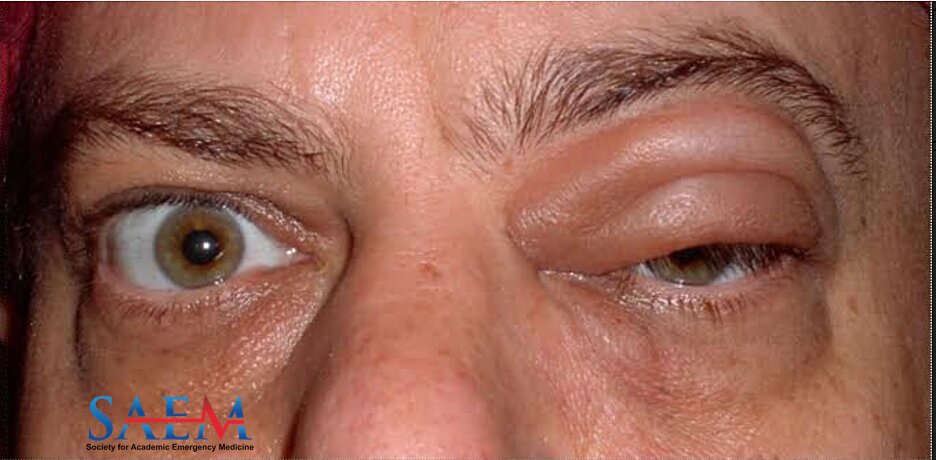
    The red flags include a history of vision loss and the presence of ocular hypertension with the hyphema. Ophthalmology was emergently consulted for the intraocular hypertension. By the time of evaluation by the specialist, the patient stated that his vision was less blurry and he did not see any spots in his vision. The photos demonstrate progression of the traumatic hyphema from grade IV, to grade II, and then grade I.


    The emergent conditions that must be addressed include open globe and intraocular hypertension. Ophthalmology IOP measurements were 14 mmHg bilaterally. Visual acuities were 20/40 on the right and 20/20 on the left. A dilated eye exam with the slit lamp could not fully assess the posterior eye structures due to haziness. A metal eye shield was applied to the patient’s right eye, and he was discharged with cyclopentolate and prednisolone acetate eye drops, and an ophthalmology follow-up appointment within 24 hours. The patient was instructed to be on bed rest with the head of the bed elevated and to avoid straining.


    Take-Home Points

    • In traumatic eye injury, pay attention to eye color changes with grade IV hyphema which can be missed unless you compare it to the uninjured side.
    • Look for features of an open globe which include irregularly shaped pupils, delayed consensual light response, extrusion of vitreous, Seidel’s sign (fluorescein streaming of tears away from the puncture site).
    • Beware of intraocular hypertension (>21 mmHg) with high-grade traumatic hyphema which needs to be emergently addressed to prevent optic nerve atrophy and permanent vision loss.

    • Brandt MT, Haug RH. Traumatic hyphema: a comprehensive review. J Oral Maxillofac Surg. 2001 Dec;59(12):1462-70. doi: 10.1053/joms.2001.28284. PMID: 11732035.
    • Gharaibeh A, Savage HI, Scherer RW, Goldberg MF, Lindsley K. Medical interventions for traumatic hyphema. Cochrane Database Syst Rev. 2011 Jan 19;(1):CD005431. doi: 10.1002/14651858.CD005431.pub2. Update in: Cochrane Database Syst Rev. 2013;12:CD005431. PMID: 21249670; PMCID: PMC3437611.


    SAEM Clinical Image Series: An Uncommon Cause of Shortness of Breath

    shortness of breath

    A 102-year-old female presents with intermittent epigastric abdominal pain for the last two days. Episodes have no relieving or exacerbating factors. The pain originates in the epigastrium and radiates diffusely to the abdomen and back, resolving on its own within minutes of onset. She has had one episode of nonbilious, non-bloody emesis. Her last bowel movement was two days prior and she hasn’t been able to pass gas. The pain is associated with mild shortness of breath which has been progressively worsening since the onset of symptoms. Her family was concerned and called EMS because the shortness of breath has worsened and the episodes of pain have been progressively worsening in intensity. The patient denies fever, chills, hematuria, urinary frequency, chest pain, headache, dizziness, syncope, recent traumatic events, and any other associated symptoms.

    General: Well-appearing; no acute distress; awake, alert, and oriented to date, place, and person

    Cardiovascular: Regular rate and rhythm; S1/S2 present; 2+ systolic ejection murmur; capillary refill <2 seconds; 2+ pulses in all extremities

    Respiratory: Lungs clear to auscultation bilaterally with diminished breath sounds in the left lower lobe; no signs of respiratory distress; no accessory muscle use

    Abdomen: Soft; non-tender; non distended; no palpable masses; no guarding or rebound tenderness; no signs of peritonitis

    Extremities: Full range of motion of all extremities; nonambulatory at baseline

    Complete blood count (CBC): WBC 10.8 x 10^3/mcl; Hgb 12 g/dl; Hct 40.1%; Plt 375 x 10^3/mcl

    Basic metabolic panel (BMP): Na 139 mmol/L; K 3.7 mmol/L; Cl 97 mmol/L; CO2 31 mmol/L; Glucose 170 mg/dL; BUN 10 mg/dL; Cr 0.58 mg/dL; Ca 10.2 mmol/L

    Liver function test: AST 19 U/L; ALT 7 U/L; Alk Phos 144 U/L

    Lipase: 11 U/L

    Venous blood gas (VBG): pH 7.33; pCO2 61.1 mmHg; pO2 38 mmHg; BE -7 mmol/L

    Lactic acid: 1.56 mmol/L

    Small bowel obstruction (SBO) secondary to a spigellian hernia with an associated hiatal hernia. 

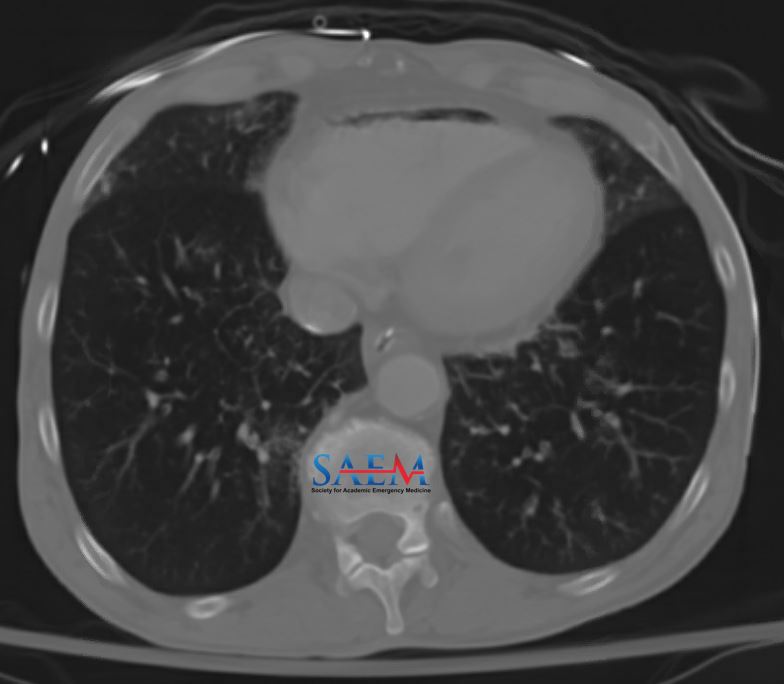
    The CT demonstrates a spigellian hernia causing a small bowel obstruction. Spigellian hernias are hernias in the spigellian fascia which is located between the semilunar line and the lateral edge of the rectus abdominus muscle. These hernias constitute 0.12% of abdominal wall hernias, making them very rare and difficult to diagnose clinically. Spigellian hernias often go unnoticed until they are strangulated and require surgery. This patient not only had a rare spigellian hernia but also had a hiatal hernia causing the stomach to enter the pleural space. It’s possible that the bowel obstruction worsened the hiatal hernia with the backup of gastric contents and gas.

    Take-Home Points

    • Spigellian hernias are rare abdominal wall hernias with a myriad of potential complications.
    • Shortness of breath is frequently considered a pathology involving the lungs or pulmonary vasculature, however abdominal complaints, especially in this case, can cause significant respiratory distress.
    • Elderly patients may have difficulty verbalizing their exact symptoms, and it is good practice to gather collateral information from families to aid in caring for these patients.

    • Spangen L. Spigelian hernia. World J Surg. 1989 Sep-Oct;13(5):573-80. doi: 10.1007/BF01658873. PMID: 2683401.


    Go to Top