ACMT Toxicology Visual Pearl: Sink or Swim

What type of mothball floats in both water and saturated salt solution?
- Camphor
- Naphthalene
- Paradichlorobenzene
- Sodium Hypochlorite



What type of mothball floats in both water and saturated salt solution?

Caring for a patient that is critically-ill secondary to a toxic ingestion is complicated and, in severe cases, extracorporeal treatments (ECTRs) may be considered. The most commonly used ECTRs are intermittent hemodialysis (iHD) and continuous renal replacement therapy (CRRT), but ECTRs also include exchange transfusion, hemoperfusion, liver dialysis, and therapeutic plasma exchange. Finding and evaluating the supporting literature for these treatment modalities in a timely manner is not feasible in most situations. In order to assist in this effort, the EXtracorporeal Treatments In Poisoning (EXTRIP) workgroup has reviewed and provided free, evidence-based recommendations regarding the use of ECTRs for many common toxins and toxicants [1]. These recommendations can be found in a summarized format on the EXTRIP website and the links to their comprehensive reviews are published on PubMed with direct links on their website. This international workgroup is made up of experts in toxicology, nephrology, emergency medicine, pediatrics, pharmacology, critical care, and more. An excellent example of this resource is their review and recommendations on ECTRs for poisoning secondary to beta-adrenergic antagonists (BAAs).
The EXTRIP workgroup included 76 publications in this comprehensive review on the use of ECTRs in BAA poisoning [2]. They evaluated pharmacokinetic/toxicokinetic data for a total of 334 patients poisoned with various BAAs, of which ~90% of the data was published prior to 1990 and does not necessarily represent the improved clearance of these medications with modern ECTR modalities. Based on this evidence, they deemed atenolol, nadolol, and sotalol as dialyzable BAAs. They also reviewed case reports/series of 37 patients with BAA toxicity and made recommendations for those agents with sufficient evidence. Based on the above data, the EXTRIP group recommends iHD over CRRT in patients severely poisoned with atenolol or sotalol and kidney impairment. They make no recommendation for or against ECTR in patients severely poisoned with atenolol or sotalol with normal kidney function and they recommend against ECTR in patients severely poisoned with propranolol.
Read other articles in the EM Pharm Pearls Series and find previous pearls on the PharmERToxguy site.
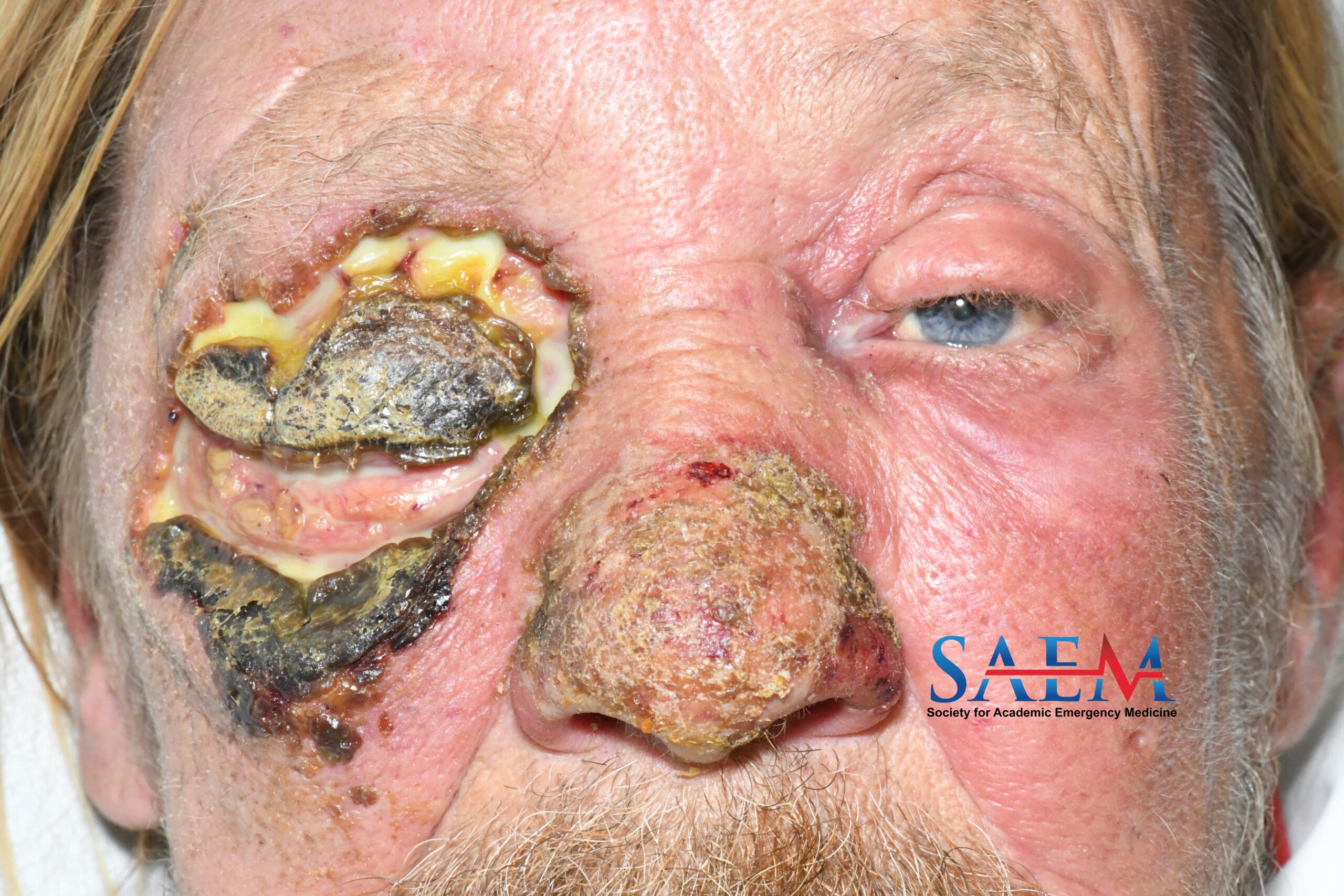
A 59-year-old gentleman experiencing homelessness with a history of hepatocellular carcinoma, hepatitis C, alcohol use disorder, and tobacco dependence presented to the emergency department (ED) with severe, worsening right eye pain, blurry vision, swelling, redness, and purulent discharge after scraping his upper face on concrete during a mechanical fall two weeks prior. Of note, his partner presented to the ED at the same time with a necrotic infection of the breast as well as multiple skin lesions reportedly due to insect bites.
Human trafficking is a devastating crime, where a human being’s labor is exploited through force, fraud, or coercion, for someone else’s profit (1). For survivors, connecting to support in the community can be incredibly difficult, and may come at the expense of their personal safety (1, 2).
The emergency department (ED) is a rare exception, with some studies estimating that over 60% of trafficked persons will present at some point during their exploitation to the ED (3). Unfortunately, less than 5% of emergency physicians report feeling confident in their ability to identify a trafficked person, citing confusion around patient characteristics and their role as a provider (4).
By learning more about human trafficking, ED providers can better prepare themselves to identify and provide appropriate support to those who experience human trafficking.
What can I do to be ready in the ED?
Click to view full-size image. |
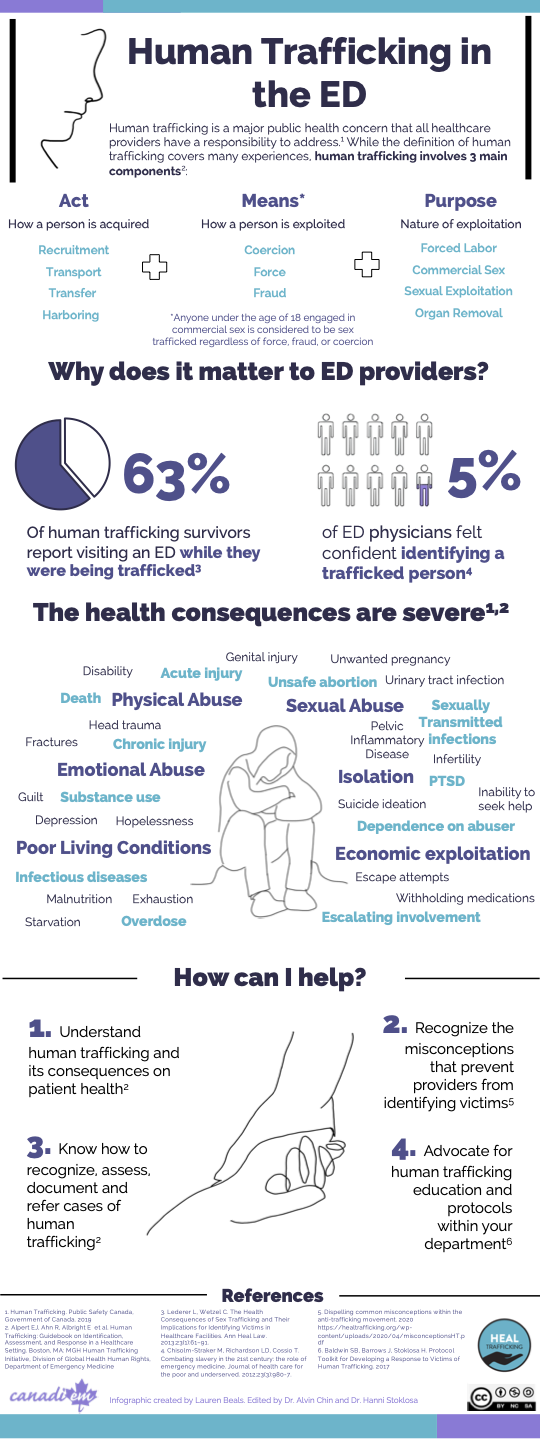 |
Human trafficking always involves 3 components –an act, a means, and a purpose.
Often human trafficking will overlap with other crimes such as assault, domestic violence, rape, and child abuse (5). Of note, anyone under the age of 18 engaged in commercial sex is considered to be sex trafficked regardless of whether a means is present, as they cannot provide consent.
Human trafficking is widespread, but is often undetected, making true estimates of size difficult.
For example, human trafficking prevalence estimates may fail to account for survivors who do not recognize they are being exploited or are afraid to disclose (6, 7).
While no identity is spared, there are certain populations that are at greater risk. These may include:
The only thing all trafficked persons have in common is their vulnerability (1). Trafficking determinants can be conceptualized as “push” and “pull” factors. Push factors lead people to away from their current situation to trafficking (e.g., abuse, poverty, family conflict). Pull factors, drive an individual to something new that increases the risk of trafficking (e.g., income, housing, access to substances) (9, 10).
In the same way that anyone can be trafficked, anyone can be a trafficker.
Traffickers may be well known in the community, recruiting victims from places of employment or education (1). They may be a family member. They may also lure at-risk individuals by acting as a romantic partner, or by providing emotional affirmation, financial assistance, and material goods (1).
A number of tactics can be employed by traffickers, each tailored to the individual survivor but can include any combination of the following (1).
Specific situations to be wary of:
Click to view full-size images
The goal of the visit is NOT to elicit a disclosure.
Your role as a provider is not to investigate or confirm the presence of trafficking, but to respect the autonomy of the patient in front of you, meet their healthcare needs, and empower them to seek additional support on their terms.


Click for full-size images
| Patient Indicators | Companion Indicators |
|---|---|
| Delayed presentation | Refuses to leave |
| Discrepancy between history and clinical presentation | Insists on translating or speaking for the patient |
| Scripted/memorized history | Controlling, interrupting |
| Hypervigilance, fearful | Has patient’s documents in their possession |
| Cannot produce identification | Employer demanding access to medical information |
| Work-related injury with unsafe conditions | |
| Fearful attachment to a cell phone (often used for communication and tracking) |
Any next steps should always be determined by the patient
Unless local criteria for mandatory reporting are met, Police should only be contacted at the explicit instruction of the patient (6, 16).
Consider implementing an ED and institutional protocol for human trafficking. A complete protocol guide is available through HEAL Trafficking.
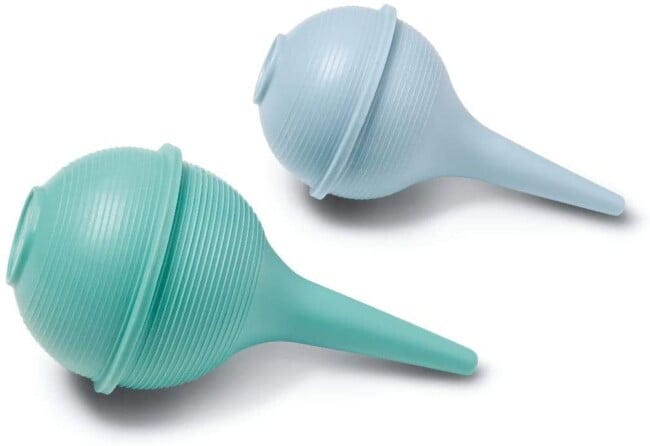
Nasal congestion is a common symptom of upper respiratory tract infections, such as bronchiolitis, in newborns and infants. Because newborns are obligate nose breathers, any congestion presents a challenge during feeding and sleeping. These infants become frustrated when they cannot breathe while feeding and tend to have disturbed sleep when their nasal passages are occluded. This often leads to dehydration and irritability. Although the infant bulb syringe (above) can often alleviate the congestion, other commercial products may be able to more forcefully clean out the nasal mucus (e.g., NoseFrida, Bubzi Nasal Aspirator).
In the Emergency Department, you may encounter families who may not have the resources to purchase or be aware of commercial aspiration devices for children. The concept behind our DIY Nasal Snot Aspirator is to allow the caregiver to suction the child’s nose using the negative pressure generated from the caregiver’s own mouth. The left video demonstrates how the NoseFrida works, and the right video demonstrates our DIY Nasal Snot Aspirator. Note that the specimen trap serves as the protective “filter”, or barrier, between the child’s suctioned mucus and the caregiver’s mouth. Thanks to Stephany Landry, RN, BSN for sharing this trick of the trade.
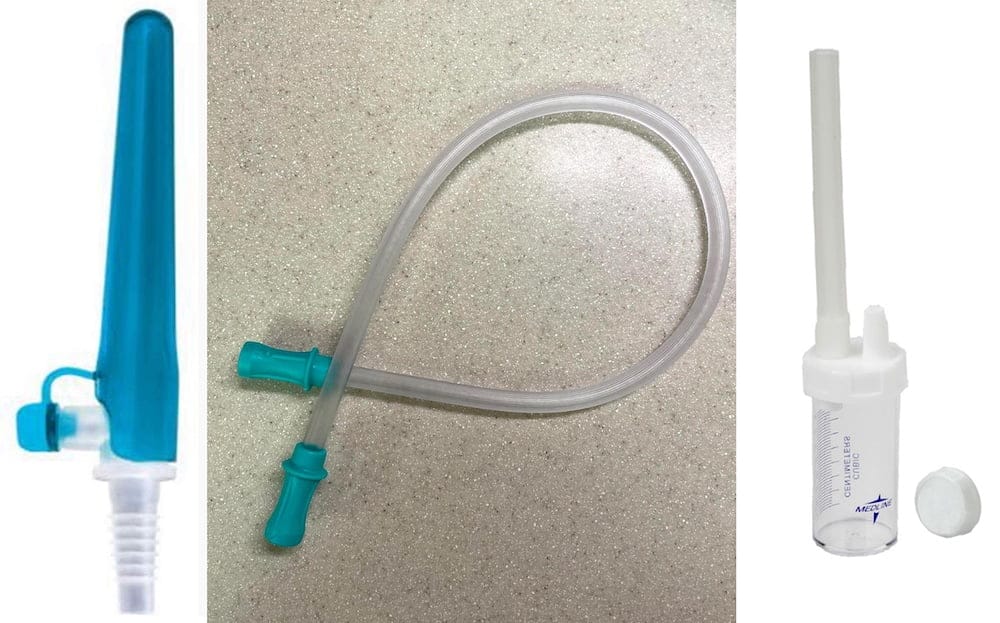
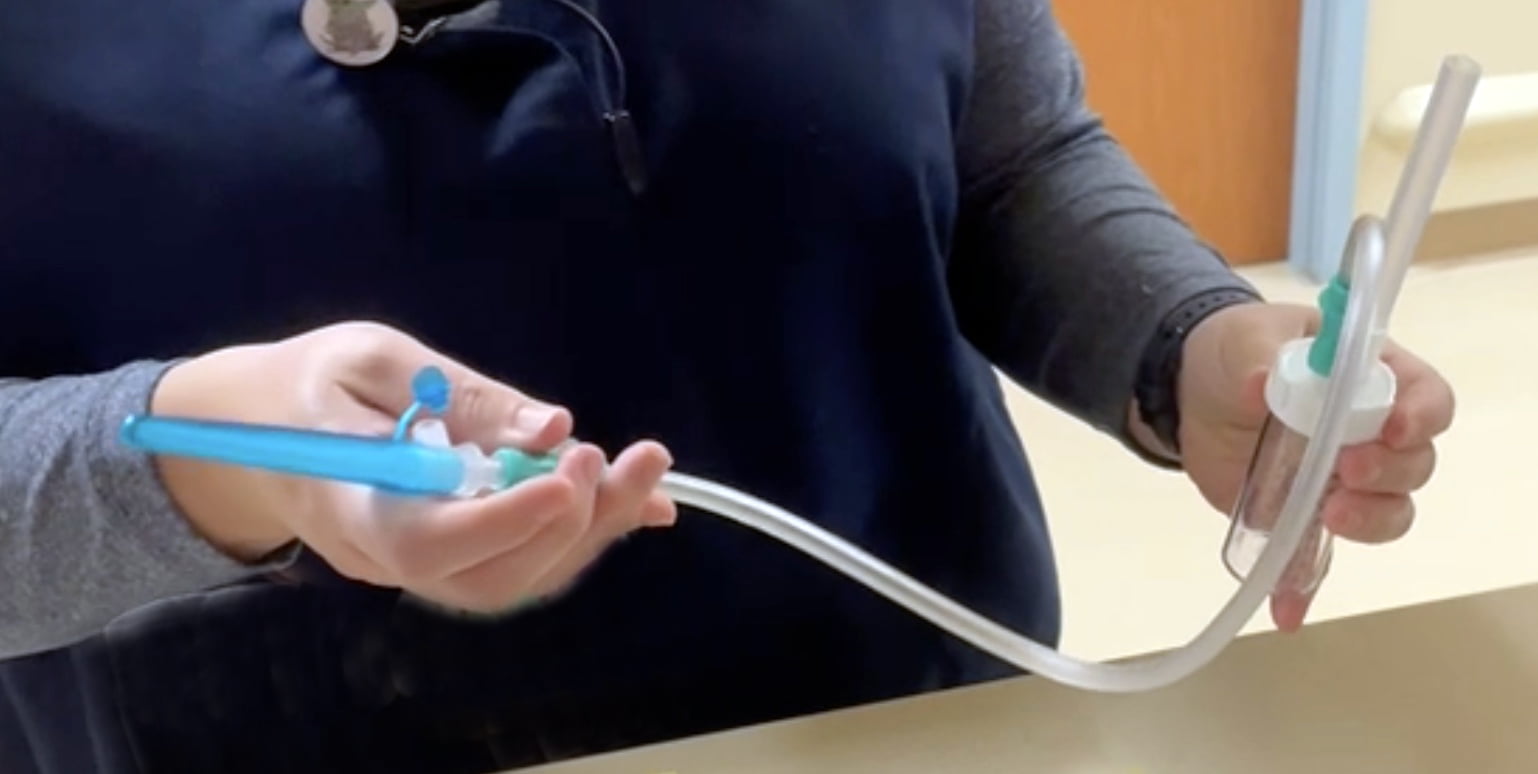
The authors and ALiEM do not have any affiliation with any of these device companies.
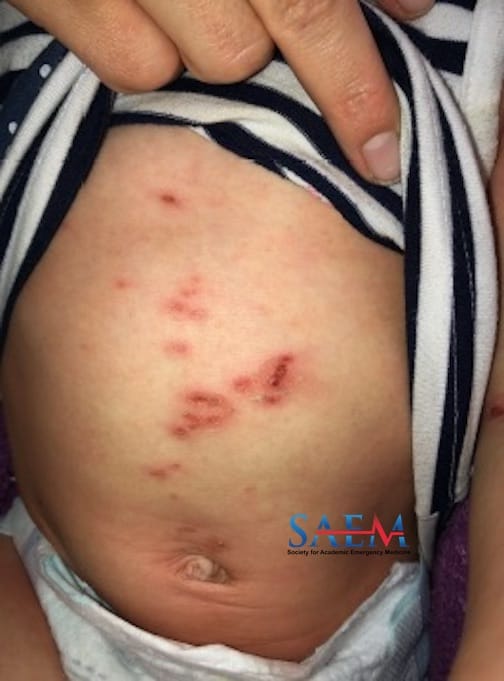
A 17-month-old girl with a history of eczema presents to the pediatric emergency department for evaluation of a rash. The rash is different from her usual eczema, developed three days prior to presentation, and is described as red with yellow crusting. Her mother also noticed blistering in her groin and under her axilla. She has associated fussiness and decreased feeding, but no fever.
Vitals: T 37.7°C; HR 161; BP 115/75; RR 24; O2 sat 100% on room air General: Fussy but consolable Eyes: No conjunctival erythema or discharge Mouth: Yellow crusting and fissuring surrounding mouth; no intra-oral lesions Neck: No nuchal rigidity Cardiovascular: Tachycardic with regular rhythm; no murmurs Respiratory: Normal rate; normal breath sounds Abdomen: Non-tender to palpation; non-distended; normal bowel sounds Neurologic: Alert Skin: Diffusely erythematous; scaling rash over the face with areas of yellow crusting; erythematous areas with blistering/desquamation to the anterior trunk, axilla, and inguinal regions Complete blood count (CBC) and comprehensive metabolic panel (CMP) unremarkable. Staphylococcal scalded skin syndrome caused by impetigo. This case describes a patient with a rash, blistering/desquamation of axilla and groin, and systemic symptoms consistent with staphylococcal scalded skin syndrome (SSSS). Clinical features of SSSS include erythema to intertriginous areas, rapid progression of erythema, and systemic symptoms such as fever, irritability, and poor oral intake. Mucous membranes are not typically involved. Physical exam findings include perioral crusting and fissuring (seen in photo), blanching erythema, desquamation, shallow skin erosions, and a positive Nikolsky sign. SSSS is caused by exfoliative toxin A (ETA) and exfoliative toxin B (ETB), two exotoxins produced by certain strains of S. aureus. ETA and ETB cause the breakdown of keratinocyte adhesions within the epidermis, leading to desquamation. Infection with S. aureus at any site can cause SSSS, including bacterial conjunctivitis, wound/skin infection, staphylococcal pneumonia, pyomyositis, septic arthritis, and endocarditis. SSSS is more common in children, a phenomenon thought to be due to a lack of protective antibodies against staphylococcal antigens. The diagnosis of SSSS is clinical but can be confirmed with histopathology. In this case, the extensive yellow, crusting lesions of the face suggest impetigo, a superficial skin infection predominantly caused by S. aureus, as the etiology of SSSS. Children with eczema are at increased risk of impetigo due to disruption of the normal skin barrier. Complications of SSSS include fluid losses due to extensive skin breakdown, electrolyte abnormalities, sepsis, and death. Penicillinase-resistant penicillins (oxacillin, nafcillin) or first- or second-generation cephalosporins. Clindamycin monotherapy should be avoided due to high rates of resistance. Management of SSSS in most cases also includes hospitalization for IV antibiotics and supportive care. In patients with significant skin involvement, admission to either an ICU or burn unit is warranted for close monitoring and wound care.

Take-Home Points

Two new oral agents were given Emergency Use Authorization to be used in patients with mild-moderate COVID-19 at high risk of progression to severe infection, molnupiravir and nirmatrelvir/ritonavir (Paxlovid) [1,2]. Prior to this authorization, most evidence-based COVID therapies were parenteral and required significant healthcare resources to coordinate and administer.
| Nirmatrelvir/ritonavir [3] | Molnupiravir [4] | |
|---|---|---|
| Mechanism |
Protease inhibitor leadings to interruption of viral replication Ritonavir has no role in treating COVID-19, it is only included to boost levels of nirmatrelvir via CYP3A4 inhibition |
Increased frequency of RNA mutations and impaired replication [5] |
| Efficacy vs Placebo (Hospitalization or Death) | 0.8% vs 6.3% (CI -7.21 to -4.03) | 6.8% vs 9.7% (CI -5.9 to -0.1) |
| Drug Interactions | CYP3A4 inducers, inhibitors, and substrates
May decrease efficacy of hormonal contraceptives, non-hormonal contraceptives should be considered Contraindicated medications include: amiodarone, carbamazepine, clozapine, colchicine, dihydroergotamine, dronedarone, flecainide, lovastatin, ranolazine, sildenafil, simvastatin Many other important interactions exist so care should be taken to assess all medication interactions |
N/A |
| Cost* | Patient: $0
US government: $530 [6] |
Patient: $0 US Government: $700 [7] |
| Dose | 300 mg/100 mg BID for 5 days
Must be started within 5 days of symptom onset |
800 mg BID for 5 days
Must be started within 5 days of symptom onset |
| Notes | Approved for patients ≥ 12 years old AND ≥ 40 kg
Not approved for inpatient initiation If patient is hospitalized, continuation is up to the discretion of the provider Not used as pre-/post-exposure prophylaxis |
Approved for patients ≥ 18 years
Not approved for inpatient initiation If patient is hospitalized, continuation is up to the discretion of the provider Not used as pre-/post-exposure prophylaxis |
| Renal/Hepatic Dose Adjustments | eGFR ≥30 to <60 mL/min: 150 mg/100 mg BID
eGFR <30 mL/min: Not recommended Child-Pugh class C: Not recommended |
None |
*Note: The US federal government has purchased 10 million doses of nirmatrelvir/ritonavir and 3 million doses of molnupiravir [8,9]. These supplies will be allocated to states and territories as needed and will be available to patients at no charge.
Nirmatrelvir/ritonavir (Paxlovid)
Paxlovid was evaluated in the EPIC-HR trial, which is not fully published at this time [3]. This was a phase 2/3, double-blinded, randomized placebo controlled trial including nonhospitalized, unvaccinated patients adults with mild-moderate COVID-19 within 5 days of symptom onset with at least 1 risk factor† for development of severe illness from COVID-19. Exclusion criteria included patients with a history of COVID-19 infection or COVID vaccination. Patients were given Paxlovid 300 mg/100 mg or placebo BID for 5 days. The primary outcome was hospitalization or death at day 28. The modified intention-to-treat1 (mITT1) group excluded patients who did not receive nor were expected to receive COVID-19 mAb treatment. In the mITT1 group, the primary outcome occurred in 0.8% of patients receiving Paxlovid vs 6.3% of patients in the placebo group (8/1039 vs 66/1046, CI -7.21 to -4.03).
These results appear quite robust with a fragility index of 37. Additionally, in patients with detectable COVID antibodies there was less of an impact of the study medication. However, these patients still appeared to have some benefit (0.2% vs 1.5%, CI -2.45 to -0.23) which suggests that vaccinated patients may still benefit from Paxlovid.
†Risk factors for progression to severe disease: BMI >25, chronic lung disease, asthma, chronic kidney disease, current smoker, immunosuppressive disease or immunosuppressive treatment, cardiovascular disease, hypertension, sickle cell disease, neurodevelopmental disorders, active cancer, medically-related technological dependence, or age >60 years
Molnupiravir
Molnupiravir was evaluated in the MOVe-OUT trial [10]. This was a phase 3, double-blinded, randomized, placebo controlled trial including nonhospitalized, unvaccinated adults with mild-moderate COVID-19 within 5 days of symptom onset with at least 1 risk factor‡ for development of severe illness from COVID-19. Exclusion criteria included anticipated hospitalization within 48 hours, eGFR <30 or dialysis dependent, pregnancy, and COVID vaccination. Patients were able to receive steroids but not monoclonal antibodies (mAbs) nor remdesivir. Patients were given molnupiravir 800 mg or placebo BID for 5 days. The primary outcome was hospitalization or death at 29 days. In the mITT population, the primary outcome occurred in 6.8% of patients in the study group vs 9.7% in the placebo group (48/709 vs 68/699, CI -5.9 to -0.1). Death occurred in 1 patient on molnupiravir and in 9 patients on placebo (0.1% vs 1.3%, RRR 89%, CI 14 to 99).
Despite the above results, this may not be the positive trial it initially appears. First of all, for the primary outcome, the fragility index is 0, meaning that if 1 more patient in the study group experienced the primary outcome then it would have changed the statistical significance. Additionally, when the mITT analysis was adjusted for sex, the absolute risk reduction remained 2.8% but the confidence interval was not significant (-5.7 to 0.1). Lastly, in the subgroup analysis, there was no benefit in patients that had positive COVID antibody tests and there was a slight preference towards placebo over molnupiravir (3.7% vs 1.4%, ARR 2.3, CI -1.7 to 7.1). This suggests that vaccinated patients may not benefit from this therapy as much (or at all) as compared to unvaccinated patients.
‡Risk factors for progression to severe disease: age >60 years, active cancer, chronic kidney disease, COPD, BMI ≥30, heart failure, coronary artery disease, cardiomyopathy, or diabetes mellitus
Note: Both the EPIC-HR and MOVe-OUT studies were funded by their respective pharmaceutical company.
Read other articles in the EM Pharm Pearls Series and find previous pearls on the PharmERToxguy site.