


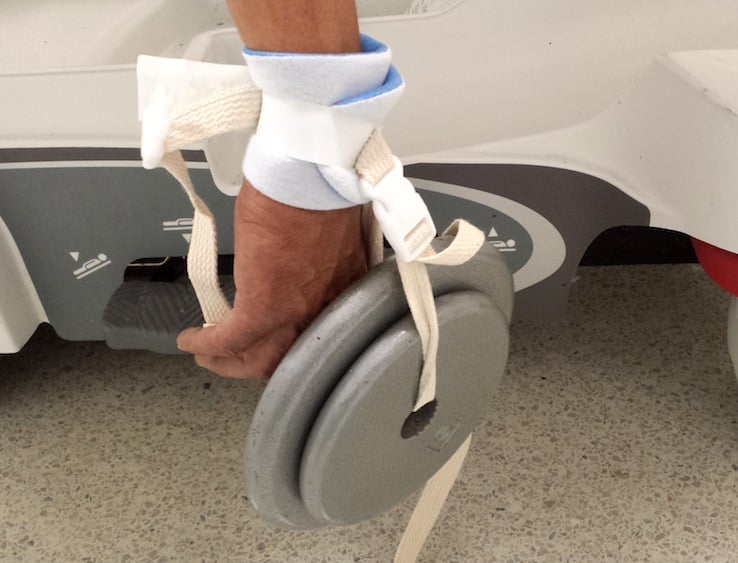
Trick of the Trade: Stimson technique using wrist restraints
A patient presents with an anterior shoulder dislocation on x-ray. Your ED just received 5 new patients via ambulance and you are trying to prioritize your patients as they come in the door. What can you do for your patient with the shoulder dislocation in the meantime? [+]
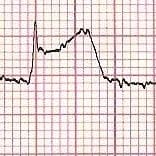
Prehospital ECG and STEMI Activation: A Good Idea?
It is well known that primary percutaneous coronary intervention (PPCI) is the gold standard in STEMI treatment and that decreased door-to-balloon time has better patient outcomes. Guidelines recommend that the interval between arrival at the hospital and intracoronary balloon inflation (door-to-balloon time) should be 90 minutes or less. [+]
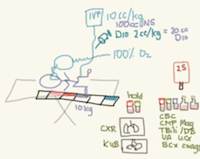
Patwari Academy videos: The Crashing Neonate
In this series of videos, Dr. Rahul Patwari reviews the approach to the crashing neonate. Because these cases are often stressful, it is paramount to keep in mind a broad list of potential causes, such as “THE MISFITS” mnemonic: T rauma/abuse H eart disease E ndocrine (CAH, hyperthyroid) M etabolic (hypoglycemia, hyponatremia) I nborn errors S epsis F ormula mishaps I ntestinal catastrophes T oxins (home remedies) S eizures [+]
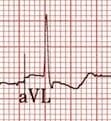
The Importance of Reciprocal Changes in Lead aVL
ECG interpretation is one of the most important skills to master as an emergency physician, and its interpretation can be very complex and frustrating. ECG manifestations can be very subtle, and sometimes the earliest and only ECG change seen will be reciprocal changes alone. To further complicate this, many patients have the atypical symptoms of nausea/vomiting, weakness, or shortness of breath and not chest pain. [+]
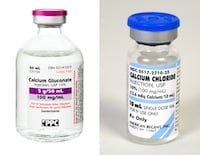
Mythbuster: Calcium Gluconate Raises Serum Calcium as Quickly as Calcium Chloride
LET’S START WITH THE FACTS We know that calcium chloride (CaCl2) provides 3 times more elemental calcium than an equivalent amount of calcium gluconate. So, CaCl2 1 gm = calcium gluconate 3 gm. CLINICAL QUESTIONS Does CaCl2 have better bioavailability than calcium gluconate? Does calcium gluconate have a slower onset of action because it needs hepatic metabolism to release the calcium? [+]

Geriatric Blunt Trauma – Respect the Lactate
Which is a better prognostic tool in geriatric trauma, traditional vital signs or lactate level? Meet Norma Nuance (NN), a 70-year-old woman with CAD, HTN, HLD, DM, and mild dementia. She was involved in an MVC as the restrained driver with questionable LOC. She arrives in your ED and appears confused, but has a history of dementia. There are no family members to tell you her baseline. Her BP is 120/80, and her HR is 90. She is not calling out in pain, but does mumble about her left arm when you ask if she is hurting. You think she [+]

Welcome new series Geriatric EM by Dr. Christina Shenvi
Welcome a new superstar blogger, Dr. Christina Shenvi (@clshenvi), to the ALiEM team. If there’s one talent I have, it’s spotting the rising academic star. As the new Geriatrics EM fellow at the University of North Carolina, she’ll be starting her monthly series of blog posts on Geriatric EM. I jumped at the chance when she came up with the idea of this series, since there is never enough teaching about the unique aspects in the emergent care of older patients. Since meeting her in March 2013 at the annual CORD meeting, it’s been the longest 4 months anxiously waiting [+]
Patwari Academy videos: Anticoagulation and reversal agents
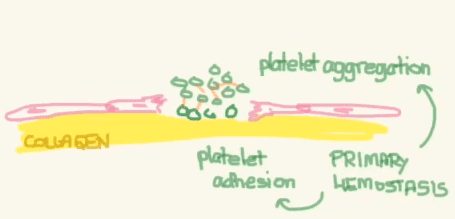
Bleeding in general is bad. Bleeding while on anticoagulants is VERY bad. Dr. Rahul Patwari reviews the pathophysiology of coagulation, the various reversal agents, and treatment approaches we can use. In this five-part series where all videos are less than 10 minutes, Rahul goes from the basic physiology of coagulation all the way to the complex reasoning and approaches to reversing anticoagulants. These are worth a quick look and review. [+]

The Dirty Epi Drip: IV Epinephrine When You Need It
You’re a recent graduate picking up an extra shift in a small ED somewhere north of here. At 3 AM an obese 47 year-old woman presents with shortness of breath and difficulty speaking after eating a Snickers bar an hour earlier. She admits to history of hypertension, peanut allergy, and a prior intubation for a similar presentation. She is becoming more obtunded in the resuscitation room as you are collecting your history. A glance at the monitor shows: HR 130 BP 68/40 O2 saturation 89% on room air [+]

Brugada Syndrome: An ECG Pattern You Need to Know
Brugada Syndrome is an abnormal ECG (Right Bundle Branch Block Pattern with coved ST elevation over the right precordial leads of V1-V3), which leads to ventricular fibrillation (VF) and sudden cardiac death (SCD) in patients with structurally normal hearts. It has been recognized as a clinical entity since 1992. Why should all ED physicians know about this entity? Although a rare syndrome, it is often mistaken as a STEMI and more importantly the clinical spectrum can be asymptomatic to SCD. [+]

Director of Growth, Strategic Alliance Initiative, Center for Innovation and Digital Health
Massachusetts General Hospital;
Chief Scientific Officer, Conductscience.com
Latest posts by Shuhan He, MD (see all)
- The Discharge Severity Index: Early Research on ED Readmission Risk Assessment - August 14, 2025
- Suboxone and the Emergency Physician: Get Waivered Training - August 12, 2022
- A Tale of Two Epidemics: COVID-19 and the Opioid Crisis - April 23, 2020