


Trick of the Trade: Got a shoulder dislocation? Park it
Myriad techniques exist to reduce shoulder dislocations, which includes scapular rotation, Hennepin, Snowbird, Cunningham, and Legg maneuvers. They are nicely reviewed at ShoulderDoc.co.uk. You can also supplement any technique with ultrasound-guided intraarticular lidocaine for improved pain control. Recently, Dr. Jay Park (Beth Israel Medical Center in New York) contacted me about his novel approach to shoulder reduction which anatomically makes sense. If his animation video doesn’t convince you, check out the video of an actual reduction. [+]
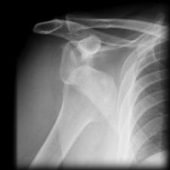
Anterior Shoulder Dislocation: Are Prereduction Films Needed?
A patient comes into your department with an obvious shoulder dislocation. You know you can easily reduce the shoulder and have the patient discharged before the orthopedic consultant calls back. But what if there is a fracture? Do you need to get that plain film before popping it back into place? [+]
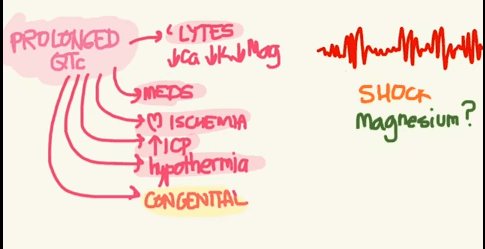
Patwari Academy video: Torsades de Pointes
Torsades de pointes is a polymorphic form of ventricular tachycardia. Why does this occur? What does it characteristically look like? Why is this an important form of ventricular tachycardia to differentiate from the more classic monomorphic ventricular tachycardia? View this short 9 minute video on QT intervals and Torsades de Pointes. [+]
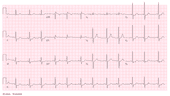
Lead aVR: The Forgotten 12th Lead
Augmented leads (aVR, aVF, and aVL) were developed to derive more localized information looking at the right, lower, and left part of the heart respectively. Specifically, lead aVR obtains information from the right upper side of the heart. It also gives reciprocal information on the left lateral side of the heart, which is already covered by leads aVL, I, II, V5, and V6. This is the main reason lead aVR has become forgotten. [+]

Wellens’ Syndrome: Is it on your radar?
Wellen’s Syndrome was first described in 1982 in which 75% of patients with t wave inversions in V2-V4 went on to have an acute myocardial infarction (MI). This was again repeated in 1989, and showed that all patients with this morphology had >50% LAD stenosis. The incidence in the United States is about 10-15%. [+]
Must We Avoid Nitrofurantoin with Impaired Renal Function?
Acute uncomplicated cystitis is becoming more difficult to treat in the setting of increasing antimicrobial resistance. In the 2010 IDSA Guideline, as summarized in a PV Card on Cystitis and Pyelonephritis in Women, nitrofurantoin is now listed as the first-line choice, surpassing ciprofloxacin and sulfamethoxazole/trimethoprim from the previous iteration. [+]
RUSH protocol: Rapid Ultrasound for Shock and Hypotension
Patients with hypotension or shock have high mortality rates, and traditional physical exam techniques can be misleading. Diagnosis and initial care must be accurate and prompt to optimize patient care. Ultrasound is ideal for the evaluation of critically ill patients in shock, and ACEP guidelines now delineate a new category of ultrasound (US)– “resuscitative.” Bedside US allows for direct visualization of pathology and differentiation of shock states. The RUSH Protocol was first introduced in 2006 by Weingart SD et al, and later published in 2009. It was designed to be a rapid and easy to perform US protocol (<2 minutes) [+]
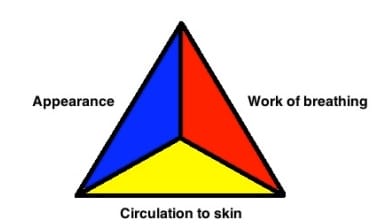
PV card: Pediatric Assessment Triangle
Have you heard of the Pediatric Assessment Triangle? Taught in the Pediatric Education for Prehospital Professionals (PEPP) certification course, it provides a clear and simple approach to the emergency assessment of pediatric patients. The following PV card summarizes the PAT: PV Card: Pediatric Assessment Triangle Adapted from [1] Go to ALiEM (PV) Cards for more resources. Reference Dieckmann R, Brownstein D, Gausche-Hill M. The pediatric assessment triangle: a novel approach for the rapid evaluation of children. Pediatr Emerg Care. 2010;26(4):312-315. [PubMed]
Out-of-Hospital Cardiac Arrest and Prehospital Intubation
Worldwide, death from cardiac arrest in the out-of-hospital setting remains the leading cause of mortality. Focuses have aimed at improving bystander CPR, public access to AEDs, minimizing chest compression interruptions, and decreasing the emphasis on advanced airway management. This latter concept has become so important that the AHA/ASA have now changed their “ABC” philosophy to “CAB.” Below is the review of the literature that has changed this philosophy. [+]
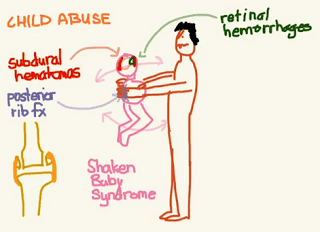
Patwari Academy video: Child abuse injury patterns
What are common injury patterns seen in children who are abused? Non-accidental trauma should always be considered in pediatric patients who present with traumatic injuries. Watch this great 8 minute video on child abuse injury patterns by Dr. Rahul Patwari. [+]

Director of Growth, Strategic Alliance Initiative, Center for Innovation and Digital Health
Massachusetts General Hospital;
Chief Scientific Officer, Conductscience.com
Latest posts by Shuhan He, MD (see all)
- The Discharge Severity Index: Early Research on ED Readmission Risk Assessment - August 14, 2025
- Suboxone and the Emergency Physician: Get Waivered Training - August 12, 2022
- A Tale of Two Epidemics: COVID-19 and the Opioid Crisis - April 23, 2020