



On the Horizon: Propofol for Migraines
Propofol for the treatment of migraines in the ED might be on the horizon. This will possibly be a new practice in emergency medicine, although it has been known for some time. Propofol, when given at procedural sedation doses, seems to miraculously terminate migraines refractory to usual treatment. Patients awake with minimal to no headache and may be discharged from the ED much quicker than traditional treatment with possibly less side effects. The proposed mechanism of action is described in below papers, but in short, propofol seems to “reboot” the brain and terminate the migraine. [+]

PV Card: Contraindications to Thrombolytics in Stroke
This Paucis Verbis (PV) card is an updated version of the PV card on Contraindications to Thrombolytics for CVA from September 10, 2010, based on the Stroke 2013 AHA/ASA new guidelines that were just published.1 Some changes include... There is new mention of new anticoagulants in the market with additional absolute exclusion criteria. A blood glucose < 50 mg/dL has been upgraded from a relative exclusion to an absolute exclusion criteria. There is no more mention of glucose > 400 mg/dL as an exclusion criteria. Seizure at onset of presentation has moved from an absolute to a relative risk. Post-AMI pericarditis is no longer [+]
Calcium before Diltiazem may reduce hypotension in rapid atrial dysrhythmias
The Case A 56 y/o man presents to the ED via ambulance. He was sent from clinic for ‘new onset afib.’ His pulse ranges between 130 and 175 bpm, while his blood pressure is holding steady at 106/58 mm Hg. He has a past medical history significant for hypertension and hypercholesterolemia. His only medications are hydrochlorothiazide and atorvastatin. The decision is made to administer an IV medication to ‘rate control’ the patient with a goal heart rate < 100 bpm. Calcium channel blockers, such as diltiazem and verapamil, can both cause hypotension. In the case above, the patient has [+]

Patwari Academy video: Discharge instructions
Read more about the writing of appropriate ED discharge instructions. Clear communication of your thoughts and recommendations are a crucial part of patient care despite their no longer being in the ED. Learn about the pearls and pitfalls in writing instructions in this short 7.5 minute video. 1 [+]
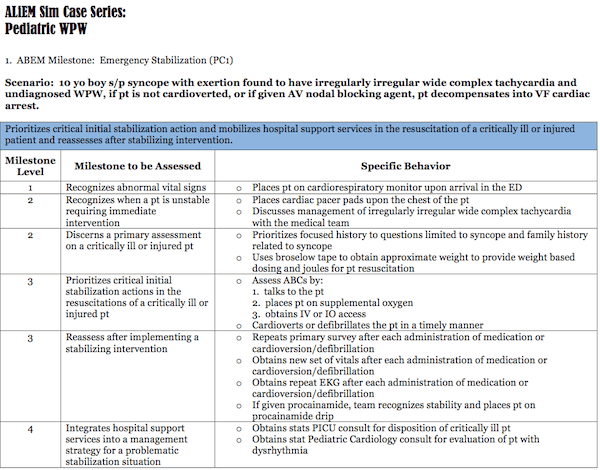
ALiEM Sim Case Series: Pediatric WPW
Case Writer: Nikita Joshi, MD Keywords Pediatrics, Syncope, Wolff Parkinson White (WPW), PALS Educational Objectives Medical Discuss a broad differential diagnosis for pediatric syncopeIdentify critical findings in pediatric EKGManage WPW tachycardia Communication Obtain a focused history in a pt with WPW focusing upon family historyCommunicate as an interdisciplinary team Case Synopsis 10 yo boy BIBEMS s/p syncope. Pt was playing on the football field, running down field when he suddenly collapsed. Bystanders quickly went to the boy and within 1 minute the pt had regained consciousness without any intervention. When EMS arrived on the scene, the boy was sitting with [+]
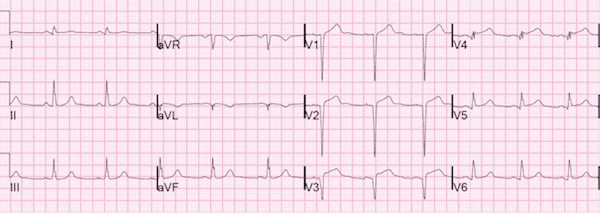
PV card: Early repolarization vs STEMI on ECG
You are handed an ECG for a 50 year old man with moderate chest pain for 2 hours now and no associated symptoms typical for ACS, PE, aortic dissection, or any other red flags of chest pain. He has no prior ECG's on file. Is this early repolarization or ST elevation MI? Should I activate the cardiac catheterization lab? Image courtesy of Dr. Steve Smith at HQMedEd-ecg.blogspot.com Here are some great literature-based pearls compiled by Dr. Jason West (@JWestEM), an EM resident from Jacobi/Montefiore. PV Card: ECG - Early Repolarization vs ST Elevation MI Adapted from [1–7] Go to [+]
Three predictors for success in cardiac arrest resuscitations
The goal of resuscitation in cardiac arrest is to respond in a timely, effective manner that leads to good patient outcomes. Resuscitation is not taking an ACLS and BLS course and going through the motions of a code. There have been several studies looking at the quality of intubation and CPR, and their association with good patient outcomes. [+]
Patwari Academy videos: Salter Harris fractures
Dr. Rahul Patwari discusses Salter Harris fractures in pediatric patients with a helpful mnemonic to help you remember the categories. He also poses several questions in the first video, which are answered in the second video. [+]


PV card: Ectopic pregnancy
Ectopic pregnancy is the leading cause of maternal death in the first trimester of pregnancy. A recent JAMA systematic review,1 from The Rational Clinical Examination series, looked to risk-stratify women in early pregnancy presenting with abdominal pain or vaginal bleeding for ectopic pregnancy. The authors set out to identify the accuracy and precision of elements in the history, physical examination, beta hCG, and ultrasound in ectopic pregnancy. The systematic review consisted of 14 studies (n=12,101). The search consisted only of English language studies from 1965 to 2012 in which ectopic pregnancy was the final diagnosis with 100 or more patients per article. The [+]
Pediatric Appendicitis: CT or Ultrasound?
Appendicitis is the most common pediatric surgical emergency accounting for 5% of urgent pediatric outpatient visits for abdominal pain. Computed tomography (CT) and ultrasonography (US) are two imaging modalities used in the diagnostic evaluation of acute pediatric appendicitis. Both have decreased the incidence of negative appendectomy results. It is well known that CT has greater diagnostic accuracy than US for diagnosing acute appendicitis, but there is concern over long-term cancer risk, with routine use of CT in children. What modality should be used for pediatric patients who are suspected of appendicitis? [+]
Director of Growth, Strategic Alliance Initiative, Center for Innovation and Digital Health
Massachusetts General Hospital;
Chief Scientific Officer, Conductscience.com
Latest posts by Shuhan He, MD (see all)
- The Discharge Severity Index: Early Research on ED Readmission Risk Assessment - August 14, 2025
- Suboxone and the Emergency Physician: Get Waivered Training - August 12, 2022
- A Tale of Two Epidemics: COVID-19 and the Opioid Crisis - April 23, 2020