


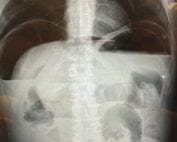
SAEM Clinical Image Series: The Cocaine Gut
A sixty-five-year-old male with a medical history of gastroesophageal reflux disease (GERD), hypertension, alcohol dependence, homelessness, and cocaine abuse presents to the emergency department with abdominal pain for three days. The patient describes his abdominal pain as knife-like, 9/10, located diffusely throughout his abdomen, with associated anorexia and nausea. He reports that he had one episode of coffee ground emesis this morning which provoked him to come to the ED. He reports frequent cocaine use with his last use three days ago. He endorses subjective fevers, chills, and no bowel movement for two days. He [+]

SAEM Clinical Image Series: Severe Cutaneous Lesions in an Immunocompromised Host
A thirty-one-year-old female presented to the emergency department with the complaint of a painful rash for 2 days. She has a history of HIV with a known CD4 count < 200 cells/µL. She states that the rash began two days ago and progressed to the current size. She describes the rash as burning and has never experienced these symptoms before. She has tried topical corticosteroids which did not alleviate the pain. [+]
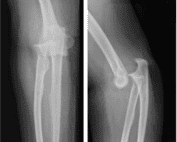
SplintER Series: Elbow Injury
A 70-year-old female presents with left elbow pain and deformity after falling on an outstretched hand. You obtain shoulder x-rays and see the above images. What is the most likely diagnosis, likely mechanism of injury, expected physical exam findings, and management plan? (Image 1: AP and lateral views of the left elbow. Author’s own images) [+]

Victor Huang, MD
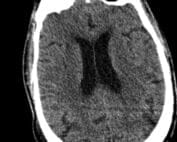
SAEM Clinical Image Series: Found Down with Altered Mental Status
A forty-nine-year-old male with a history of polysubstance abuse, including methamphetamine and intravenous (IV) drug use, rectal cancer, and human immunodeficiency virus (HIV) was brought into the emergency department by emergency medical services (EMS) after he was found down at the bottom of a flight of stairs by his roommate. In the emergency room, he was found to have a Glasgow Coma Scale (GCS) score of 7 and was intubated for airway protection. Non-contrast head CT was performed. Per the roommate, the patient had been “not himself,” exhibiting strange behavior and weight loss. History and [+]

ALiEM AIR | Renal/Genitourinary 2020 Module
Welcome to the AIR Renal/Genitourinary Module! After carefully reviewing all relevant posts from the top 50 sites of the Social Media Index, the ALiEM AIR Team is proud to present the highest quality online content related to renal and genitourinary emergencies. 6 blog posts within the past 12 months (as of May 2020) met our standard of online excellence and were curated and approved for residency training by the AIR Series Board. We identified 1 AIR and 5 Honorable Mentions. We recommend programs give 3 hours (about 30 minutes per article) of III credit for this module. AIR Stamp of [+]
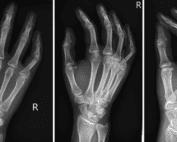
SplintER Series: Finger pain
A 45-year-old male presents to the emergency department (ED) with right hand pain after an e-bike accident. Physical exam shows deformity and tenderness at the 5th proximal phalanx. Radiographs are shown above (Image 1: Plain radiography of right hand with AP and oblique views. Author’s own images). What is the most likely diagnosis? What are the important aspects of the associated physical examination? What is the management in ED, including pain management? When do you consult orthopedics? [+]

ACMT Toxicology Visual Pearls: Perineal Skin Burns
What toxicologic exposure could cause this finding in a 3-year-old child? Ibuprofen Miralax Pseudoephedrine Senna [+]

Michael Keenan, MD
State University of New York at Buffalo
Latest posts by Michael Keenan, MD (see all)
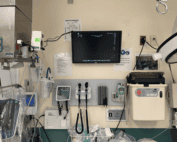
IDEA Series: Big Screen Ultrasound in Resuscitation Bays
Bedside ultrasound (US) often plays a crucial role in medical and trauma resuscitations in the emergency department (ED) [1]. Performing and interpreting bedside US studies such as the Extended Focused Assessment with Sonography for Trauma (E-FAST) during traumas or echocardiography during medical resuscitations are key skills for emergency medicine residents to learn during their training and adopt into clinical practice [2]. During trauma resuscitations timely and efficient dissemination of critical information is paramount. Information obtained via bedside US can be critical in determining further clinical actions (need for urgent thoracostomy for a pneumothorax, need for urgent exploratory laparotomy in a [+]
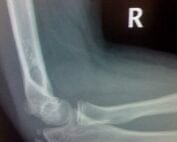
SplintER Series: Pediatric Elbow Pain
A 9-year-old male presents with right elbow pain after a fall onto the elbow. What is your diagnosis? What common pediatric elbow findings are you looking for? What is your management and disposition in the ED? (Image 1: Case courtesy of Dr Ian Bickle, Radiopaedia.org, rID: 47354) [+]

Mark Hopkins, [+]
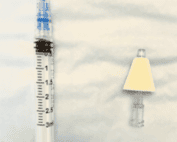
PEM Pearls: Intranasal Medications in the Pediatric ER
Fiona is a 6 year old female who presents to your emergency department after falling onto her left hand while racing on the playground. X-ray of the left upper extremity reveals a distal radius fracture with minimal displacement and angulation. You plan to place her arm in a splint and arrange for close orthopedic follow-up. The only problem: Fiona is in a lot of pain, especially with any manipulation of her arm, and Dad is worried that she will not be able to tolerate having a splint placed. You consider reaching for an intranasal medication [+]

Director of Growth, Strategic Alliance Initiative, Center for Innovation and Digital Health
Massachusetts General Hospital;
Chief Scientific Officer, Conductscience.com
Latest posts by Shuhan He, MD (see all)
- The Discharge Severity Index: Early Research on ED Readmission Risk Assessment - August 14, 2025
- Suboxone and the Emergency Physician: Get Waivered Training - August 12, 2022
- A Tale of Two Epidemics: COVID-19 and the Opioid Crisis - April 23, 2020