



ACEP E-QUAL: The Electronic ICU
Building on already increasing interest in telehealth, the COVID-19 pandemic accelerated the development and implementation of telemedicine services in a variety of clinical settings. In 2018, Dr. Jason Woods hosted an episode of the ACEP E-QUAL Network podcast highlighting the creation of an electronic intensive care unit (eICU) through Emory Healthcare. In this episode, Dr. Tim Buchman and Critical Care Nurse Cheryl Hiddelson share their innovative approach to delivering critical care services via telehealth. We present highlights from this discussion below. What is an eICU? The eICU allows for critical care oversight, without having to be on site. [+]
Buprenorphine prescribing: The Get Waivered Initiative makes it easier to get your DEA-X Waiver
A major development in curbing the opioid epidemic is the introduction of the medication buprenorphine to address opioid addiction. Being able to prescribe this medication, however, requires a special DEA-X Waiver in the United States. Dr. Alister Martin, the Founder of the Get Waivered initiative, is working to reduce the barriers for clinicians to obtain the training and paperwork necessary to obtain this waiver. Dr. Michelle Lin talks with Dr. Martin on this podcast about the backstory of the Get Waivered program, the lowered barriers to obtaining training, and some sneak peaks on what is new on the launching pad [+]
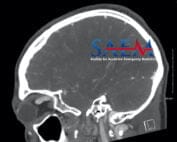
SAEM Clinical Image Series: Eye Pain After Assault
A 33-year-old male presents with intermittent blurry vision and left eye pain for 3 months, and a left-sided orbital headache for 1 day. He reports getting punched in the left side of the head during an altercation a few months ago. The eye pain is worse with ocular movements and is associated with bilateral conjunctival injection and white/green discharge from the left eye. The patient was seen at another emergency department 3 months prior for the same symptoms. He was then found to have left-sided proptosis, visual acuity 20/60 in the left eye, no fluorescein [+]
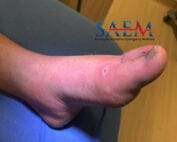
SAEM Clinical Image Series: Surfing Sting
A 38-year-old male presents 8 days after being stung in the left foot while surfing. He reports the sudden onset of sharp pain while walking in the ocean. He was seen initially in the emergency department. The puncture wound on his left foot was anesthetized, explored, and irrigated. No X-ray was obtained, no foreign body was discovered, and he was discharged home. Two days ago, he noticed worsening heat, itchiness, swelling, and skin changes (red bumps and patches extending from the foot up to the lower calf) in his left foot. His current pain is [+]

Tricks of the Trade in Emergency Medicine book holiday sale
Well wishes to all of you for this COVID-19 holiday season. As a thank you for your public health efforts and sacrifices during this pandemic, we are discounting our autographed Tricks of the Trade in Emergency Medicine book from $69 to $59 to clear out our remaining few copies [order site]. This sale will end December 31, 2020 or whenever we run out of books in my garage. Get it for yourself, or gift it as coffee-table book for your emergency medicine colleague or trainee. Proceeds go entirely to the ALiEM endeavor to allow us to continue delivering you educational [+]
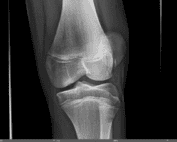
SplintER Series: I Think My Knee Popped?
13-year-old M presents to the ED with acute left knee pain that occurred about 2 hours prior to arrival while playing football. No direct trauma. Reports two audible “pops” followed by knee instability. Radiograph as pictured (Image 1. Plain film of the left knee. Image courtesy of John Kiel, DO). Patellar subluxation. This patient likely had a spontaneous dislocation and relocation (the two “pops”). There is a very small avulsion fracture noted along the lateral femoral condyle. PEARL: Patellar subluxations and dislocations are most commonly seen in the pediatric population [1]. PEARL: Patellar subluxation most frequently [+]
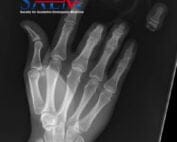
SAEM Clinical Images: Man vs Snow Blower
A 28-year-old man presents to the emergency department after a snow blower accident while at work. The patient was performing maintenance and he placed his hand into a clogged snow blower while the machine was still on. His hand subsequently got jammed in the snow blower, catching his second and third digits. The patient has an obvious amputation of the right third digit with the stump still connected to the hand via the flexor tendon, which is attached to the distal phalanx. He has pain in the right hand and lack of sensation to the [+]

ALiEM AIR Series | Immunology 2020 Module
Welcome to the AIR Immunology Module! After carefully reviewing all relevant posts from the top 50 sites of the Social Media Index, the ALiEM AIR Team is proud to present the highest quality online content related to immunology in the Emergency Department. 5 blog posts within the past 12 months (as of September 2020) met our standard of online excellence and were curated and approved for residency training by the AIR Series Board. We identified 2 AIR and 3 Honorable Mentions. We recommend programs give 3 hours (about 30 minutes per article) of III credit for this module. AIR Stamp [+]

SAEM Clinical Image Series: Strange Eyes
A 3-month-old boy, born full-term via normal spontaneous vaginal delivery to a gravida 2 para 1 mom with negative prenatal labs, presents with abnormal eye movement and position. His parents report 2 days of an increase in bulging of the soft spot, head size, and abnormal eye movement. He has not been able to look at his mother “like he used to.” This is associated with an increase in fussiness, poor feeding, and non-bilious, non-bloody vomiting. He also had increased sleepiness and difficulty waking up for feedings overnight. The patient has normal urination with no [+]
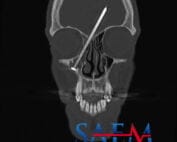
SAEM Clinical Image Series: An Incidental Finding
A middle-aged man presented after a motor vehicle collision with a logging truck at 55 miles per hour with low back pain. A computed tomography scan (CT) of the abdomen and pelvis at an outside facility showed a burst fracture of the third lumbar vertebra (L3). The patient had no other complaints. Given the fracture, additional CT imaging was done and the above finding was discovered. After the incidental finding was found, the patient reported a nail gun accident three years prior where he thought it had just recoiled and struck him in the lip [+]

Director of Growth, Strategic Alliance Initiative, Center for Innovation and Digital Health
Massachusetts General Hospital;
Chief Scientific Officer, Conductscience.com
Latest posts by Shuhan He, MD (see all)
- The Discharge Severity Index: Early Research on ED Readmission Risk Assessment - August 14, 2025
- Suboxone and the Emergency Physician: Get Waivered Training - August 12, 2022
- A Tale of Two Epidemics: COVID-19 and the Opioid Crisis - April 23, 2020