



SAEM Clinical Image Series: What Lies Beneath?
A 35-year-old male with a history of diabetes and pericarditis, status post pericardiectomy 3 years ago, presented with a painful lesion on his anterior chest wall. One month prior, the patient reported a bump at his sternotomy scar base which extruded a piece of suture when squeezed and subsequently healed. Two days ago, the patient developed diffuse right-sided chest pain. During the past 24 hours, an enlarging, erythematous, painful, non-draining lesion developed at the base of his scar. He reports subjective fever. He denies shortness of breath, exertional chest pain, nausea, and vomiting. [+]

SAEM Clinical Image Series: Left Ear Mass
A 25-year-old male who was previously healthy presents to the emergency department with a painful left posterior ear mass. The mass began as a “pimple” and has been increasing in size for the last 6 months. He has an associated headache, dizziness, and malaise. He denies fever, trauma, drainage, known insect bite, dysphagia, dyspnea, trismus, and hearing loss. He emigrated to the United States from Honduras 8 months ago. He was seen in the emergency department 4 months prior for a similar complaint, which was diagnosed as lymphadenopathy by point-of-care ultrasound. [+]
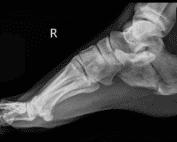
SplintER Series: We’ve Got A Jumper
A 42-year-old patient is brought in by EMS after jumping off of a two-story building. The primary survey is intact and the secondary survey demonstrates swelling, ecchymosis, and tenderness to the right heel. You obtain foot x-rays and see the following images (Image 1. Lateral view of the right foot. Author’s own images). [+]

Ashraf Hussain, MD

SAEM Clinical Image Series: Blisters, Bullae, and Badness
A 3-year-old female with a history of epilepsy presents with a rash that began one day ago. The patient started becoming fussy four days ago, saying, “I don’t feel good,” and not wanting to play outside with her siblings or finish her meals. Family noticed the patient rubbing her eyes frequently and crying when she went to the bathroom. She felt warm so they gave her Tylenol and Motrin at home. Yesterday, they noticed a rash was starting to develop with itchy, painful red spots. This morning, the rash progressed to involve some blisters on the [+]
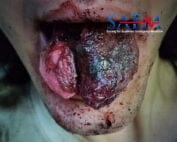
SAEM Clinical Image Series: The Hemorrhaging Bifurcated Tongue
A 26-year-old male with no past medical history presented to the emergency department for tongue bleeding for one day. Five days prior he had an elective cosmetic tongue bifurcation completed out-of-state. About two hours prior to arrival, he had been using a swish-and-spit saltwater rinse when he felt a suture break. Ever since he has had copious bleeding, reportedly filling his sink at home with blood. Additionally, he had about 250 milliliters of blood, including large clots, in a container in the emergency department. He denied using any blood thinners. There was no syncope, dizziness, [+]
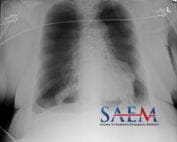
SAEM Clinical Image Series: Shortness of Breath
A 60-year-old female presented to the emergency department (ED) for respiratory distress. Emergency medical services reports that the patient was in respiratory distress upon arrival, slowly becoming unresponsive en-route. They started the patient on continuous positive airway pressure, but she lost consciousness with oxygen saturation in the thirties and they switched to bag valve mask (BVM) ventilation, which improved saturations up to 100 percent. Narcan was administered without improvement as she was on narcotics following bronchoscopy earlier today at an outside hospital. [+]
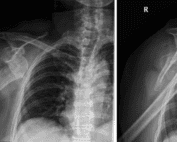
SplintER Series: More Than Just a Shoulder Dislocation?
An 80-year-old female presents to the Emergency Department with right shoulder pain, deformity, and decreased range of motion after falling down half a flight of stairs. AP and Y-views of the right shoulder were obtained (Images courtesy of Kenneth Chang, DO). [+]

Kenneth Chang, DO
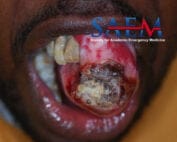
SAEM Clinical Image Series: Oral Trauma and Mass
A 38-year-old African American male without a significant past medical history presented with an oral mass. He was struck on the mouth by a wrench handle about two prior. Since then he has had a growing mass originating from the gum of his left front upper teeth. He is no longer able to eat solid foods and has to use a straw for all oral intake. The patient denies fevers, chest pain, shortness of breath, and weight loss. [+]
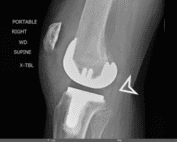
SplintER Series: My Knee, Again!
A 61-year-old F presents to the ED from the orthopedic clinic with acute right knee pain. She endorses that while a physical exam was being performed, she had sudden onset knee pain. Denies any trauma to the knee, radiation of pain, numbness, tingling, or swelling. The above knee radiographs were obtained (Images courtesy of John Kiel, DO). [+]

Parwaiz [+]

ACEP E-QUAL: ACEP Non-STEMI Clinical Policy
In 2018, the American College of Physicians (ACEP) released a Clinical Policy with management recommendations for patients presenting to the emergency department (ED) with concern for non-ST-elevation myocardial infarction (NSTEMI). Dr. Jason Woods hosted an episode of the ACEP E-QUAL Network podcast highlighting key aspects of the new policy. Dr. Woods was joined by lead writer Dr. Christian Tomaszewski from the University of California San Diego, and Dr. Michael Ross, Director of the Chest Pain Center at Emory University. Below are show notes reviewing the recommendations and the process involved in creating the clinical policy. How is a clinical policy [+]

Director of Growth, Strategic Alliance Initiative, Center for Innovation and Digital Health
Massachusetts General Hospital;
Chief Scientific Officer, Conductscience.com
Latest posts by Shuhan He, MD (see all)
- The Discharge Severity Index: Early Research on ED Readmission Risk Assessment - August 14, 2025
- Suboxone and the Emergency Physician: Get Waivered Training - August 12, 2022
- A Tale of Two Epidemics: COVID-19 and the Opioid Crisis - April 23, 2020