



To debrief or not?
Learners have limited time. Residents have work hours restrictions, practicing physicians have work / life demands, and the list goes on. Time is valuable. Therefore, educational interventions must be hard-hitting, effective, and worthwhile. We discussed previously “What is debriefing?” Debriefing is a facilitated discussion and reflection about objectives previously chosen by the educator. Dr. Ernest Wang (NorthShore Center for Simulation and Innovation) states that it’s about getting learners to that “aha!” moment. [+]
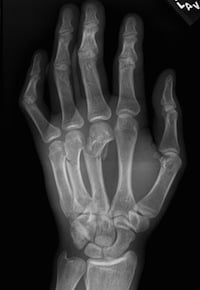
PV card: Metacarpal fractures
Patients with rotation deformities of the fingers from a metacarpal fracture should be reduced. All fingers should normally point towards the patient's scaphoid bone. Metacarpal (MC) fractures are common injuries, which often spark discussions about whether they should be reduced in the ED urgently. What are the criteria for acceptable degrees of angulation? Are these criteria different for the MC neck versus shaft? Which fractures tend to be unstable and thus require eventual operative repair? How should I splint the injury? Here's a quick-reference card to help guide your management decisions. These recommendations may vary slightly based on what references [+]
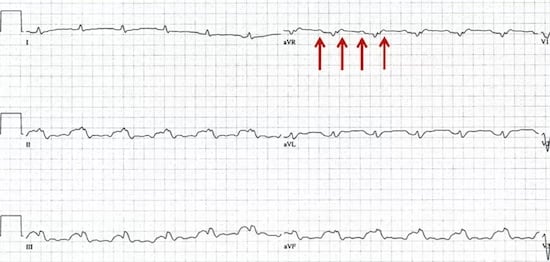
Trick of the Trade: Speed up ECG paper rate to differentiate tachycardias
Undifferentiated tachycardias, especially when the rate is extremely fast, make it difficult to see anything other than the QRS complexes! Is there a P or flutter wave? [+]

Director of Growth, Strategic Alliance Initiative, Center for Innovation [+]
Patwari Academy videos: ACLS (parts 7-10)
What is the definition of bradycardia and tachycardia in the 2010 ACLS guidelines, for the purposes of resuscitation algorithms? Bradycardia: heart rate < 50 bpm Tachycardia: heart rate > 150 bpm [+]
Director of Growth, Strategic Alliance [+]

Teaching internationally: More than just a language barrier
I recently traveled to San Salvador to help teach a pediatric and adult ultrasound course. The course was well received and it was wonderful traveling around San Salvador. I wanted to share some of our experiences, and discuss some challenges to educating internationally. More importantly, I want to engage you, the readers to share some of your experiences when educating internationally as well. [+]

Is the 6-12-12 adenosine approach always correct?
The ACLS-recommended dosing strategy of 6 mg, 12 mg, and 12 mg for adenosine may not be appropriate in every situation. There are a few instances when lower or higher dosing should be considered. Caveat: All recommendations are data-based, but many factors affect successful conversion of paroxysmal supraventricular tachycardia (PSVT) including proper line placement and administration technique. [+]
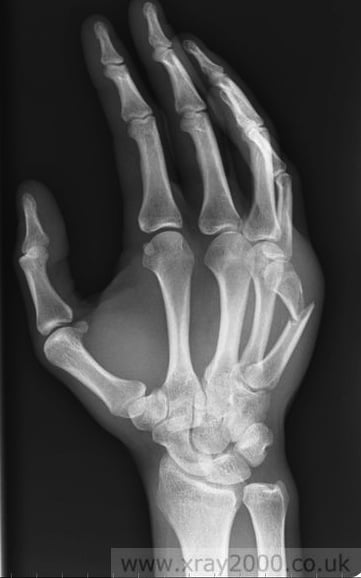
Poll: How would manage a metacarpal fracture in the ED?
I am in the process of creating a PV card on metacarpal fractures, divided into anatomical areas (base, shaft, neck, head), and am realizing that the EM and orthopedic literature don’t quite agree. Actually they are quite vague on whether reductions should occur in the ED vs orthopedics clinic in the next few days. Do you need to close-reduce all angulated fractures in the ED, which are outside of “acceptable” angulations? What exactly are “acceptable” angulations? Some sources say that angulations of 10, 20, 30, and 40 degrees are acceptable for MC neck fractures and only 10, 10, 20, and [+]
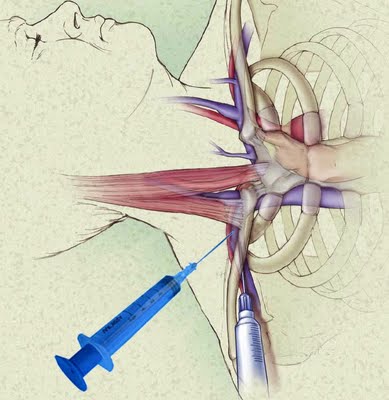
Trick of the Trade: Ultrasound-guided supraclavicular central line
Subclavian central lines are commonly touted as the central line site least prone to infection and thrombosis. The problem is that they are traditionally performed without ultrasound guidance. They are done blindly because of the transducer’s difficulty in getting a good view with the clavicle in the way. [+]
Patwari Academy videos: ACLS (parts 4-6)
Below are the next 3 video installments of Dr. Rahul Patwari’s digital whiteboard talks on ACLS. These videos cover: Cardiac arrest (Vfib and Vtach) Cardiac arrest (More of Vfib and Vtach) Cardiac arrest (Asystole and PEA) I love that each video is less than 15 minutes long. Also, even if you aren’t a medical student, these are great refreshers. For instance, don’t forget that atropine is no longer on the 2010 ACLS algorithm for asystole. [+]
The secret to patient presentations
“So there’s a patient, and umm… they are in the hallway, they came to the ED today for breathing problems, I mean dyspnea. They also don’t speak any English. So, uh the respiratory rate is normal, and they had a blood clot, er… I mean PE, in the past, but not on coumadin anymore. Shoot, I forgot to tell you my exam…they had pitting edema for 3 months. By the way, the labs came back on that other anemic patient in the other hallway, and they are really anemic…” – Anonymous medical student Sounds familiar? Imagine working in a hectic ED [+]