



Mythbuster: Pediatric coin ingestion vs aspiration?
Is this coin in the esophagus or the trachea? The classic teaching for the Boards exam is: Esophageal coins appear in the coronal plane, as shown above. Tracheal coins appear in the sagittal plane because of the cartilaginous tracheal rings. [+]
Trick of the Trade: Safer guidewire disposal
Have you ever accidentally flicked a drop of blood while disposing a straight guidewire into a rectangular sharps bin? The bins just don’t quite fit the wire easily. That’s just an occupational exposure just waiting to happen to yourself. [+]
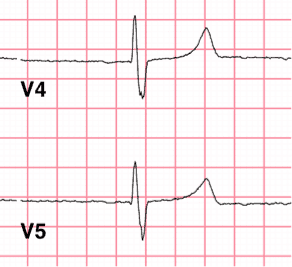
PV Card: Electrolytes and ECG changes
The electrocardiogram can pick up all sorts of electrolyte abnormalities. The most common abnormalities revolve around high and low levels of potassium and calcium. Magnesium derangements typically have nonspecific findings. How do you keep things straight? To make things more complicated, multiple electrolyte derangements can occur at the same time, making ECG interpretation challenging. [+]

Creating a personal learning environment
What is digital curation? It is the selection, preservation, maintenance, collection and archiving of digital assets.1 Once you have curated the digital content you might want to share with others. There are different ways of sharing this content: Sending out the link Retweeting on Twitter “Like” on Facebook “1+” on Google+ Many others [+]
Hot off the press: Academic EM journal abstracts in Spanish
La revista Academic Emergency Medicine ha creado una nueva función en su página web en la cual todos los resúmenes de los articulos seran traducidos al espanol. Felicidades a AEM por ser la primera revista americana en emergenciologia y unas de las primeras en medicina general por tomar en cuenta a la población de idioma español. [+]
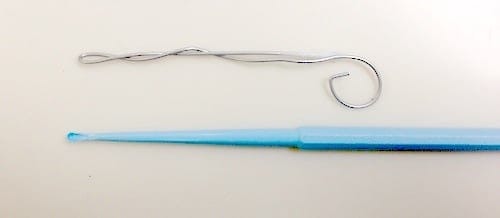
Trick of the Trade: A flexible pediatric ear curette
Having you had trouble seeing a pediatric patient’s tympanic membrane because of impacted cerumen? Scared from that last time you used a rigid curette and caused bleeding in the ear canal? The parents are worried that you hit the brain… [+]
Paucis Verbis: EMTALA rules in the transfer of ED patients
In U.S. academic emergency departments, decisions to accept patients is typically easy, because you have ready access to on-call physicians. When in doubt, accept transfer patients and sort things out later. What are the obligations for those transferring patients to other EDs? What do the EMTALA (a.k.a. "anti-dumping") rules say? When can you transfer unstable patients? As a general rule, the liability falls upon the transferring site and physician. So be sure that your patient won't decompensate in the ambulance during transfer. So, don't transfer that CP patient who is getting ruled-out for an MI or ACS no matter how good [+]
Mini-guide to Twitter: Why should I join?
What is Twitter? It’s a social network where people can send messages of a maximum of 140 characters in real time. It was created in 2006, and it has grown tremendously ever since. When it was first created the messages, called tweets, were about what people were doing in real time. Nowadays people, or “tweeple” as they are called on Twitter, are tweeting about any subject in the world. Here’s is detailed guide on how to use Twitter by Albert Einstein College of Medicine. Slide 35 is a 7:47 minute video where Dr. Chretien, an internist, is interviewed about the [+]
Top 10 tweets about medical education
Here are my favorite 10 tweets in the recent Twitter world about medical education. [+]

Director of Growth, Strategic Alliance Initiative, Center for Innovation and Digital Health
Massachusetts General Hospital;
Chief Scientific Officer, Conductscience.com

Tricks of the Trade: Calcium gel for hydrofluoric acid burns
A 41 y/o m presents to your ED after an occupational exposure to 30% hydrofluoric acid (HF). The thumb and index finger of his right hand were affected. Upon visual examination, the site of exposure looks relatively benign but the patient is complaining of extreme pain. Beyond giving opioids, what can you do? [+]